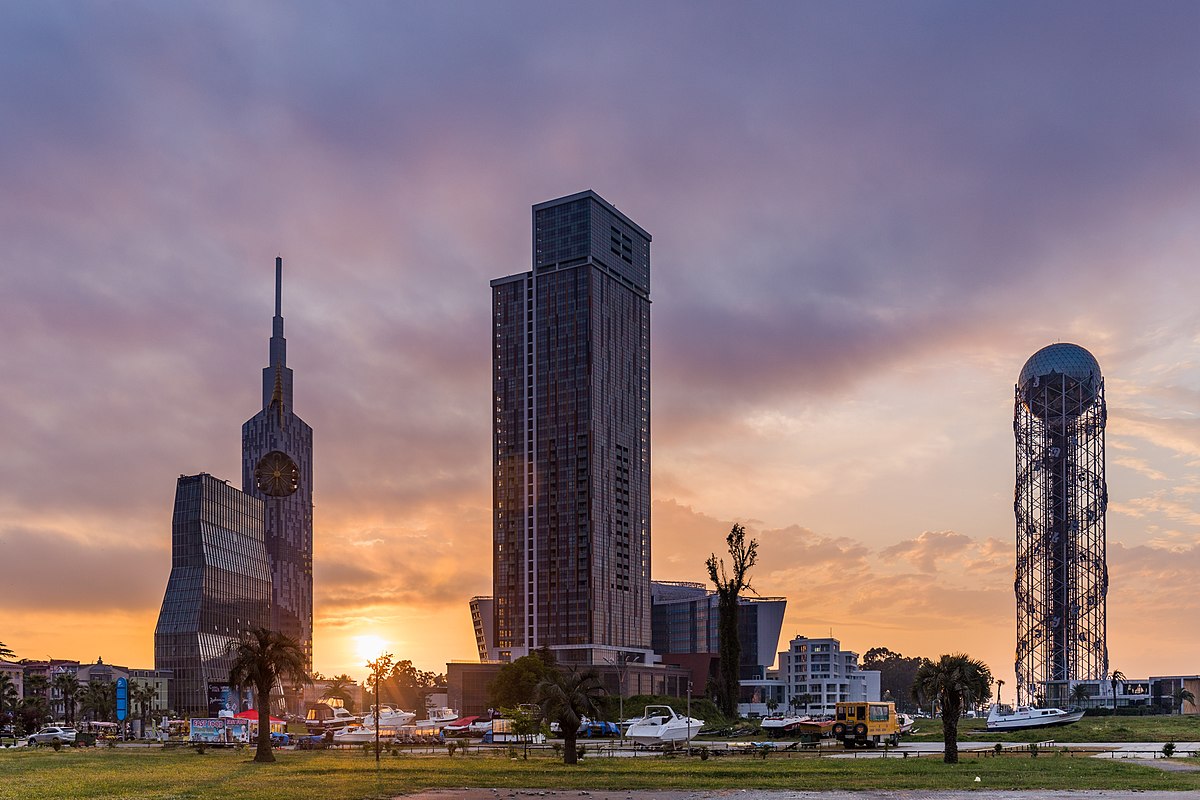
In late 2025, Georgia’s government announced a $6 billion real-estate deal with the UAE-based developer Eagle Hills, presenting it as the biggest influx of foreign investment in the country’s history. This deal promised two new urban megaprojects: one near Tbilisi’s Krtsanisi district, and the other on the Black Sea coast in Gonio. Together, they were planned to span nearly 850 hectares, and bring a mixed-use blend of residential complexes, hotels, marinas, and shopping districts to Georgia’s map.
Officials called it a milestone, proof that international investors trusted the country’s stability and the incumbent government’s direction. But within days, the celebration gave way to suspicion. The government’s enthusiasm was met with outrage from both conservative and left-leaning groups, who feared the projects would create “Arab satellite cities” and erode national identity. More moderate critics focused on the deal’s lack of transparency. The details of the contract– who owns what, what guarantees were given to whom, how profits will be shared– have not yet been made public.
This is where Georgia’s latest political storm begins. The controversy isn’t really about Arabs buying land or foreigners reshaping culture. It’s about trust; whether Georgians can believe that such a monumental deal serves their interests. And that, more than ideology or nationalism, is what defines this debate.
The Promise of Foreign Direct Investment
At its core, this agreement is a form of foreign direct investment: capital flowing into Georgia, to build infrastructure and attract tourism. For a small, open economy that still struggles to retain talent and sustain growth, the appeal is clear. FDI can provide financing, jobs, and know-how that the country cannot easily generate alone.
The Eagle Hills developments could add more than $7 billion to GDP and create 30,000 jobs over the next decade. Beyond the numbers, there is a symbolic dimension: Georgia aligning itself with global capital and ambition. For policymakers, the presence of a major Gulf investor signals that the country can play in the higher leagues, moving beyond regional trade toward global integration.
It also fits the broader vision of Georgia, as a regional hub for tourism and logistics. The Krtsanisi site is meant to evolve into a self-contained “green city,” while the Gonio area is planned as a high-end coastal resort. If successful, these spaces could redefine the country’s urban identity.
There are reasons to be hopeful. The UAE has the experience, and Eagle Hill’s previous projects show how large-scale development can change a city’s landscape. For Georgia, this could mean new industries, local employment, and an end to chronic labour migration that pushes young workers abroad. On paper, this looks like progress.
But opportunity without clarity is fragile. Big money doesn’t just build skylines, it also tests institutions. And this is where Georgia’s optimism collides with its old problem, which is weak transparency and public distrust.
The Real Problem: Secrecy and Trust Deficit
When people ask what exactly Georgia agreed to, they get few answers. The contract with Eagle Hills is classified as a “commercial secret,” meaning neither journalists nor legislators can review its contents. In effect, nearly 900 hectares of land, much of it state-owned, has been committed under terms invisible to the public.
That decision alone was enough to damage credibility. A government confident in its deal would have nothing to hide. Yet officials chose silence, insisting confidentiality was required to “protect commercial interests.” This only deepened suspicion that the agreement may include hidden guarantees or one-sided benefits.
Analysts believe the state contributed land valued at more than $1 billion for a minority 33 % stake in a joint venture. The investor, meanwhile, receives an equal share based largely on design work and future fundraising. Without transparency, Georgians are asked to take it on faith that this exchange is fair.
This secrecy undermines both investor confidence and democratic legitimacy. The OECD’s policy framework for investment notes that clear and predictable rules are essential for FDI to contribute to development. When the rules are hidden, citizens assume corruption, and investors, ironically, face greater reputational risk.
The political environment makes this worse. Georgia’s institutions have long battled accusations of elite capture and one-party control. In that context, any murky megadeal feels like another decision made by a few men behind closed doors. The result is a vacuum of trust. And in that vacuum, identity politics rushes in.
The Fear Narrative: Identity and “Arabization”
Once transparency collapses, logic gives way to emotionalistic fear. The Eagle Hills deal quickly turned from an economic story into a cultural one. Rumours of “Arab cities” and “foreign gated communities” spread online, framing the investment as an invasion rather than a partnership.
These fears resonate because they touch old scars. Georgia’s history is one of survival between empires, such as the Russian, the Ottoman, and the Persian. Each left a mark, and the collective memory of losing sovereignty remains strong. When people hear that foreigners will control hundreds of hectares near Tbilisi or the Black Sea, they instinctively recall that history and traumas associated with it.
The country’s fragile socio-economic state worsens this phenomenon. For many Georgians, prosperity still feels distant. Renderings of luxury towers and marinas prompt questions of who they are for. The fear isn’t just of outsiders, but of exclusion. Projects that price out locals feed the narrative that development happens “for someone else.”
There are also examples abroad that reinforce the worry. In Serbia, Eagle Hill’s Belgrade Waterfront was pushed through with limited consultation and generous terms for the investor, sparking protests and ongoing debate about public benefit. Georgians have seen this movie before: promises of transformation followed by disappointment.
Still, the claim that Georgia faces “Arabization” is more myth than reality. The deal does not include immigration privileges or paths to citizenship. Georgia’s migration laws are not affected by any means by this project, and there is no indication that thousands of Gulf citizens plan to settle permanently. The issue is governance, not ethnicity. When citizens cannot see the rules, they imagine threats that do not exist. Transparency, not nationalism, is the antidote.
Open Markets, Accountable State
Georgia’s dilemma is how to stay open to global capital without losing public control. There is a simple framework that will guarantee this: openness, accountability and inclusion.
Openness means engaging with investors regardless of origin. Capital should be welcomed from anywhere if it abides by Georgian law and benefits the country. Closing the door out of cultural fear only weakens the economy and isolates society.
Accountability demands transparency. Governments cannot expect citizens to trust what they cannot see. Public disclosure of the main contract terms, even summaries of ownership structure, obligations, and benefits would help. Clear oversight mechanisms would protect both the state and the investor from suspicion.
Inclusion ensures that Georgians feel ownership of change. The projects must provide real local opportunities, not just jobs in construction but roles in planning, design, and management. Ensuring that local suppliers and workers are prioritized would turn FDI from an abstract number into a visible benefit.
When all three align, foreign investment becomes a partnership that strengthens both sides.
Conclusion
Georgia stands at an inflection point. It can either prove that openness and sovereignty are compatible, or retreat into a defensive nationalism. The Eagle Hills controversy shows how thin the line is between pride and paranoia.
In truth, the nationality of capital matters far less than the integrity of governance. A contract with a Middle Eastern developer can serve Georgia just as well as one with a European company, if it’s handled openly and fairly. The fear of “Arabization” masks a deeper anxiety: not knowing who decides, on whose behalf, and under what rules.
Georgia doesn’t need to close itself off to protect its identity. It needs to protect transparency to safeguard its democracy. If citizens can see where the money goes and how it is spent, there is no contradiction between foreign investment and national dignity.
This piece solely expresses the opinion of the author and not necessarily the magazine as a whole. SpeakFreely is committed to facilitating a broad dialogue for liberty, representing a variety of opinions. Support freedom and independent journalism by donating today.