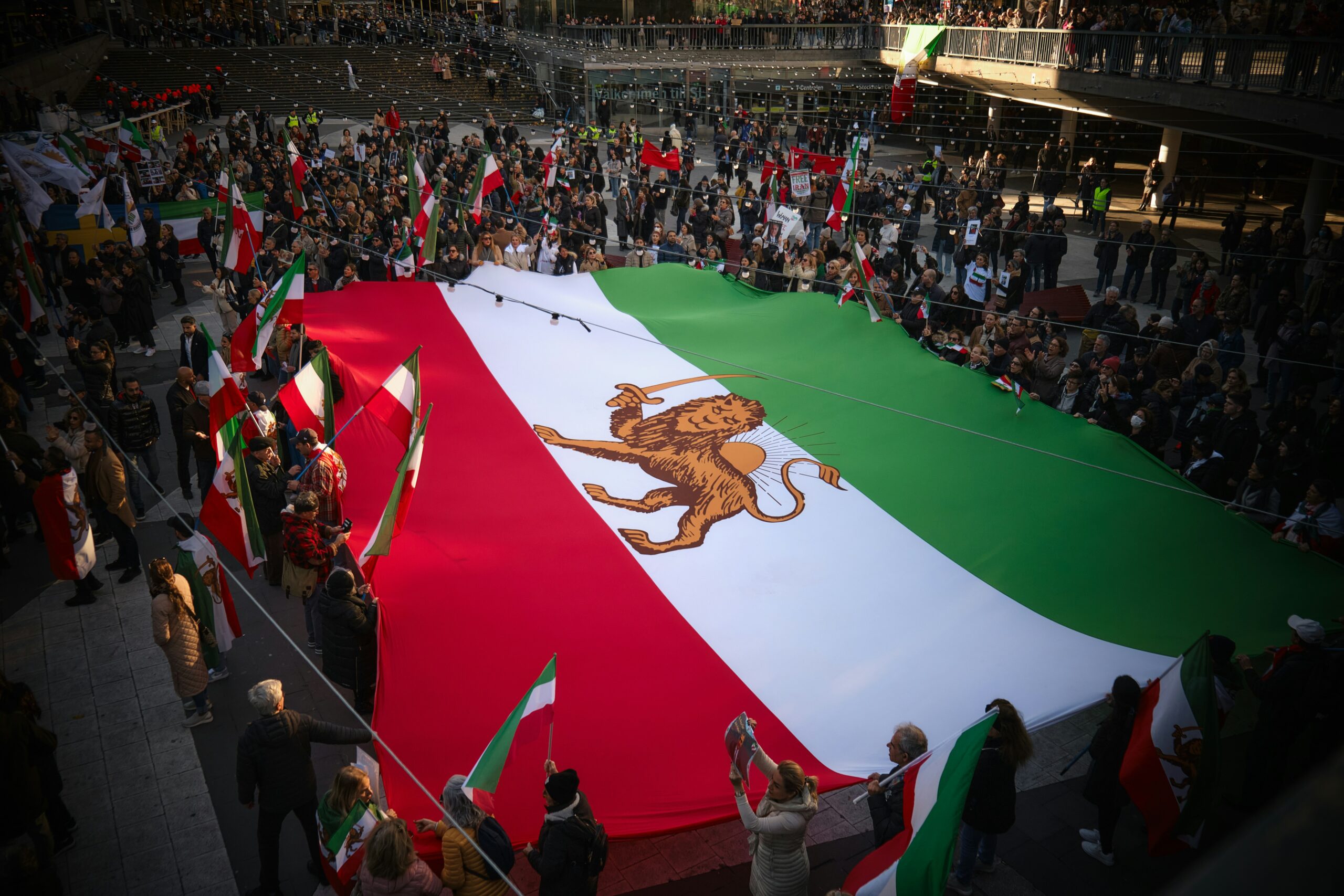
On December 28, 2025, protests in the Tehran Bazaar were sparked by too-high prices of bread and fuel. Since then, the movement has spread to several provinces, and the streets of Tehran, Karaj, Hamedan, Shiraz and Isfahan have swelled with people demanding a total change in government. These protests, the largest since the 1979 Revolution, are rooted in years of economic pain and corruption, both results of a state that prioritizes ideological control over civil rights and public welfare. The situation therefore represents a dangerous turning point.
The Iranian rial has collapsed to a record low of 1.45 million per US dollar. In 2025 alone, the currency lost nearly 45% of its value; a person’s savings could disappear in a few weeks. For the people of Iran, this highlights the failure of a state that controls everything but manages nothing. When a government ignores basic economic rules, it eventually loses control over its people. Iran is a clear case study in how the suppression of economic freedom can lead to systemic collapse.
Without a stable currency and a free market, personal autonomy becomes impossible. The Iranian government’s war on the market has become a war on its people themselves. Without a stable currency and a free market, personal autonomy becomes impossible. This is most evident in the way state-backed monopolies, particularly those controlled by the Islamic Revolutionary Guard Corps (IRGC), have stifled competition and bred deep-seated corruption. The Iranian government’s war on the market has become a war on its people themselves.
What makes this movement unique is its hitting the heart of the regime. The protests began in the Tehran bazaar, led by the merchants and workers who usually stay quiet. For several days, they have stood their ground despite a total internet blackout. The bazaar represents the engine of spontaneous economic order. Its revolt proves that even the most powerful state cannot fully suppress the human drive for trade and prosperity. Historically, the bazaari class has been a kingmaker in Iranian politics; their withdrawal of support was pivotal in the 1979 Revolution that overthrew the Shah. By turning against the current regime, they are signaling a historic shift in loyalty.
The regime is using its guards and paramilitary groups to quell the protests. But when more than 100 security officers die in two weeks, it indicates the fear has gone. The people are no longer just protesting, but fighting for their right to own their future. This is a fight for the core principles of liberalism: the right to private property, the freedom to exchange, and the protection of the individual against state tyranny.
The current events show that a centralized economy cannot satisfy the complex needs of a modern society. When a state controls the means of production and limits competition, it creates a fragile system. In Iran, for instance, the government’s heavy-handed regulation of the energy and automotive sectors has led to chronic inefficiencies and frequent shortages. Furthermore, the government chose to fund external conflicts through groups like Hezbollah and Hamas instead of protecting domestic economic rights. This choice has backfired. Liberalism teaches that peace and stability are the results of a high degree of economic liberty. When individuals are free to pursue their own interests, they create wealth that benefits the entire nation. By restricting this process through predatory taxation and currency manipulation, the Iranian state has made poverty a tool of political control, which the people now reject.
The Iranian crisis is a warning to all authoritarian systems. A state that refuses to reform its economy and respect the agency of its people is a state built on sand. In Georgia, this is a local issue. For years, the Russia-Iran axis has functioned as a strategic cage for the South Caucasus. This alliance is a military and economic project that is designed to keep Georgia and its neighbors away from Europe. Iran provides the military hardware and logistical support that Moscow needs to maintain its influence. If the regime in Tehran falls, Russia loses its most vital strategic partner in the South. Moscow would find itself alone in the Caucasus. This shift could finally break the northern grip on Georgia, offering a rare chance for the Caucasus to exit the shadow of authoritarian bullies and follow a European path.
True regional stability comes from peaceful trade and open borders, not from military alliances between dictators. A post-Islamic Republic era would fundamentally change regional cooperation. Instead of a zone of conflict, the Caucasus could become a center for international trade. In this future, Iranian energy and goods could flow through Georgia to European markets without Russian interference. Regional cooperation would move away from arms deals toward infrastructure projects, such as shared power grids and open trade routes. This would turn the Caucasus from a closed system into a gateway for global commerce.
However, the instability of a neighbor brings immediate risks. Georgia remains the primary destination for Iranians seeking safety. A full-scale civil war could trigger a massive humanitarian wave that Georgia must be prepared to manage. Furthermore, the regional transit economy is already suffering. Disruptions in the “International North-South Transport Corridor” (INSTC) and increased insurance risks for regional trade have slowed the movement of goods across the border, directly impacting Georgia’s role as a transit hub. As Iranian infrastructure becomes unreliable, the “Middle Corridor” through Georgia becomes more important but also more volatile.
The shift toward a more open region means Georgia must focus on long-term economic stability. A more liberal trade policy is a tool to reduce the risks of regional crises. By removing bureaucratic barriers and lowering tariffs, Georgia can diversify its supply chains, ensuring that the economy is not overly dependent on a single volatile neighbor. This resilience is strengthened when private businesses, rather than state officials, decide where to invest and which routes to use; they react faster to market shocks than any government agency.
If the South Caucasus adopts a model with less government interference, the region will be better protected from the shocks in Tehran. The current failure of the Iranian system is a chance to change how regional cooperation works. Instead of projects run by the state, the priority should be the free movement of goods, people, and ideas. This approach is the only way to ensure that the collapse of one regime does not damage the entire neighborhood.
The situation in Tehran proves that no state can survive indefinitely by ignoring market reality and individual agency. The Russia-Iran alliance was built on state control, but that foundation is cracking. For Georgia, the end of this axis would be a historic geopolitical shift. The struggle in Iran is not an isolated event. It is a process that will redefine the borders of freedom in the Caucasus. By championing the values of limited government and individual liberty, the path to a more stable and independent Georgia becomes clearer. Georgia must navigate this transition with strategic foresight.
Not a cent from the state, ever. Keep us stubborn. Donate today!
This piece reflects the author’s views, not necessarily the entire magazine. We welcome a range of pro-liberty perspectives. Send us your pitch or draft.