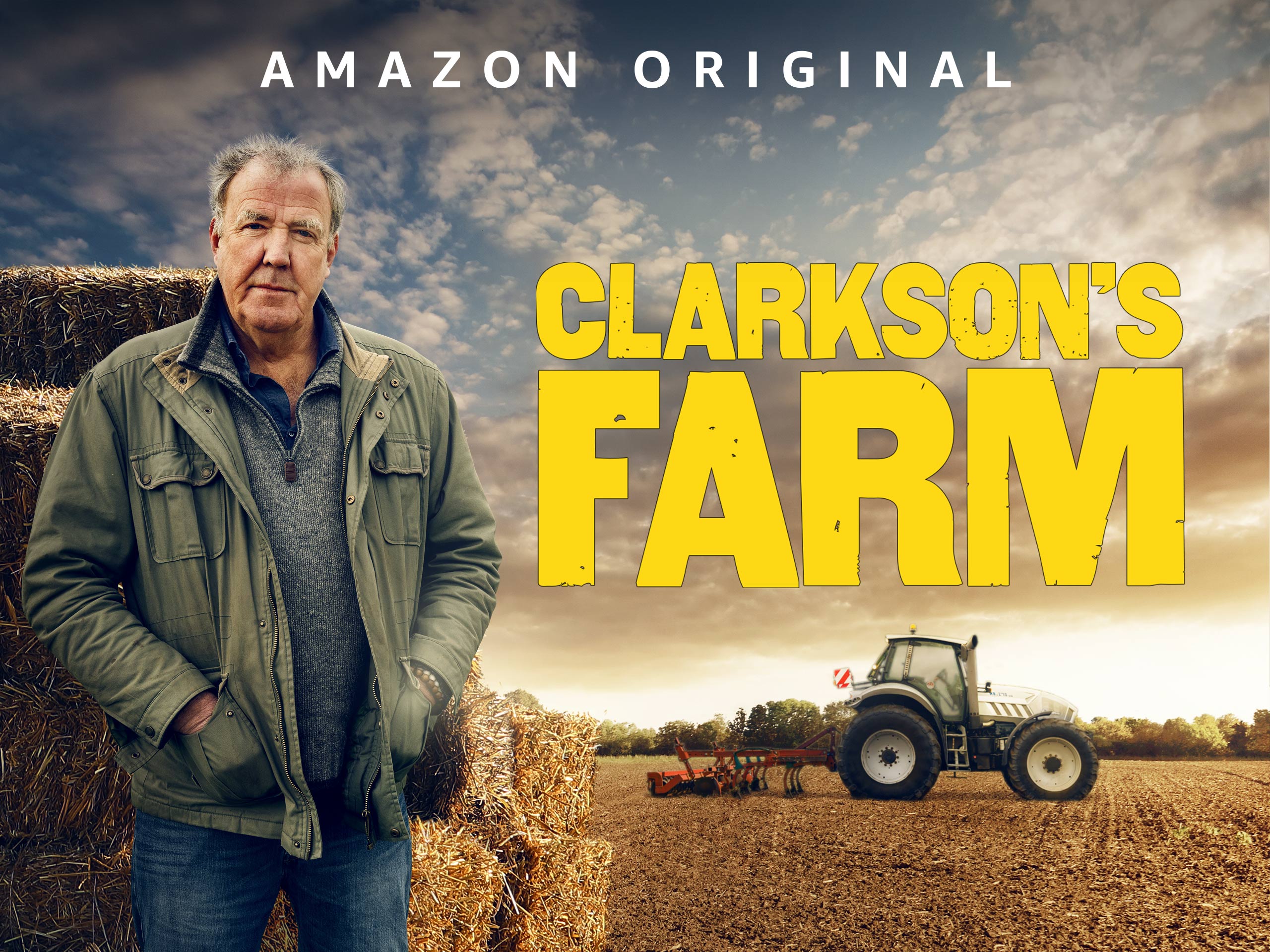
“You’ve just got to watch Clarkson’s Farm with me”, I said.
“Ok, but who is Clarkson?”, my Serbian partner responded.
I was stumped. Jeremy Clarkson is a British journalist and TV presenter, best known for hosting the controversial BBC motoring show Top Gear and later both the Amazon Prime revamp, The Grand Tour, and the latest series of Who Wants to be a Millionaire?.
But those of you familiar with Jeremy Clarkson know full well that a short profile can never capture the man’s impact, mystique, or reputation. My partner doesn’t know who he is and I can’t really figure out how to explain it. On the other hand, one of my friends in Belgrade sends me videos of a young Clarkson destroying a Yugo, the iconic state-produced car of communist Yugoslavia, by shooting at it with a tank. It really is a case of ‘if you know, you know’.
If you don’t, I advise you to at least read the controversies section of his Wikipedia page before reading this and strongly recommend watching a few episodes of Top Gear.
In short, Clarkson has made a name for himself by being an idiot on television. Top Gear was, in theory, an informative programme about cars. In reality, it mostly consisted of Clarkson and his two co-presenters doing foolish things with cars. And it was brilliant.
Both on Top Gear and in his written newspaper columns, Clarkson provoked outrage and hilarity in equal measure by aiming his wit and ire at all kinds of targets, from Britain’s environmental policies and tax system, to political correctness, Meghan Markle and speed cameras.
Clarkson’s Farm, his latest Amazon Prime adventure, follows him as he takes over ‘Diddly Squat’ Farm in rural Oxfordshire and attempts to learn how to be a farmer whilst making the whole enterprise profitable. To understand the absurdity of this premise, readers should understand that one of Clarkson’s iconic Top Gear-era sayings was ‘I don’t do manual labour’.
What comes out of the setup is funny and disturbing in equal measure. Funny, because it’s Jeremy Clarkson running a farm (again, if you know, you know) and disturbing because it shines a light on the absurdity and destructiveness of the British state.
Throughout the series, Clarkson’s humour and incompetence is offset by the series ‘straight man’ and farm advisor, ‘Cheerful Charlie’ Ireland. Charlie’s role is to pour cold water on Clarkson’s maverick ideas on the basis that they’re too expensive or otherwise infeasible. And oftentimes, Charlie has to explain to Clarkson that his plans have run up against the most immovable obstacle: the government.
Take Season 1, Episode 2 for example. In this episode, Clarkson is told that there are over 300 acres of uncultivated meadows on his land that the government is paying him not to grow crops on. A rough projection based on British government estimates suggests that land could have yielded 850 tonnes of wheat. It could also have accommodated around 1,500 medium-sized homes or 227 American football pitches. But rather than doing something productive on his own property, the government paid him not to.
This is because Britain retained the old European Union Common Agricultural Policy arrangement of paying farmers to manage grassland and meadows, rather than farming them. Given that the government subsidises English farmers to the tune of £2.3bn per year, we might, at the very least, expect it to increase the volume of crop yields. Unfortunately, that isn’t always the case.
But by far the most egregious case study in the failures of state intervention comes in Season 2. To make his farm more profitable and increase its value to the community, Clarkson plans to open a restaurant. But of course, this all happens in Oxfordshire, Ground Zero for Britain’s growth-killing, freedom-restricting struggle to build anything.
Initially, Diddly Squat Farm had permission to set up a small farm shop along with parking for customers. Clarkson added a restaurant on the land for customers to eat his farm-fresh produce on site. Eventually, the enterprise became too successful by attracting too many visitors. Subsequently, the local government’s planning inspector declared Clarkson’s operation an ‘Intentional Unauthorised Development’ because it had turned into a mixed use of land comprising agriculture, café, restaurant, farm shop, parking and lavatory facilities.
Clarkson responded by petitioning West Oxfordshire District Council for planning permission to regularise his growing business. Of course, this was denied in an all-too-familiar way. Local governments, under pressure from local activists, killed a productive property-owner’s wealth-creating venture. While they may have had some legitimate concerns about Clarkson’s businesses creating a surge in demand on local roads, a sane planning system would not nix an entire business over that alone.
But Clarkson, freedom fighter that he is, refused to be beaten. He claims to have found a ‘loophole’ whereby his lambing shed could be converted into a restaurant by virtue of ‘permitted development rights’ (a national grant of planning permission which allows certain building works and changes of use without new planning permission). Like a poorly-dressed Randian hero, Clarkson went ahead and opened the restaurant in open defiance of the local busybodies.
Unfortunately, the council still stepped in and enforced the restaurant’s closure on the basis that it still caused the whole farm to go beyond the land use for which it had permission. He was ordered to cease on-site food service, restrict retail sales, and reduce parking space. After an appeal, Clarkson won a partial victory, which allowed the farm shop to continue and a small cafe to open by his lambing shed. But the damage had already been done: Jeremy Clarkson became yet another victim of the planning system, which chokes investment, scaling, and diversification for countless businesses across the UK, while forcing them to spend precious money and man-hours on bureaucratic processes.
Clarkson’s Farm does an excellent job of shedding light on some of the state-imposed barriers to productive work in Britain. Clarkson himself resolutely fought for his right to produce, up to and including a torturous session engaging with local residents’ concerns in a stuffy town hall. Increasingly, the success and failure of major projects in Britain are decided in those halls and local government offices, rather than in the competitive marketplace. Those of us who want a freer, richer Britain owe Jeremy Clarkson our thanks for exposing that reality.
Despite all of that, it would be misleading to characterise Clarkson as an all-out freedom fighter. While he worked tirelessly against the local officials and NIMBYs who denied his right to be productive, he also, when it suited him, sought to deny that same right to others. Last week, he wrote in The Sunday Times that he was ‘staggered’ to see imported chicken served to school children instead of British meat. He rightly points out that other countries have lower regulatory standards than the UK for meat, but that’s a case for deregulation in Britain, not tariffs against foreign imports that drive up the cost-of-living.
The truth is that Britain’s farming sector is mostly unproductive. Taxpayers are forced to pay them over £3bn per year in direct subsidies while being constantly lectured about not ‘buying British’ in our weekly grocery shops. The farming lobby endlessly campaigns for all kinds of special perks, from more subsidies and tariffs to restrictions on lab-grown meat. Policies favouring British farmers keep them and their land unproductive, while wasting money and resources which could be put to better use elsewhere.
What we need is radical reform. Yes, the government should get off farmers’ backs by cutting back planning and environmental red tape. But we should also end their subsidies and force them to compete on a level playing field, which prioritises producing the best products for willing consumers.
New Zealand did just that in 1984 by cancelling most subsidies, state-backed loans, tax perks, and price supports extended to partners. The results are astonishing, with productivity quadrupling despite a similar number of people being employed in the sector today as in the early 1980s. That productivity boom also benefited the environment through more efficient land and fertiliser use.
We libertarians often let purity stand in the way of building coalitions for change. Jeremy Clarkson has undoubtedly done more good than harm by shedding light on Britain’s failed planning system. But if he wants to build on his work and drive real, lasting change to tackle Britain’s economic malaise, he should embrace freedom and markets consistently, not just when he wants to build a restaurant.