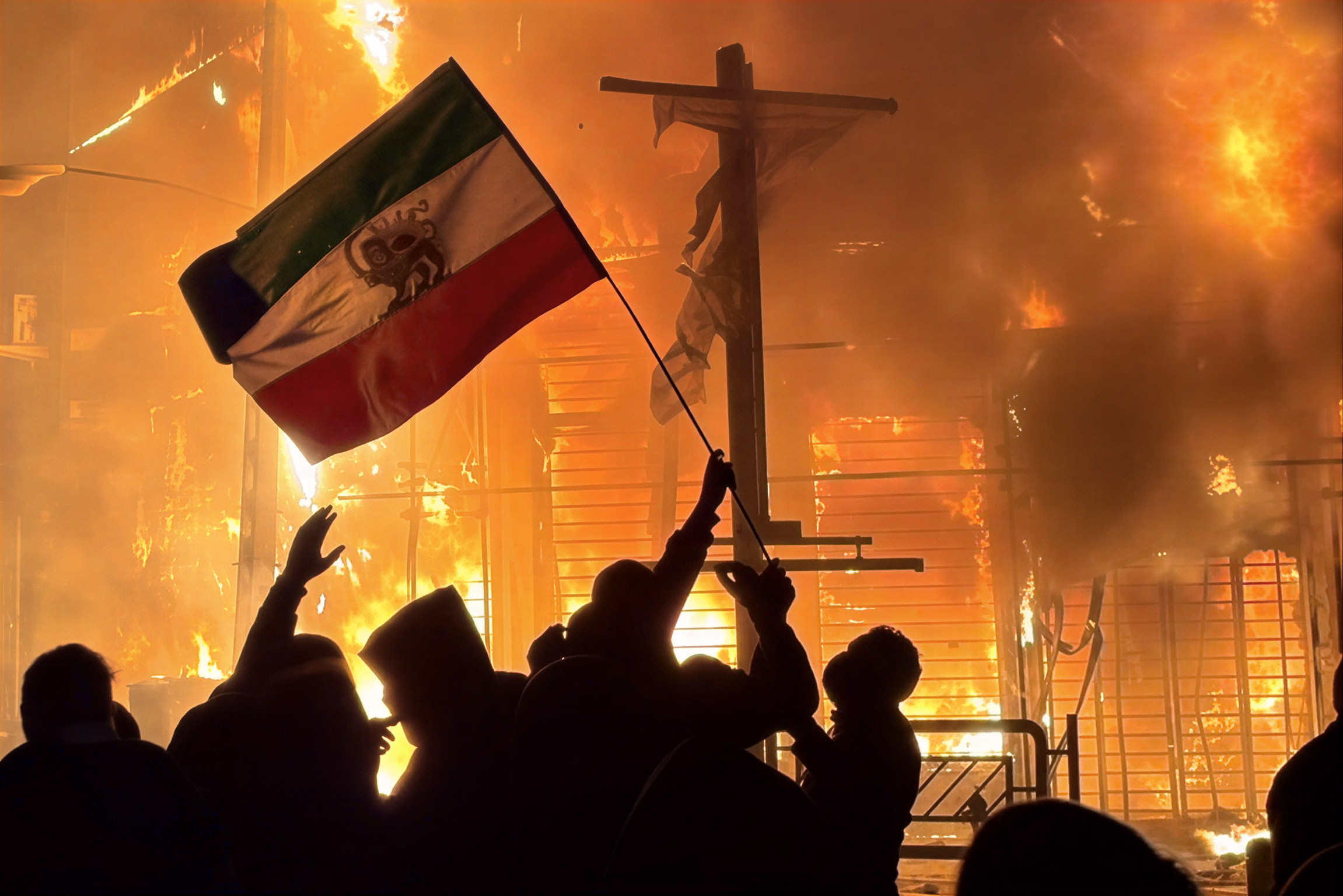
Europe must put the Islamic Revolutionary Guard Corps on the terror list now, or risk its credibility and security.
On January 22, 2026, the European Parliament voted 562 in favour to just 9 against to designate the Islamic Republic’s Revolutionary Guard Corps (IRGC) as a terrorist organisation. Members from Spain, Portugal, Germany, and Ireland supported this decision, sending a strong message about the designation. This powerful resolution condemning the Islamic Republic’s brutal crackdown on protesters is a political thunderclap. Yet it is politically significant without being legally binding, a show of solidarity that changes no laws on its own. The final say lies with the European Council, representing the EU’s 27 states, which holds the legal key to actually blacklist the IRGC. For years, the Council has tiptoed around this step, dodging similar calls despite mounting evidence and urgency. Now, with the blood of 20,000+ of my compatriots on the streets of Iran and Europe’s credibility on the line, the Council perhaps for the last time faces a historic opportunity to designate the IRGC as a terrorist organisation.
After decades of IRGC crimes and years of European hesitation, today’s circumstances demand moral clarity and political courage. If Europe truly stands for human rights and its own security, it must act decisively, aligning its actions with its values and sending a clear message to the Islamic Republic that “enough is enough”.
What is happening in Iran?
In late December 2025, as the rial plunged and prices surged, fresh protests erupted across Iran. After years of oppression by the Islamic Republic and its failure to retreat from its mistakes, millions of Iranians across cities and provinces rose up, demanding the end of the Islamic Republic regime and the restoration of their country, chanting the name of the crown prince, Reza Pahlavi. For years, anger had been building, but this time, it reached the point of no return. In response, the regime initiated a full digital blackout on January 8th, cutting off internet and telecommunication access nationwide, which at the time of publishing this article continues.
Over the course of just 48 hours, the Islamic Republic’s forces, particularly the paramilitary arm of the IRGC, Basij, killed more than 20,000 people. Entire neighbourhoods were turned into war zones, while the only thing the world could hear from Iran was silence; the bloodshed was hidden behind the regime’s blackout. These forces moved with impunity, carrying out extrajudicial killings, mass arrests, and torture. The IRGC is not a conventional military; it is a terrorist entity in uniform, built to preserve the regime’s grip on power through fear, repression, and violence, at home and abroad.
In response to this tragedy, the European Parliament finally acted. On January 22, it passed with overwhelming support, a resolution calling for the IRGC, the Basij, and the Quds Force to be designated as terrorist organisations. Parliament’s nearly unanimous vote shows both public and political desire for change. However, it has no power to put the IRGC on the terrorism list. That authority rests with the EU Council, which can update the EU’s official list of terrorist organisations only by unanimous agreement of all member state governments. In practical terms, just one country can block the listing. This requirement has been the bottleneck stalling action on the IRGC.
Listing the IRGC would place the Guard Corps alongside groups like ISIS and al-Qaeda on Europe’s terror list. This would trigger EU-wide asset freezes, travel bans, and criminalise any support for the group. It would also mean any IRGC member or front organisation operating in Europe could face prosecution or shut down under terror-financing laws, not just human rights sanctions. For now, though, it is stuck in limbo: the Council has to act, and it has not.
This proposal has been on the table before. In early 2023, after the IRGC helped suppress the Mahsa Amini uprising, the European Parliament similarly called for the IRGC’s terrorist designation. At that time, even the president of the European Commission showed support. But when it came to the Council, the EU foreign ministers, instead of bold listing, settled for more piecemeal sanctions on individual IRGC officers. The official reasoning? Legal technicalities and caution: EU officials like Josep Borrell argued that a court decision was needed first. Since then, the Islamic Republic’s regime has only become bolder, and the calls for action have grown louder. Parliament’s latest resolution explicitly “calls on the Council to proceed without delay” in fully designating the IRGC and its affiliates (Basij militia and Quds Force) as terrorist organizations. The ball is now firmly in the Council’s court. Will EU leaders pull the lever now, or watch this final chance evaporate?
Credibility and deterrence
“There was so much talk about the protests in Iran, but they drowned in blood. The world has not helped the Iranian people enough; it has stood aside. By the time politicians started forming positions, the Ayatollah had already killed thousands. What will Iran become after this bloodshed? If the regime survives, it sends a clear signal to every bully: kill enough people and you stay in power.” – Volodymyr Zelensky at World Economic Forum 2026
Europe’s own security and its credibility as an institution are at stake. For decades, EU officials have shown solidarity with the Iranian people and condemned the IRGC’s crimes. Today, thousands of protesters have been killed, injured, tortured, disappeared, or jailed, and many have been sentenced to death at the hands of this exact force.
The IRGC and its commanders must finally face real consequences for their actions. Until now, they have operated without fear, assuming Europe will respond only with mild condemnation and slow-moving sanctions. The Islamic Republic’s agents connected to the IRGC have been tied to assassination plots and kidnappings on European soil; from the killing of ex-PM of Iran Shapour Bakhtiar in France to plot to attack a synagogue in Germany. These are acts of terror by any definition, carried out under Europe’s nose. How can the EU genuinely claim zero tolerance for terrorism while the IRGC’s death squads escape the terrorist label?
Consistency in Europe’s security architecture
“As for Iran, everyone is waiting to see what America will do. And the world offers nothing, Europe offers nothing, and does not want to enter this issue as a supporter of the Iranian people and the democracy they need.” – Volodymyr Zelensky at World Economic Forum 2026
Designating the IRGC is both a moral duty and a rational move for Europe’s security framework. The IRGC has financed and armed groups like ISIS, al-Qaeda, Hamas, and Hezbollah, all of which are already on the EU’s terrorism list. It also supplies the drones that Russia uses to bomb Ukrainian cities. Today, it is killing thousands of Iranians, in the streets of Iran. By any reasonable standard, the Islamic Republic’s Revolutionary Guard Corps belongs in that rogues’ gallery. While the small terror groups are designated as terrorists, their powerful sponsors escape scrutiny. How can Europe tolerate their lobbies and money-laundering networks operating freely within its borders?
The EU has already recognized the IRGC’s role in terrorism through other means. Many IRGC commanders are under EU sanctions for terrorism and human rights violations. The IRGC’s elite Quds Force is identified as the “principal tool” for the Islamic Republic’s operations outside its borders and has been sanctioned for helping Bashar al-Assad’s regime in oppressing its people. The EU even lists a branch of the Islamic Republic’s Intelligence Ministry on its terror list, showing that state entities can be treated as terrorists when they meet the criteria.
The United States, Canada, and Australia have already designated the IRGC as a terrorist organization. Europe risks looking weak if it remains hesitant. To align with its partners and strengthen its security, the EU Council must add the IRGC to the terror list where it clearly belongs.
The Cost of Council Inaction
What happens if the Council backs down again? The political and reputational cost of doing nothing would be huge. Europe’s moral standing would decline. It would become propaganda for the Islamic Republic. Iranian communities across Europe, who have marched, written, and pleaded for this cause, along with those brave individuals fighting for their freedom in the streets of Iran, will feel let down.
The reasons for the delay are no longer valid. We have heard the excuses: that the IRGC is a state entity, that a court ruling is necessary, and that unity is essential. None of these arguments are convincing. Legal tools are available. Other state-linked actors have been listed in the past. Court rulings from countries like Germany have provided legal support.
A Historic Opportunity
There are moments in the life of political institutions when they must define what they truly stand for. After the massacre of over 20,000 Iranians in two days, the time for uncertainty has passed. The IRGC did not just suppress an uprising; it committed a mass atrocity. A regime that slaughters its own citizens loses any claim to legitimacy. The Islamic Republic is not the government of Iran. It is a criminal organisation controlling a country that belongs to its people, and those people now want their country back.
The European Parliament, the Iranian diaspora, and many member states are all pointing in the same direction; history is knocking at Europe’s door. Future generations will ask whether the EU stood with the Iranian people in their darkest hour or stood aside. Years from now, no one will blame an EU minister for being too firm against a regime that was massacring its youth, but they will certainly question those who, in the face of cruelty, choose to remain silent.
The message of Iranians to the EU Council is clear: with or without your support, we, the people of Iran, will overcome this tyranny and reclaim our country. We have lost our loved ones, our young people, our brightest spirits, and our purest souls. We have reached a point of no return. If they kill all of us in Iran, those living outside will return and continue the fight until we win. Because light always triumphs over darkness.
The Islamic Republic’s days are numbered. By the time the EU Council meets to vote, the Islamic Republic may already be gone. Its agents will surely try to escape and avoid justice. Europe’s inaction could give them safe passage. The clock is ticking.
What you can do
Readers who share these concerns can help make this moment count by raising your voice and urging leaders to act. Here are some steps you can take:
- Write to your officials: Contact your country’s government representatives, especially your Foreign Ministry or EU Council representatives. Demand that they support adding the IRGC to the EU terrorist list. If your country’s leaders already back this, thank them and encourage them to keep pushing. If they are hesitant, clearly let them know that voters expect a stance against terror and repression.
- Join Iranian solidarity rallies: Across Europe, Iranian diaspora groups often organize rallies, demonstrations, and public events to call for stronger actions against the Islamic Republic regime. Show up and stand with them. Your presence matters. It shows policymakers that the public is paying attention and cares about this issue.
- Use your voice online: Share information about the IRGC’s abuses. Request its terrorist designation on social media, especially X. Use the hashtag #IRGCTerrorists to join the campaign highlighting the IRGC’s true nature.
Each of these actions, no matter how small, adds to a larger movement to hold Iran’s regime responsible. Europeans have a strong tradition of civic engagement that shapes foreign policy. Today, that focus is on Iran. By taking action, you help protect innocent people in other countries while also supporting the values of justice and security at home. Silence helps those in power. Speak up now.