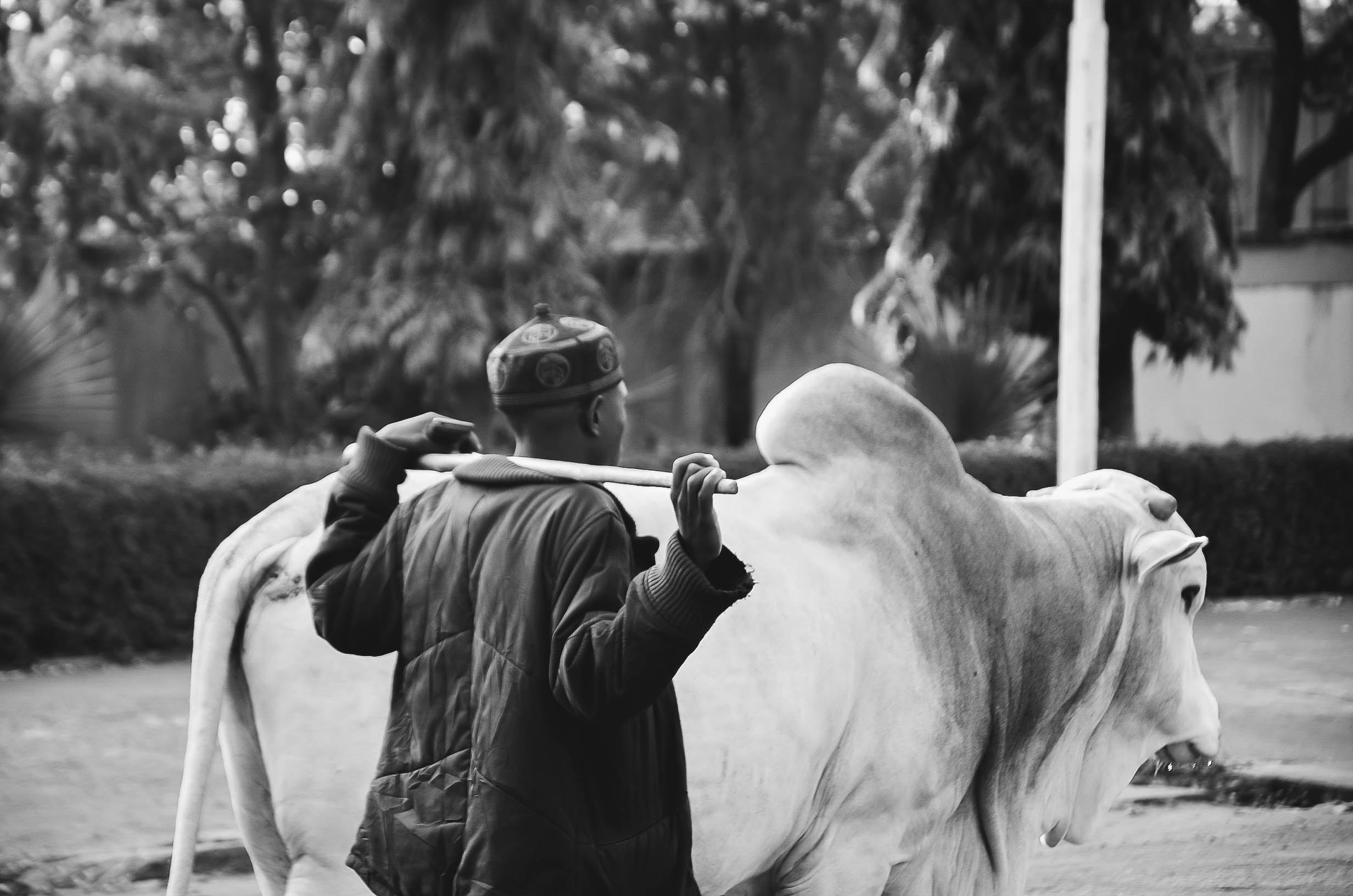
Every dry season, the same tension returns with the dust.
A herd appears at the edge of a village just after sunrise, moving like a slow river of horns and heat. A farmer walks into a field expecting green rows and finds broken stems, hoofprints, and the sick feeling that this season’s school fees may have been trampled into the soil. Someone runs to call the elders. Voices rise. Old grievances wake up quickly. And a dispute that starts with a few destroyed plants can end, if we are not careful, with injuries, arrests, revenge, or worse.
Across Africa’s Sahelian belt and forest margins, the seasonal movement of herders with cattle, transhumance, has always been a rational response to climate variability, water scarcity, and the search for pasture. But in recent decades, mobility has increasingly collided with expanding agriculture, fragile governance, and protected areas under pressure. We call it “agro‑pastoral conflict,” but behind that phrase are real lives: farmers who fear hunger, herders who fear ambush, and communities whose social fabric frays every season.
As a Cameroonian environmental engineer. My work has taken me through rural communities in Cameroon and into regional contexts. Where mobility and land governance intersect experiences that include Chad and the Democratic Republic of Congo. I have learned to be suspicious of big promises and allergic to “silver bullets.” I’ve also learned something that deserves to be said plainly: these conflicts are not inevitable. They persist not because Africans are destined to fight, but because too often we leave shared landscapes without clear rules, workable alternatives, or trusted mediation.
In five villages in my country– villages I will keep anonymous, honoring their safety and dignity– the situation looked “unsolvable” from the outside. People spoke of farmers and herders as if they were two different nations. Some had stopped attending the same markets. Small incidents traveled faster than truth. Everyone carried a memory that justified their fear.
When I arrived, I did not come as a savior with a prepackaged blueprint. I came the only way I’ve seen real solutions born: as a listener, a translator between worlds, a technical hand when needed, and often just a patient presence when meetings became uncomfortable. The communities did the hardest work. My role was to help them believe again that agreement was still possible.
One transhumant herder said to me, with the tired honesty of someone who has been blamed too many times, “We don’t move because we love wandering. We move because grass doesn’t negotiate.”
A farmer answered, not angrily, but like a father counting risks: “My field is not a map. It’s my children’s food.”
Those two sentences hold the whole crisis. Mobility keeps animals alive. Farming keeps families alive. Both are rational. Both are vulnerable. And both become dangerous to each other when the landscape has no shared design.
The real trigger is not transhumance, it is unmanaged transhumance
Transhumance becomes conflict when routes are rumors, when boundaries exist only in someone’s memory, when enforcement is selective, and when mediation comes too late. In many places, farmers expand cultivation because they must; herders shift routes because they must; local authorities improvise because they must. Necessity pushes everyone forward, and without agreed rules, forward movement becomes collision.
Climate change intensifies this. Rainfall becomes erratic, water points shrink, and pasture calendars break. Add demographic growth, land pressure, and a lack of transparent governance, and the conflict becomes a match near dry grass. Yet what we saw in those five villages is that with systems, conflict can be redesigned into coexistence.
What changed: from seasonal chaos to predictable coexistence
The turning point was when everyone accepted one hard truth: peace is not only a moral decision. It is an infrastructure decision.
We stopped treating conflict as an emergency to manage and started treating it as a design problem to solve. That shift opened space for practical, replicable steps. Steps that can work beyond Cameroon, even if every geography demands adaptation.
1) We made transhumance corridors real, visible, known, and monitored.
The first breakthrough was agreeing on clearly defined corridors for cattle movement. Not simply “a direction,” but a recognized pathway: where herds can pass, where they cannot, how close to farms, at what periods, and under what conditions.
We worked with herders’ representatives, farmers, traditional authorities, youth, and local administration to map routes and validate them publicly. Then came the unglamorous part that makes or breaks everything: visibility. Simple signage. Community awareness. Local monitoring. A corridor cannot live only in minutes from a meeting. It must exist on the ground.
Corridors protect herders from ambush and protect farmers from surprise. And when violations happen, as they sometimes will, people can address them as incidents, not as ethnic or collective provocations.
2) We micro‑zoned multi‑use areas instead of pretending “everything belongs to everyone.”
The second step was micro‑zoning. Identifying grazing zones, buffer spaces near farms, and sensitive areas where herds should not enter. This mattered especially around water points and near areas with conservation value.
Uncertainty is a hidden fuel of violence. When nobody knows what tomorrow’s movement will look like, everyone prepares for the worst today. Micro‑zoning reduced uncertainty. It gave predictability back to daily life.
3) We promoted forage plots as conflict prevention, not as a technical add‑on.
One practical change mattered more than many speeches: feed. We encouraged forage solutions not as a technical add-on but as conflict prevention. And in our context, one plant helped more than we expected: Bourgou (Echinochloa stagnina).
Where it could be grown, Bourgou became a local feed reserve that reduced desperate grazing at the edges of farms and sensitive zones. It didn’t eliminate mobility, but it softened the pressure points. Those tense weeks when animals are hungry, fields are vulnerable, and a single mistake can ignite a season of retaliation. In short, Bourgou gave both sides breathing room: herders gained a reliable feed option, and farmers gained fewer surprise incursions.
4) We formalized simple, clear, and publicly understood agreements.
We supported the development of straightforward local agreements: who does what, what happens when animals destroy crops, how compensation is assessed, what penalties apply, and which committee handles the first response.
The purpose was not paperwork. It was shared memory. In fragile contexts, verbal commitments can die the moment a leader changes or a rumor spreads. A simple written agreement explained publicly creates a reference point stronger than gossip.
5) We made awareness sessions about responsibility, not lectures.
We held dialogues that treated both sides as full stakeholders. Herders discussed herd control, rules for passage, and respect for farms. Farmers discussed avoiding cultivation that blocks corridors, reporting incidents early, and preventing retaliation. Traditional authorities clarified mediation roles. Youth proposed practical monitoring ideas. Women often excluded raised household food security concerns that forced everyone to see the cost of conflict more clearly.
When people speak as humans with problems, stereotypes lose power.
6) We confronted the corrosive role of corruption and weak capacity.
I will say this carefully but clearly: many conflicts are worsened when enforcement is selective, when passage becomes a “fee,” when fines disappear, or when illegal practices are tolerated. Beyond governance, this is a violence issue.
We advocated for stronger local capacity: better logistics, clearer procedures, and transparent handling of cases. Even modest improvements, consistent monitoring, recorded mediation outcomes, and predictable sanctions can rebuild trust.
In those five villages, we didn’t create paradise. We created predictability, and that alone reduced fear. People began sharing information again about routes, water points, and timing. What looked impossible from the outside became normal because communities chose clarity over rumor and systems over revenge. My contribution was modest but specific: helping people sit in the same circle long enough for suspicion to turn into a plan.
If that can happen in five anonymous villages, it can happen elsewhere. Not because contexts are identical, but because the principles travel. And the sooner we treat peace like infrastructure, the fewer seasons we will spend rebuilding what a single preventable clash can destroy. That is what happens when liberty meets opportunity.
We roast sacred cows medium-rare. Help fund the habit!
This piece reflects the author’s views, not necessarily the entire magazine. We welcome a range of pro-liberty perspectives. Send us your pitch or draft.