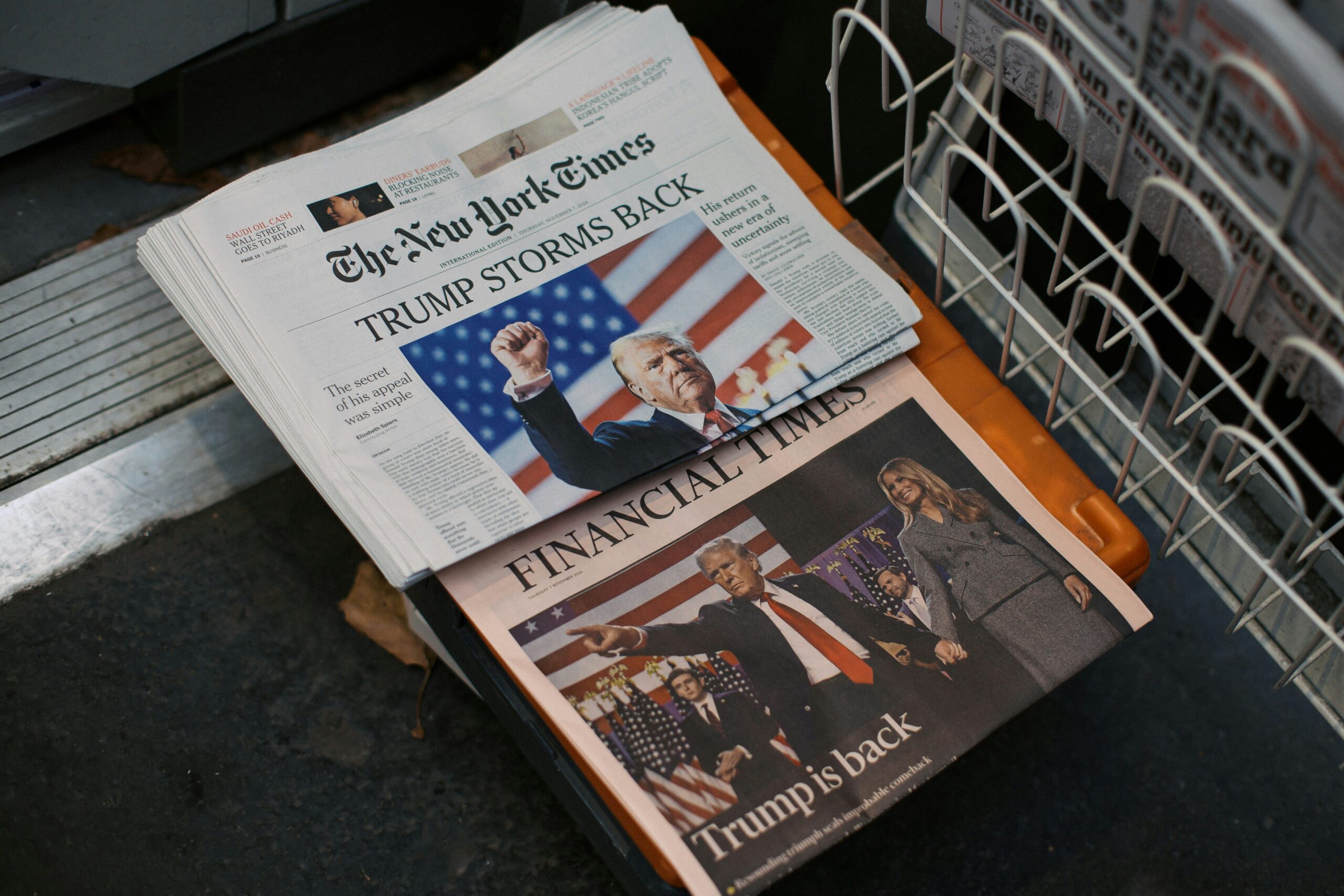
Following President Donald Trump’s return to the White House, he boldly reintroduced the “America First” agenda, determined to end “forever wars” and reduce U.S. global commitments. However, as he enters his second year, his foreign policy has taken an assertive turn, moving decisively away from his original isolationist approach. This new direction, referred to as the “Donroe Doctrine,” is marked by unilateral and coercive actions. Despite initial promises to challenge past foreign entanglements and advocate for a reduced global footprint, Trump has shown a growing readiness to deploy military power, prioritizing consequential performances and attention over coherent and strategic governance.
NATO Under Pressure
From the outset, Trump made it clear that NATO allies must contribute more and align explicitly with U.S. priorities. At the NATO summit in The Hague last summer, he demanded that member states accept a substantial increase in defense spending to 5% of GDP by 2035, far surpassing the previous 2% guideline. Mark Rutte, NATO’s newly appointed secretary-general, echoed this demand, stating unequivocally that no ally could exempt itself from the 5% pledge. Consequently, nearly all NATO governments, including those initially resistant like Germany and Italy, had no choice but to comply, with only Spain negotiating an exception.
Washington has also insisted on strategic alignment with U.S. policies, often clashing head-on with the agendas of European leaders. Trump has required strong support for his uncompromising positions on China and Iran and has demanded NATO involvement in matters far beyond its conventional scope, extending from the Arctic to South America. His offensive use of tariffs against traditional partners, such as threatening European car tariffs to influence a Chinese telecom deal, has only heightened tensions. These tactics have left NATO leaders on edge, fully aware that future ultimatums from Trump are a looming threat.
Greenland and Chilled Alliance
Trump’s audacity has tested U.S. alliances, particularly in the case of Greenland. Intrigued by its strategic location and mineral wealth, he aggressively pursued the idea of purchasing the island from Denmark, igniting a significant diplomatic crisis. Despite repeated assertions from Washington that Denmark should hand over Greenland for national security reasons, Danish officials firmly rejected this demand, insisting that Greenland’s sovereignty is non-negotiable.
In a meeting with Danish Prime Minister Mette Frederiksen and Greenlandic leaders, Trump bluntly suggested that taking Greenland by force could be a possibility, sending shockwaves across Europe. Major EU powers swiftly rallied behind Denmark, publicly reaffirming that the fate of Greenland is not Trump’s to dictate. NATO allies coordinated military measures to reinforce Denmark’s position, with Denmark and Greenland inviting NATO members to strengthen patrols around the island.
This confrontational tactic has pushed NATO into uncharted territory, shattering the long-held taboo against one NATO nation threatening another’s territory. The repercussions have strained transatlantic relations, prompting European leaders to accelerate efforts to reduce their dependence on Washington. Under mounting pressure, the White House attempted to backtrack by withdrawing a threat of tariffs on Danish goods and ruling out a military invasion of Greenland, but the damage was already substantial. This episode exemplifies the Donroe Doctrine in action: a bold power play that captures headlines and projects strength yet undermines alliance unity and global norms.
Venezuela Raid
Trump’s Arctic strategy echoes 19th-century land grabs, while his Latin America policy channels the “big stick” interventions of the 20th century. On January 3, 2026, U.S. special forces executed Operation Absolute Resolve, a daring raid into Venezuela that captured President Nicolás Maduro in Caracas. Once transported to New York, Maduro was swiftly indicted on longstanding narcotrafficking charges, with Trump noting that the operation “felt lifted from a blockbuster” movie.
The world reacted with shock, drawing immediate parallels to U.S. Cold War interventions, such as the overthrow of Chile’s Salvador Allende in 1973. Trump embraced these comparisons, invoking the Monroe Doctrine and asserting a Trumpian corollary, what insiders now refer to as the “Donroe Doctrine”, aimed at reasserting American dominance throughout the Western Hemisphere.
Trump’s aggressive maneuver effectively dismantled Maduro’s government, accomplishing in hours what years of diplomatic pressure could not. However, the administration failed to implement a post-Maduro plan, lacking necessary peacekeeping forces or a transitional government. Though officials briefly considered a U.S. occupation authority, they quickly abandoned this critical idea.
Now, Venezuela is in a state of uncertainty, with a sympathetic interim leader installed. Yet it remains unclear how long U.S. forces will support the new regime. Secretary of State Marco Rubio has unveiled a “three-phase plan” that demands compliance from Maduro’s holdovers, including the removal of foreign advisors, significant market reforms to open the oil sector to U.S. companies, and the release of political prisoners. Meanwhile, the U.S. Navy enforces a blockade on vessels suspected of carrying sanctioned Venezuelan oil, continuing a campaign initiated by Trump months before the raid.
Iran Strikes and Brinksmanship
The Middle East has also felt significant repercussions from Trump’s departure from the “no more wars” policy. Tensions with Iran escalated during his second term, particularly after a U.S. intelligence warning in June 2025 indicated that Iran was just two weeks away from producing weapons-grade uranium. Israeli Prime Minister Netanyahu responded with a preemptive airstrike on Iran’s nuclear facilities.
Initially considering negotiations, Trump quickly pivoted to support Israel as Iranian retaliation intensified. On June 22, he authorized U.S. strikes on Iran’s nuclear sites, the first direct American bombing of Iran in decades. Trump claimed that these strikes obliterated Iran’s nuclear infrastructure, but analysts revealed that the program could be rebuilt, undermining his assertion and shattering any illusions of a non-interventionist approach.
Tehran vowed revenge, leading to clashes between Iranian-backed militias and U.S. forces. By late 2025, amid economic turmoil, large-scale protests erupted in Iran calling for the Supreme Leader’s ousting. The Trump administration supported these protests, warning of severe consequences if Iran responded violently. Despite threats of war, Iranian leaders signaled an interest in talks. The U.S. tightened sanctions while avoiding direct intervention, which resulted in the protests losing momentum after the killing of thousands. Trump’s Iran policy highlights the contradictions in his foreign agenda.
Unbound Superpower – Without the “Pax Americana”
One year into Trump’s second term, his administration’s foreign policy demonstrates a clear trend: it has adopted a bold, power-driven global stance that discards the framework of traditional Pax Americana. Unlike previous U.S. presidents who couched military actions within a broader commitment to international values and alliances, Trump regards allies merely as tools or obstacles, dismissing established international norms as impediments. The U.S. exerts its influence in a raw, transactional manner, prioritizing its own interests above all else, and fundamentally shifting from a role as a global stabilizer to that of a deal-maker and enforcer.
This approach has undoubtedly produced striking moments and visible victories that energize Trump’s base, but it comes at the expense of U.S. moral authority. How can Washington credibly oppose China’s expansionist actions or Russia’s territorial aggression when it claims the right to annex parts of NATO allies’ territory for itself? By dismantling the rules-based order it once championed, the U.S. risks inviting other nations to follow suit, eroding global stability.
Supporters might argue that these criticisms miss the mark, asserting that Trump’s unapologetic “America First” stance finally prioritizes U.S. interests over international niceties. They might contend that allies should align with U.S. goals, and that adversaries should respect nothing but strength. They can attribute substantial European defense spending increases, decisive actions in Venezuela, and firm messaging toward Iran to Trump’s powerful approach, viewing him as a leader unchained from the burdens of global policing.
However, there is a glaring contradiction: Trump rose to power by denouncing foreign interventions, yet he now embarks on unilateral actions devoid of any comprehensive global vision. The United States wields immense power but fails to provide the leadership needed on the world stage. This has prompted allied nations to rethink their security arrangements, preparing for the possibility of a fickle Washington.
In essence, Trump’s second-term foreign policy can be aptly summarized as “might makes right, American-style.” This doctrine, while lacking an official name, merges isolationist rhetoric with aggressive interventionism, reflecting a U.S. that claims to focus on its own interests while forcefully intervening in global affairs when it serves the President’s purposes.
Good reporting is cheaper than heavy-handed regulation. Support freedom and independent journalism by donating today.
This piece reflects the author’s views, not necessarily the entire magazine. We welcome a range of pro-liberty perspectives. Send us your pitch or draft.