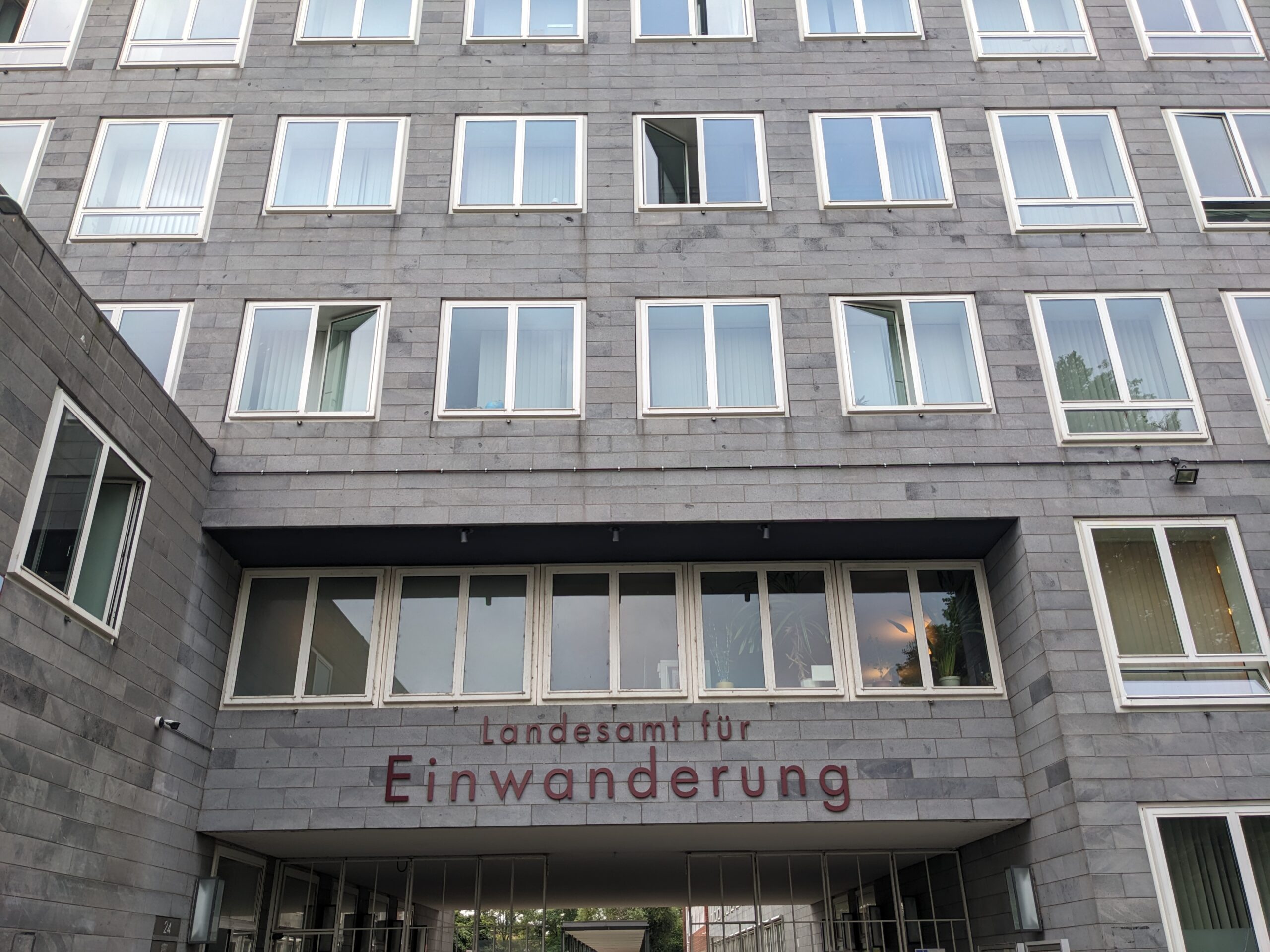
As the year 2026 begins, Germany is already starting to experience the consequences of the increasingly restrictive asylum policies it pursued throughout 2025. Faced with mounting public pressure driven by the rise of anti-immigration political movements and widespread outrage over surging asylum applications, the federal government responded by tightening border controls, reducing social and financial assistance available to asylum applicants, and making access to the asylum system itself more difficult. These measures were presented as “necessary” steps to save public money and restore state “control” over migration. The language of fiscal responsibility and order dominated the political narrative, even as the real structural problems remained untouched.
At the same time, and in stark contrast to the political messaging coming from Berlin, German business leaders spent much of 2025 sounding increasingly urgent alarms about deepening structural labour shortages. Employers warned that persistent gaps in construction, transport, logistics, and healthcare were undermining economic growth, degrading the quality of services provided by public institutions, and threatening Germany’s long-term competitiveness. These warnings were not isolated complaints from individual firms, but coordinated and highly public calls for action from across the business community, reflecting a labour market under sustained strain.
These two developments were never contradictory. Instead, taken together, they exposed a fundamental flaw within Germany’s broader framework for protecting and managing asylum seekers. Germany is not overwhelmed by asylum seekers. Rather, it has constructed an asylum system that systematically prevents asylum seekers from obtaining employment and then punishes them for relying on the very financial assistance the state makes unavoidable. The perceived crisis is not one of numbers, but of policy design. By restricting access to work, the system itself manufactures dependency and then treats that dependency as evidence of failure.
Political pressure played a decisive role in both the continued electoral strength of the AfD and the federal government’s decision in February 2025 to reduce cash assistance and intensify border enforcement. In many municipalities, these measures were welcomed as symbolic relief from the rising costs of housing and social services. Local governments, already under budgetary strain, saw them as a visible signal that something was finally being done. Yet one crucial question was never seriously addressed: how much of those costs were the direct result of legal barriers preventing asylum seekers from entering the labour market? These barriers do not exist because asylum seekers are unwilling to work, but because the state actively prevents them from doing so.
Throughout 2025, Germany continued to face a persistent shortage of workers. At the beginning of January, the Federal Employment Agency reiterated that even amid an economic slowdown, demand for labour remained strong in construction, transport, logistics, and healthcare. These are precisely the sectors in which many asylum seekers could realistically enter employment shortly after arrival. Yet despite this clear overlap between labour demand and available workers, many asylum seekers remained trapped in administrative limbo. They waited months or even years for work permits, status clarification, and bureaucratic approvals, during which time they were legally prohibited from earning an income.
Even when formal permission to work is eventually granted, employment remains constrained by a dense web of regulation. Tight occupational rules, deep mistrust of foreign credentials, and lengthy, complex, and costly recognition procedures continue to block access to jobs. For many migrants who possess relevant skills, these regulatory hurdles persist long after they are legally allowed to work. Research from the OECD consistently shows that licensing systems function as major impediments to migrant employment, leading to lower employment rates and prolonged dependence on welfare support. While these systems are often justified in the language of safety and quality assurance, in practice they act as protectionist barriers that shield insiders from competition and exclude outsiders regardless of their capabilities.
The housing and welfare support provided to asylum seekers is therefore not the result of voluntary dependency, but the predictable consequence of enforced exclusion from the labour market. This dynamic fuels social tension and public resentment, reinforcing the narrative that migrants are a fiscal burden on society. Yet this burden is largely manufactured by government policy itself. As Milton Friedman warned decades ago, combining an extensive welfare state with a heavily regulated labour market produces political conflict that cannot be resolved. Not because people move, but because they are prevented from contributing.
Employment remains the most effective mechanism for integrating individuals into society. Through work, people become self-sufficient, build social trust, and align their incentives with those of the broader community without coercion. The European Commission has repeatedly shown that early access to the labour market reduces long-term welfare dependence and significantly improves integration outcomes. By contrast, prolonged exclusion from work erodes skills, entrenches dependency, and pushes individuals toward informal or underground economic activity. The International Organization for Migration has identified extended labour exclusion as detrimental not only to economic outcomes, but also to the humanitarian objectives of the migration process.
Viewed from early 2026, Germany’s asylum crackdown of 2025 treated asylum seekers primarily as costs to be managed rather than as individuals with the potential to contribute positively to society but who are constrained by regulation. But this logic should be reversed. Instead of constructing institutional barriers that generate dependency, asylum seekers should receive immediate access to the labour market upon registration. Unnecessary licensing requirements should be eliminated, credential recognition should be driven by employers rather than monopolised by the state, and self-employment should be legal from day one. Welfare, rather than serving as a substitute for participation, should function as a temporary safety net that supports the transition into work.
The asylum policy debate is often framed as a choice between compassion and control. In reality, it is a choice between bureaucratic exclusion and human agency. A system that restricts access to employment while tightening benefits does not restore control, it entrenches the wrong incentives and deepens social conflict. If the lessons of 2025 are taken seriously, then sustainable control in 2026 will not come from harsher restrictions, but from allowing people to work.
We roast sacred cows medium-rare. Help fund the habit!
This piece reflects the author’s views, not necessarily the entire magazine. We welcome a range of pro-liberty perspectives. Send us your pitch or draft.