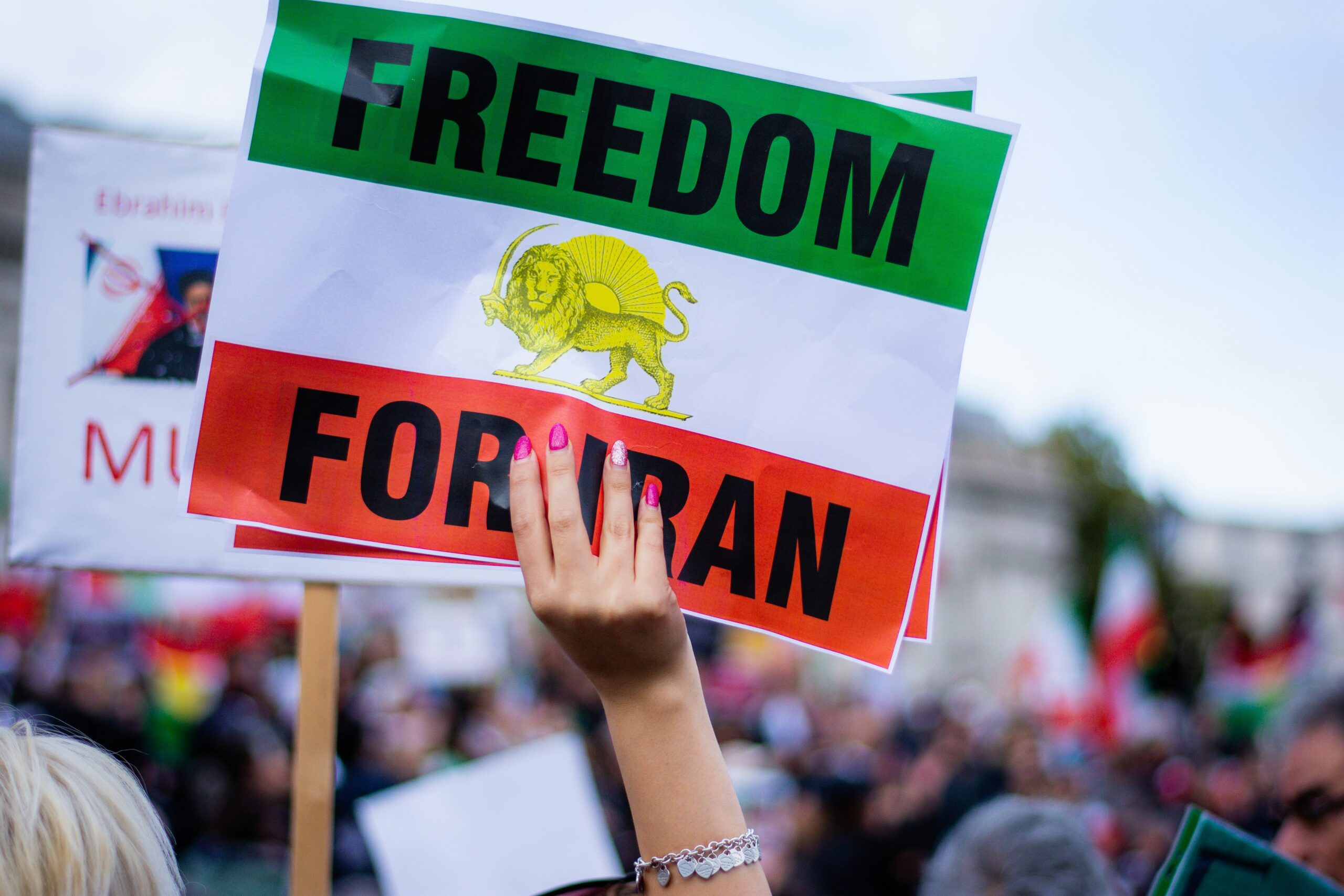
In January 2026, Iranian authorities responded to nationwide protests over economic grievances with significant violence. Security forces opened fire on demonstrators, resulting in numerous civilian deaths within days. Reports and videos indicate that since January 8, troops and Basij paramilitary snipers have been stationed on rooftops, deliberately targeting protesters. Hospitals received large numbers of gunshot victims, while families searched morgues for missing relatives. Footage from Tehran’s forensic center showed many bodies, as authorities restricted internet access to limit information about the events. The scale of violence since January 8 is unprecedented in Iran’s recent history.
Deaths, Arrests, Blackouts and Threats
Recent events in Iran require urgent international attention, as credible sources report over 2,600 civilian deaths from protests within two weeks. To put this in perspective, the 2009 protests resulted in approximately 150 deaths, and the 2022 unrest saw about 400 fatalities over several months. Eyewitnesses describe security forces using military weapons against crowds and firing on fleeing demonstrators. In response, authorities imposed a near-total internet blackout on January 8, restricting access to social media and news sites.
The crackdown has resulted in mass arrests, with rights groups estimating over 19,000 people detained, including many young people and children. Among them is a 16-year-old student named Amir who was taken from his home in the middle of the night. His family reports that Amir was actively participating in peaceful protests advocating for economic reforms. Since his arrest, his family has been unable to contact him and fears for his well-being. Detainees reportedly face poor conditions in prisons, including allegations of torture. Iranian officials have labeled protesters as ‘savage armed terrorists’ and attributed the unrest to foreign influence.
Additionally, a senior Iranian official warned neighboring countries of possible retaliation against U.S. bases if the United States intervened. This statement highlights Tehran’s intent to maintain power through threats of force.
Exporting Instability
While the Iranian government suppresses domestic dissent, it continues to influence regional stability through proxy groups and alliances. For decades, the Islamic Republic has supported organizations from Lebanon to Yemen, as seen in its involvement in rocket launches in Gaza, drone operations in Yemen, and militia activities in Syria and Iraq. Ongoing protests have not deterred these external actions. Some analysts suggest that foreign campaigns may be used to divert attention from internal unrest.
During the Gaza conflict last year, Israel targeted groups supported by Iran, including Hamas in Gaza and Hezbollah in Lebanon. Houthi rebels also launched missiles at Israel, aligning themselves with Iran’s “Axis of Resistance.” These events demonstrate how Tehran’s support enables these groups to affect regional security.
In Syria, Iran’s Quds Force supports the government of Bashar al-Assad. In Iraq, Iranian-backed militias have challenged the Iraqi state and targeted U.S. forces. Iran’s support for Houthi insurgents in Yemen has contributed to the ongoing humanitarian crisis. In Lebanon, Hezbollah, backed by Iran, has been involved in conflict with Israel. These groups serve as extensions of Iranian influence through proxy activities.
Iran’s support for militant groups impacts both regional stability and its own economy, as resources are allocated to foreign militias. Many Iranians have expressed concern about this, as seen in protest chants such as “No Gaza, no Lebanon, we give our lives for Iran!” Analysts note that Iran’s foreign policy has contributed to its international isolation. When Israel and the U.S. targeted Iranian assets directly in 2025, the regime’s network of proxies was unable to provide effective protection.
Iran’s policy of supporting instability abroad underscores the importance of addressing its domestic actions to promote regional peace. The Revolutionary Guards, implicated in domestic violence, are also involved in conflicts in neighboring countries. This pattern suggests that internal repression and external aggression are closely linked, as the same command chain that orders repression at home funds and directs militant activities abroad. This dual strategy ensures the regime’s survival by maintaining control internally while projecting power externally.
The Nuclear Threat In Focus
Iran is experiencing internal repression alongside a renewed nuclear crisis. Despite calls for freedom from protesters, the government has accelerated its nuclear program. After breaching the 2015 nuclear deal limits in 2018, Iran enriched uranium to higher levels by 2025. In mid-2025, Israel, with U.S. support, conducted airstrikes on Iranian nuclear facilities to slow potential weapons development. Although some infrastructure was damaged, Iran responded by suspending full cooperation with UN inspectors, creating uncertainty about its nuclear material.
This crisis highlights the urgency of addressing Iran’s domestic situation. A government that represses its citizens may also pursue nuclear weapons if it perceives external threats. In fact, the same disregard for human life that drives domestic repression often parallels the reckless pursuit of nuclear capabilities. The UN Security Council has reinstated certain sanctions due to Iran’s noncompliance with uranium regulations, which Iran has continued to challenge, relying on its geopolitical position. Iran’s nuclear ambitions present a significant global concern, and addressing them is essential to confronting its related human rights issues. By curbing Iran’s domestic abuses, there is also an opportunity to diminish its nuclear aspirations, as both are linked in the pursuit of international peace.
Responsibility To Protect (R2P)
How should the world respond when a government wages war on its own people? The answer lies in the Responsibility to Protect (R2P) doctrine, established after the Rwandan genocide and the Srebrenica massacre. R2P asserts that every state has a duty to protect its population from genocide, war crimes, ethnic cleansing, and crimes against humanity. If a state fails in this duty or becomes a perpetrator itself, the international community must act.
In Iran’s case, R2P is particularly relevant. Reports indicate that security forces have committed serious human rights violations, including murder, torture, and the persecution of civilians. Tehran has failed to protect its population, thereby invoking the R2P principle and the need for an international response.
Initial measures should include diplomatic isolation, sanctions, and increased UN scrutiny. If these efforts are insufficient and violations continue, R2P permits stronger actions through the UN Security Council. In summary, the principle of non-interference should not prevent action in response to ongoing violence. The same doctrine that justified intervention in Libya in 2011 is applicable to the current situation in Iran.
The World Must Act
Available evidence indicates that the Islamic Republic of Iran is committing serious human rights violations, destabilizing the region, and advancing its nuclear program. The international community should not remain passive. Global leaders are encouraged to convene an emergency session of the UN Security Council to address the crisis. The Responsibility to Protect (R2P) doctrine provides a framework for immediate international action. The international community should consider invoking R2P to protect the Iranian people from further violence through specific measures.
This process should begin with increased peaceful pressure, including a comprehensive diplomatic campaign, stricter sanctions on financial support, and the isolation of key leaders. Countries that prioritize human rights are encouraged to downgrade or suspend diplomatic ties with Tehran until the violence ceases. Individuals responsible for violence against protesters should be identified and sanctioned, with their assets frozen and their travel restricted.
The international community should also prepare for further action if violence continues. If peaceful efforts are unsuccessful, collective intervention may be required under the third pillar of R2P. This could include limited, UN-authorized measures to protect civilians, such as a no-fly zone or a humanitarian corridor. The U.S. and allied forces should begin contingency planning, pending international approval. The possibility of intervention has already resulted in some changes, such as Tehran pausing planned mass executions.
In addition to immediate measures, the international community should prepare for a potential transition in Iran by engaging with opposition groups and supporting efforts toward a government that upholds human rights. Coordination with regional partners is essential to maintaining stability during periods of change. The protesters’ call for “Woman, Life, Freedom” highlights the contrast with the current regime, and supporting their aspirations aligns with broader international interests.
The events between January 8 and January 15, 2026, underscore the urgent need for international action regarding the Islamic Republic of Iran. Preventing further violence against civilians, regional destabilization, and the pursuit of nuclear weapons is essential. The Responsibility to Protect doctrine calls for decisive measures in such situations. The international community has tools at its disposal, including sanctions, international justice mechanisms, diplomatic isolation, and, if necessary, a credible threat of force to protect civilians. Decisive action is required to support the Iranian people and to promote global stability.
Not a cent from the state, ever. Keep us stubborn. Donate today!
This piece reflects the author’s views, not necessarily the entire magazine. We welcome a range of pro-liberty perspectives. Send us your pitch or draft.