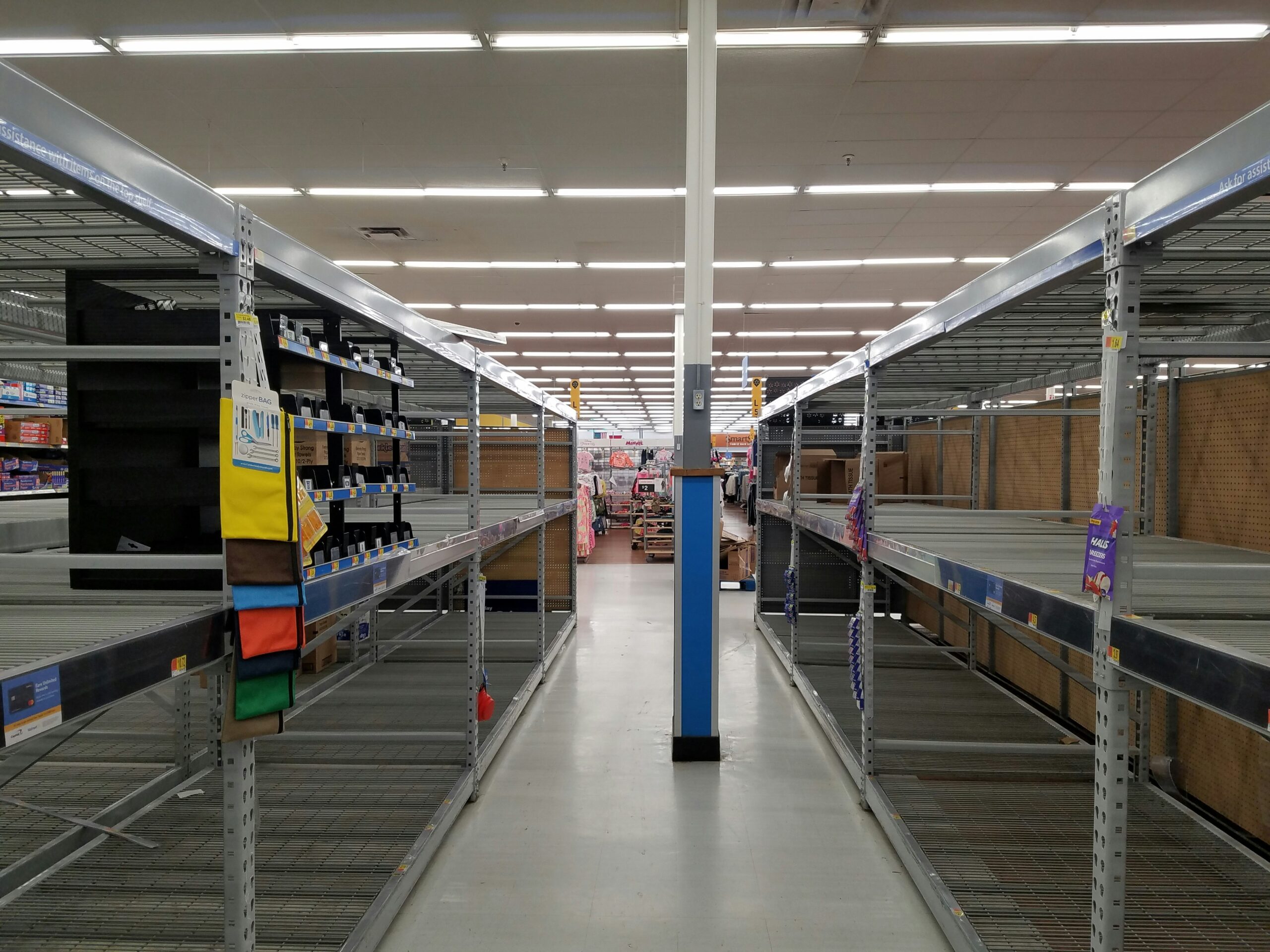
If there is one lesson the 20th century should have taught us, it is that governments make poor grocers. The image of Boris Yeltsin standing in a Texas supermarket in 1989, stunned into silence by the abundance of a randomly selected American grocery store, remains one of the most powerful indictments of central planning ever recorded.
Yet, in New York City, history is being ignored. After just a month, the mayor is already involved in a controversy surrounding his refusal to clear homeless encampments, with tragic results. Despite these early failures, the enthusiasm among young people and Democrats is still high. Although he has yet to implement his major policies, as we near the midterms and the Democrats choose their platforms, it’s worthwhile to revisit some cautionary tales of the socialist guru’s ‘great ideas’. Obviously, what Mayor Mamdani has in enthusiasm, he lacks in public policy. Previously, I covered the failure of rent controls. Now, I’ll look into the economic fallacies behind state-run grocery stores.
The Theoretical Failure
Mr. Mamdani’s plan involves the city opening and operating grocery stores in underserved neighborhoods, often called “food deserts.” The core argument is that private grocers are “greedy” and that the state, by bypassing the profit motive, can offer lower prices. This sounds benevolent, but it is a fundamental misunderstanding of retail economics. The “profit motive” that Mr. Mamdani derides is the critical efficiency signal that keeps shelves stocked, waste low, and logistics optimized.
The premise that “corporate greed” is driving high food prices collapses when examining the data. The grocery industry is famously one of the most competitive and low-margin sectors in the entire economy, operating on razor-thin profit margins. According to the Food Industry Association (FMI), the average net profit margin for grocery stores in 2024 was approximately 1.7%. To put that in perspective, for every $100 a customer spends at a supermarket, the owner keeps less than $2. The rest goes to paying farmers, truckers, stockers, energy bills, and taxes.
There is effectively no “fat” for the government to trim. If a private operator with decades of logistical experience can barely squeeze out a 1.7% margin, it is an economic fantasy to believe that a city bureaucracy, operating with the infamous unionized public sector labor costs, without the discipline of competition and with taxpayer subsidies waiting to be handed out, can do it cheaper. Instead, the government store will inevitably operate at a fiscal deficit, requiring constant taxpayer bailouts to stay afloat.
Furthermore and perhaps most important, this policy creates a “crowding out” effect. New York City is famous for its independent bodegas, many of which are owned by immigrants operating on the same razor-thin margins. If the city opens a subsidized store nearby that pays no rent, no property tax, and operates at a loss, local private grocers cannot compete. The result will be the destruction of the private small business ecosystem, leaving small communities with fewer choices, and, more extreme, possibly dependent on a single, state-run monopoly, a phenomenon economists warn reduces long-term food access.
The (Abundant) Practical Evidence: Kansas, Florida, Missouri and some optimism in Chicago
Again, Mayor Mamdani’s great innovations are not actually new (nor are they innovations). We do not have to guess what happens when municipalities play shopkeeper, as we have specific data from cities that have recently attempted this very policy.
Erie, Kansas
In 2020, the town of Erie, Kansas, purchased its only grocery store to prevent it from closing, rebranding it as the “Erie Market.” Despite initial optimism, the reality of retail economics quickly set in. While the mayor calculated that the store needed each resident to spend an average of $50 per month to break even, actual spending hovered around just $14. Why? Because consumers vote with their wallets. Plagued by the inherent inefficiencies of public management, the store could not match the supply chain logistics or wholesale purchasing power of the private sector. Residents simply crossed the street to Dollar General or drove 15 miles to Walmart, where prices were lower. By 2024, the store had become a financial burden on the town, with losses totaling over $132,000 in a single year. Facing this fiscal black hole, the city announced it would lease the store to a private operator, effectively privatizing it to stop the waste.
Baldwin, Florida
In 2019, the town of Baldwin, Florida, opened the “Baldwin Market”, to serve a food desert, with the mayor promising it would cover its own costs. It did not. Despite not having to pay rent or property taxes, the store could not compete with the pricing power and logistical efficiency of private chains. By 2022, the store had accumulated a deficit of $171,000. Once again, the financial strain became unsustainable, and in February 2024, the town permanently closed the store. The experiment cost taxpayers hundreds of thousands of dollars and ultimately left the community with an empty building.
Kansas City, Missouri
Perhaps the most amazing example comes from Kansas City, where the city government spent an outstanding $18 million in taxpayer funds subsidizing the “Sun Fresh Market” in a distressed neighborhood. The idea was that if the government simply provided a state-of-the-art facility, success would follow naturally. This definitely didn’t happen. Because the store was shielded from true market discipline, operational standards collapsed. Residents, namely the very people the store was built to serve, routinely complained of empty shelves, rotting produce, and expired meat.
The store quickly became a symbol of dysfunction, with customers driving past the subsidized market to shop at reliable chains further away. Despite the city pumping in additional emergency funds to keep the lights on, the fundamental lack of market competence could not be mitigated. The operator fell behind on rent (which was owed to the city), and the store kept losing money. Finally, in August 2025, the inevitable happened: the store closed its doors for good. The $18 million “investment” did not solve food insecurity. Instead, it merely redistributed wealth from taxpayers to a failed project, leaving the neighborhood with an empty building.
Chicago
This story has a positive outcome. Chicago, under the administration of Mayor Brandon Johnson, managed to back away from the cliff. After announcing a bold plan to explore city-owned grocery stores in 2023, the administration effectively abandoned the idea by 2025. Despite a feasibility study claiming it was possible, the city shifted its focus to supporting private markets, tacitly acknowledging that the operational complexities and financial risks of direct ownership were simply too high. Since he still has to implement such a policy, Mr. Mamdani would be wise to follow Chicago’s lead. Retreating now would be a rare act of prudence – one we can only hope he applies to the rest of his agenda.
Conclusion
The comparison between the political promise and the economic reality is clear. Just as rent controls lead to housing scarcity, government-run grocery stores lead to fiscal insolubility and eventual closure. The failures of these initiatives in Kansas, Florida, and Missouri clearly illustrate this point. Food deserts are a real problem, but they are not caused by “greedy shopkeepers.” Academic literature suggests they are often caused by supply-side constraints such as high crime rates, which make insurance unaffordable; punitive taxation, which kills low-margin businesses; and zoning regulations that stifle development. However, sadly, Mr. Mamdani has proved, time and time again through his speeches and, more recently, his actions, that he has no real interest in solving the issues he claims he cares about. This is even more tragic, as the enthusiasm of his followers seems genuine. Economic populism may buy votes for now. However, as the midterms approach, the Democrats should understand there is nothing to learn from Mr. Mamdani’s political strategy and (lack of) solutions.
Not a cent from the state, ever. Keep us stubborn. Donate today!
This piece reflects the author’s views, not necessarily the entire magazine. We welcome a range of pro-liberty perspectives. Send us your pitch or draft.