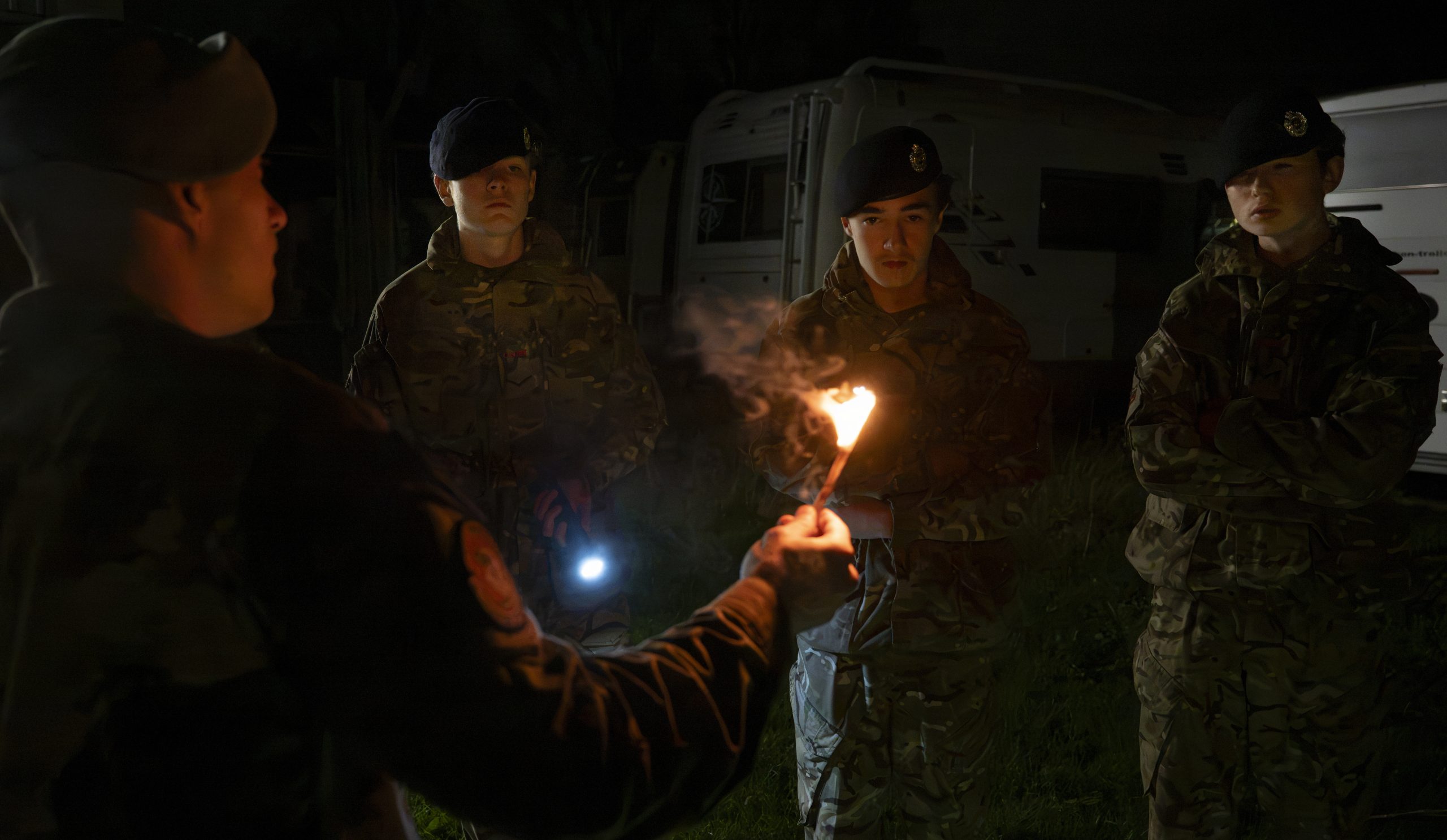
Across the Western world and beyond, war drums are beating. Recent conflicts in Ukraine and the Middle East unceasingly threaten to spiral out of control. In fact, Russia seems ever more prepared to put our firepower to the test. Realising that the peaceful status quo that we in Europe and America have enjoyed since the end of the Second World War no longer exists, governments are under pressure to join in with militarist pandering. The once staunchly pacifist Germany has pushed through new laws that monitor the movement of young male citizens and mandate medical assessment. And if it fails to reach its stated target of “Europe’s strongest army”, Berlin could move toward resuming conscription.
Across the Channel, the situation is dire. Despite plans to increase military spending, the United Kingdom repeatedly finds itself underprepared for defence. Westminster was struck by a series of resignations, first of the defence secretary John Healey and later that of the armed forces minister Al Carns, stating that the cabinet of Keir Starmer lacked the will to adequately fund the nation’s defence.
At a time when Russian ships fire warning shots in the English Channel, British submariners are expected to undergo 204-day patrols to make up for ageing equipment and a lack of personnel. Recruitment numbers are dwindling, and efforts made by successive governments don’t seem to repair the issue.
In 2024, 38 per cent of British 18–40-year-olds said then that they would refuse wartime service, even in the event of a world war. Later that year, Rishi Sunak proposed a return to national service as part of the Conservative election manifesto, before being soundly defeated by Labour.
The need for the British government to bolster defence is clear, and a citizenry that is so hostile to taking up arms doesn’t help matters. However, the posturing and open discussion of military drafts is not the road for European nations, including Britain, to follow. Not only does such conscription impinge on the rights of the individual and their conscience, but it would be detrimental to the long-term vitality and health of European nations and their citizens. States which impose military service on their citizens suffer from economic hits, failing trust in institutions and a loss of morale in their armed forces. One has only to look at the ongoing Ukraine war, in which combatants are suffering from millions of battlefield casualties, to see the how conscription serves not to strengthen cohesion, but rather to weaken it. Ukraine’s immediate survival may be assured by calling up waves of young men to the front lines, but future generations are set to suffer.
Forced military service drags young men and women away from their daily lives to pursue the ideals of patriotism, duty and valour; ideals whose allure is not to be denied. But the experience of modern combat serves only to demoralise and disenchant, as Hemingway noted in his Farewell to Arms:
Abstract words such as glory, honour, courage, or hallow were obscene beside the concrete names of villages, the numbers of roads, the names of rivers, the numbers of regiments and the dates.
We should be wary of letting states get away with increasingly authoritarian measures or propaganda campaigns to preserve their own security in a volatile political landscape. After all, it will be the young people of the United Kingdom who will bear the brunt of any remilitarisation campaign, as they abandon their plans to endure the primordial trial of warfare.
Despite the grim reality of conflict, defence is nonetheless a vital arm of governance, and one that must be considered correctly without falling either into jingoism or indecisiveness. I think that where paying tuition fees has failed to encourage young people to serve at large, the British government should instead offer an in-kind payment; a payment which would symbolise the possibility of a share in the nation itself by exchanging land in return for voluntary national service.
Offering plots of land in return for national service appears to belong to a different age, rendering the policy untenable in the 21st century. Readers who are fanatic liberals will no doubt be put off by the whiff of Communist land reform behind the idea. But this policy proposal would work in the high-tech modern era; indeed, it may be a solution to some of the United Kingdom’s many crises – military personnel shortages amongst them.
The most obvious benefit would be that the British armed forces receive new recruits, without having to impose fines or worse. Recruits will not be coerced into service but are rather given the opportunity to consider a transaction. That said, one does have to recognise that many young Brits do not relish the thought of being in the armed forces. The data is unforgiving: there will be no mad rush of national fervour any time soon. But by offering a mutual exchange rather than simply imposing emergency measures, the choice is there for young people to accept or reject as they see fit. As a project, offering land also recognises a key fact of conflict that is not being expressed to young people by governments. Rather than a Bronze Age cattle raid or an expedition that will be ‘Home by Christmas’, wars between nation-states affect every aspect of life and the future of the entire citizenry. It cannot be considered in terms of immediate gain. Land gives veterans a life to return home to, a place from which to contribute and rest.
But why the land, and not cold, hard cash as an incentive? As the English critic G.K. Chesterton wrote: “Too much capitalism does not mean too many capitalists, but too few”. British young people are finding it increasingly difficult to become property owners, and many prefer to take their chances abroad rather than face a lifetime of renting and loans. With a small plot of land, young Britons would have the chance to own, care for and develop a property. They could do with it as they saw fit, be that developing the land for housing, taking up agriculture, or, if they preferred, selling it. Given that the number of NEETs in the UK is on the rise, young people would instead be encouraged to be creative, entrepreneurial, and self-sufficient.
Inequality between land parcels would have to be reckoned with, for an acre of bramble poses different challenges to an acre of pastureland. A system of distribution would have to be set up, which could be reckoned according to length of service or military achievement. The use of green field sites would be prioritised.
Such a policy isn’t without historical precedence. Throughout the recorded history of our civilisations, land has been a reward for service. After a long stint on the imperial frontiers, Roman legionaries were granted the praemia, which often took the form of a parcel of land which would be inherited by their descendants. This policy was likewise driven by necessity after countless civil wars had left Rome’s hinterlands empty and desolate. Under the Byzantines, military units were granted dominion over entire districts as part of the theme system. Soldiers settled in these regions as farmers but were expected to defend the empire against its enemies, in a mutual agreement that saw these regions prosper and the frontiers of the Eastern empire protected.
A stake in land obliges its owner to consider the future of the property and those who will come to own it in the future. A Britain in which young people have a tangible inheritance will be one more likely to care about its wellbeing. When American writer Henry David Thoreau was given a plot of land by his friend Emerson, upon which he could build a cabin, walk, and swim, the result was On Resistance to Civil Government.