Since the first man, humans have been predestined to die. Mortality has remained the great equaliser, an inevitable fate that transcends wealth, power, and social standing. As William Shakespeare so eloquently put it, “Golden lads and girls all must, / As chimney-sweepers, come to dust.” Yet humanity might quite soon steal the fire from the gods. An increasing number of companies and researchers are spearheading efforts to enhance longevity and ensure one can enjoy longer life while remaining biologically young.
An important barrier to their efforts, however, is regulatory. European and American public health agencies bar willing patients from seeking modes of care that have not yet undergone the lengthy approval process. One such patient was Khloé Kardashian, a member of the famous Kardashian family, who sought to undergo an experimental anti-ageing intervention that had not been approved by the US Food and Drug Administration (FDA). She found such an opportunity with Unlimited Bio, a biotechnology company based in Próspera ZEDE, a city operating under a distinctive regulatory framework on the island of Roatán, Honduras.

Unlimited Bio has been developing advanced biotechnologies, including gene therapies, within Próspera’s alternative medical regulatory framework. Próspera provides a local regulatory pathway for certain gene therapies that have not received FDA approval in the United States. Under its Health Services Regulation A, gene therapy protocols must be reviewed and approved by a qualified Institutional Review Board (IRB), and healthcare providers must comply with applicable patient-disclosure and other regulatory requirements. The framework is therefore not a system of unrestricted medical experimentation, but a more lax one nonetheless.
Unlimited Bio’s interventions are currently available through independent clinics in Próspera, Mexico and the Bahamas. Kardashian reportedly received her intervention at a clinic in Mexico.
Her case points to a widespread hurdle many patients in the Western world face: the systematic denial of the right to try promising, but risky experimental interventions. This raises a fundamental question: Who should be able to choose to try a new medical technology?
From a libertarian perspective, the freedom to decide what happens to one’s own body is closely connected to individual self-determination. Your body belongs to you.
Thomas Szasz, a psychiatrist and prominent libertarian thinker, argued in his essay The Morality of Drug Controls that freedom of self-medication should be regarded as “a fundamental right.” Yet having the freedom to choose is not necessarily the same as having enough information to make that choice.
Próspera enshrines that perspective in its regulatory framework. For the biotechnology industry, it offers something particularly attractive: speed and flexibility. But earlier access also means that patients may receive an intervention before sufficient evidence of its safety and effectiveness has been established.
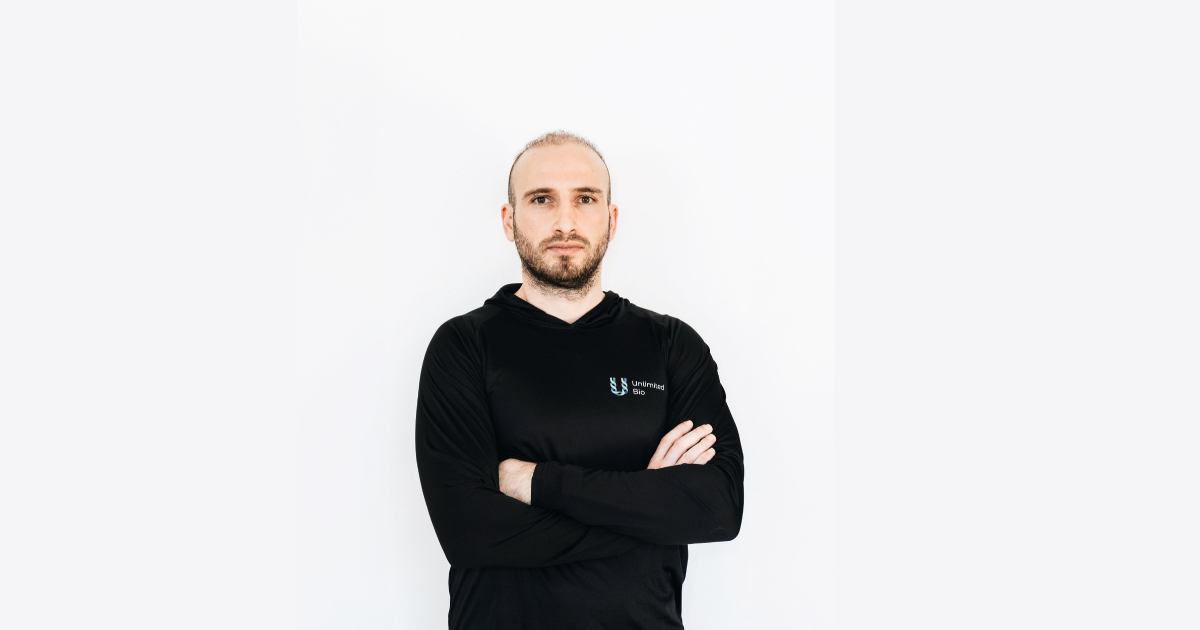
How can the individual freedom valued by libertarianism coexist with scientific uncertainty and the need to protect patients? This was the question on my mind when I spoke with Ivan Morgunov, CEO of Unlimited Bio.

The Risks of Action (and Inaction)
“My main concern is the balance of accountability.”
That was how Morgunov described one of his central concerns.
In his view, too much attention is paid to the risks created by medical interventions, while the potential benefits patients lose when access to treatment is delayed receive insufficient consideration.
“I would like the system to take both sides equally seriously: not only whom we protected from complications, but also who did not live to receive treatment,” he said.
Morgunov proposes a different approach to assessing medical risk.
“One alternative I see is mandatory liability insurance for developers and trial sponsors, with competing insurers assessing acceptable risk instead of a single regulator,” he explained.
Under this proposed model, insurers would have a financial incentive to evaluate the risks they would be responsible for covering. Rather than applying a single mandatory threshold of acceptable risk to every patient, Morgunov favours a system in which different approaches to risk assessment compete. This idea fits naturally with the philosophy of Próspera, often seen as a first case of a libertarian free city.
But how far can patients without medical expertise realistically assess the safety and effectiveness of an experimental intervention? The existence of insurance does not, by itself, establish a treatment’s scientific validity. And where should the line be drawn between continuing an experimental intervention and stopping it?
Morgunov says that his answer is based not simply on personal conviction, but on principles long established in clinical research. “The anticipated benefits must justify the risks.”
This is an important ethical principle reflected in the International Council for Harmonisation’s Good Clinical Practice guidelines (ICH-GCP) and the Declaration of Helsinki. According to Morgunov, this assessment must be revisited whenever new evidence becomes available.
If serious adverse events or new information show that the risks can no longer be justified, a study should be paused or modified, regardless of how quickly researchers want to proceed. At the same time, Morgunov distinguishes between evaluating an individual clinical trial and evaluating an entire regulatory system. “But inaction should not be assumed to be safe simply because its consequences are less visible. ”The consequences of doing nothing may be difficult to see, but that does not necessarily make inaction safe.
He argues that the additional risks of accelerating development should be weighed against the benefits that could reasonably be expected from making a therapy available sooner.
Morgunov does not believe that regulators were necessarily wrong in the past. In his view, regulations must be assessed in the context of the scientific capabilities and social circumstances of their time.
His position is therefore not so much a rejection of regulation itself as an argument for reconsidering acceptable levels of risk, and how those risks are assessed, as technology advances. The harm caused by delayed access to treatment, and the risks of receiving an intervention before sufficient scientific evidence exists, must both be considered. That, perhaps, is the essence of the accountability Morgunov is advocating.

Can a CEO’s Self-Experiment Count as Scientific Evidence?
Próspera has faced criticism for being an experimental city catering to wealthy foreigners. Its biotechnology sector, in particular, has raised concerns about patient protection and research ethics.
Yet taking advantage of regulatory flexibility is not necessarily the same as disregarding safety. The important question is what ethical standards and scientific evidence companies rely on when conducting research and protecting participants.
Morgunov himself has participated in an experiment involving his own body: an N-of-1 (single patient) study comparing the two sides of his scalp. The side treated with VEGF gene therapy showed an average hair density 20% higher than the other side, while the proportion of actively growing hairs was 12 percentage points higher.
These differences were reportedly observed under a shared protocol that included topical minoxidil, topical finasteride, 25 minutes of red-light therapy per day, scalp massage, and placebo microinjections on the control side.
The small sample size, of course, makes it difficult to establish whether similar results would be reproduced in other patients, but a CEO testing his company’s technology on his own body certainly makes an impression. He was also remarkably straightforward about the scientific value of his own experiment.
“To be honest, I do not attach much weight to my own experiment as scientific evidence either.”
According to Morgunov, the experiment was not published as a scientific paper or case report. Instead, the company shared personal experiences and observations.
There may be value in a founder demonstrating confidence in a company’s product by using it personally. But Morgunov does not believe that biotechnology developers should make self-experimentation a standard practice. He instead wanted to experience the process from a patient’s perspective and better understand the company’s operations from within.
Will Clinical Data Be Accepted Elsewhere?
Even if Próspera’s regulatory environment gives Unlimited Bio an advantage in research and development, will that advantage have value beyond Próspera itself? If the company obtains promising clinical data from an experimental intervention and regulators in major jurisdictions such as the United States or the European Union do not accept those results, the precious medical progress would be kept away from those in dire need of medical help.
And if data gathered in Próspera can contribute to international drug development, the economic case for choosing the city as a research and development hub becomes much stronger. I asked Morgunov whether he was confident that clinical data generated in Próspera would be accepted by the FDA or other major regulators.
“We still have to find out exactly how the FDA will assess our data.”However, he also pointed out that a regulatory pathway exists through which the FDA may accept foreign clinical studies conducted outside a US Investigational New Drug application (IND), provided that certain requirements are met.
Yet even not being automatically excluded is a far cry from getting accepted in a stringent regulatory review. What, then, if additional clinical trials in the United States ultimately prove necessary? Would that eliminate the advantage of conducting the original research in Próspera? Morgunov does not think so.
“Even if we have to conduct additional trials in the US, that does not undermine our business model.”Unlimited Bio sees Próspera as a place where it can seek to reduce uncertainty before entering the conventional development process. Obtaining preliminary data on the safety and potential effectiveness of promising candidates at an earlier stage could help the company decide where to make larger research and development investments. Even if further clinical trials are required in the United States, the data collected beforehand may still have scientific and commercial value, provided that they are sufficiently reliable.
My impression is that two different objectives coexist within Unlimited Bio’s vision. The first is to demonstrate the potential of more flexible medical regulation and, in the longer term, encourage changes to regulatory systems themselves. The second is to generate clinical evidence that could also be used within existing international approval frameworks, allowing the company to advance its research and development.
In other words, Unlimited Bio does not appear to be seeking merely to remain outside conventional medical regulatory systems. Rather, it seems to be exploring an alternative development pathway through which new therapies might eventually enter those systems.
A Future in Which Unlimited Bio No Longer Needs Próspera
Morgunov described his company’s ultimate goal as one in which people would no longer have to travel abroad to access treatment. “For us, Prospera is a testing ground where we can demonstrate that more flexible regulation enables the development of new therapies and delivers benefits that outweigh the additional risks,” he said.
If Prospera-based companies were to bring about an astounding medical breakthrough, the regulatory bodies in Europe and the US might very well be forced to change their approach to experimental treatments, taking away much of the free city’s raison d’être.
However, even if Unlimited Bio succeeds in developing effective therapies, that would not necessarily lead to regulatory reform elsewhere. Government institutions may be slow to change, and concerns about the safety of experimental medical interventions could continue to shape policy in countries such as the United States.
Próspera’s regulatory advantages might therefore remain valuable for years to come, even if the therapies developed there prove successful. A city founded on the promise of regulatory freedom may eventually help spread that freedom beyond its own borders.

Long Live the Elite?
While many libertarians see Próspera as a place where individual freedom can flourish, critics have described the project as a form of modern colonialism that primarily serves wealthy foreigners.
Experimental biotechnology is particularly exposed to this criticism. Advanced medical interventions may be legally available under Próspera’s regulatory framework, but legal access does not necessarily mean practical availability for the average European or American citizen.
This raises a question that cannot be answered by regulatory innovation alone: Who actually benefits from the freedom to experiment?
For those who can afford experimental treatments and international travel, Próspera may offer opportunities unavailable in their home countries. For those without such resources, however, the same freedom may exist more in principle than in practice.
Creating a zone beyond regulatory barriers does not automatically remove financial barriers. Nor does it resolve inequalities in access to information, medical expertise or the ability to travel.
Morgunov acknowledges that access to advanced therapies is already unequal. Yet he rejects the idea that this inequality is a reason to halt development. His argument is that effective technologies must first be created, with broader access becoming possible as production expands and costs decline.
His long-term vision is strikingly ambitious.
“I believe that some gene therapies could eventually cost tens of dollars. My long-term dream is for personalised combinations to become so affordable and easy to use that people could order them for home delivery — through something like Amazon — perhaps even in the form of a small pill,” he said.
There is a logic to that argument. Many technologies begin as expensive innovations available to relatively few people before becoming more widely accessible. But whether experimental longevity treatments will follow that trajectory remains uncertain.
For Próspera, the challenge is therefore not simply to demonstrate that medical innovation can move faster under a more flexible regulatory system. It is also to demonstrate that the benefits of that innovation can eventually reach beyond those who can afford to be first.
Perhaps the real test of Próspera will come not when its biotechnology companies achieve their first breakthroughs, but when the benefits of those breakthroughs begin to reach people who could never have afforded to be among the first patient.