How I learned that a real liberal sometimes makes compromises.
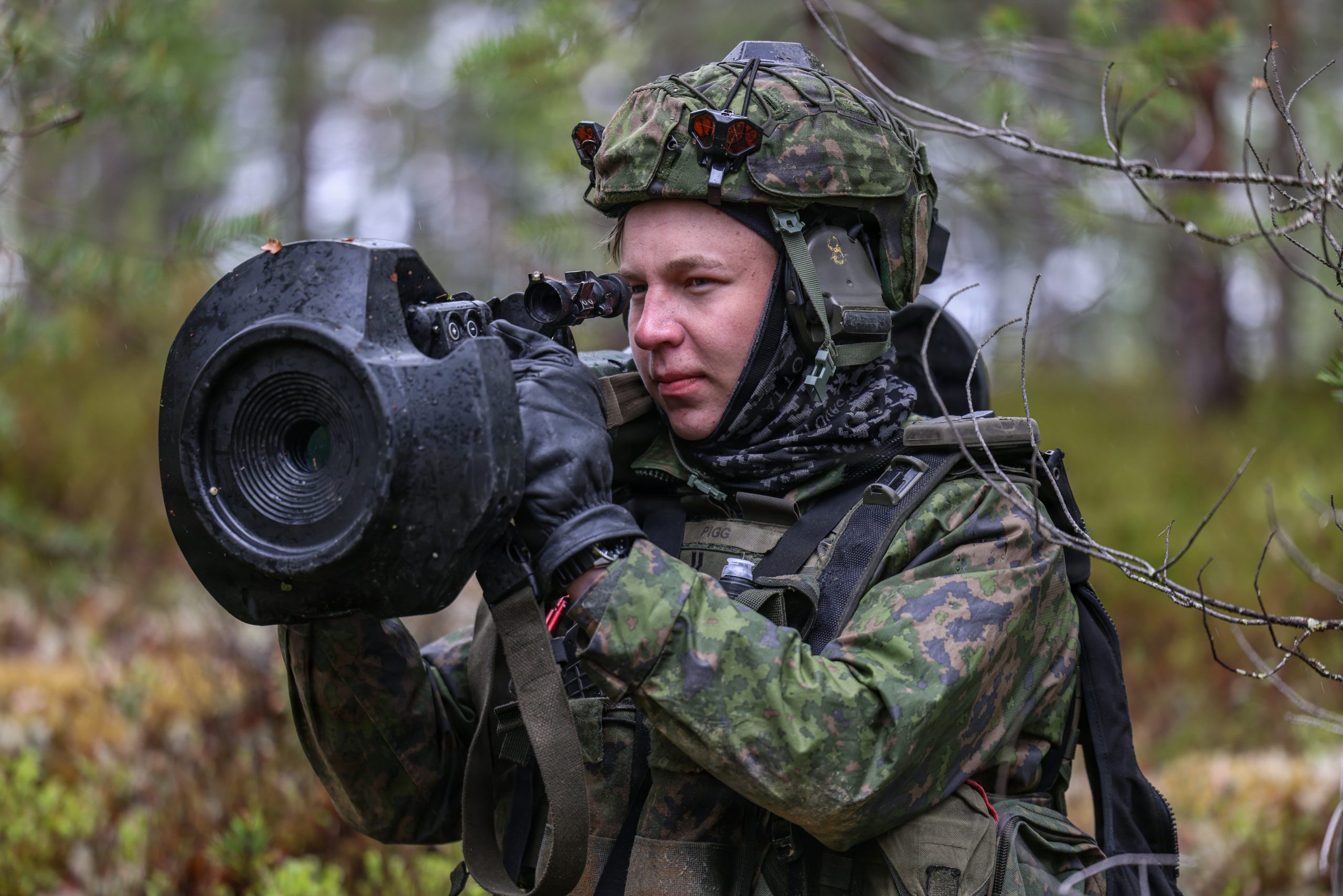
When I began my mandatory military service in July of this year, I was in for a rough surprise. After my free summer spent touring Europe and watching the FIFA World Cup, the army’s dogmatic hierarchies and evidently pointless foot drill quickly drained me of all motivation.
Throughout the six weeks of my basic military training, I fought a battle in my mind between accepting my fate and revolting against my belief in the Finnish defence model. Maybe conscription was useless all along. After two grueling weeks in the July heat, on my first weekend leave, sitting by the lake at my summerplace, I began my diary entry with the (somewhat melodramatic) words: Has this been the price for freedom all along?
For a member of a society as prosperous and liberal as Finland, entering military service is like being sent into another world. As I scribbled into my notebook on those fleeting days of freedom, I recalled staring out of the open windows of our cramped, dirty bathrooms towards the parking lot of the military base. It was a desperate attempt just to get some fresh air while brushing my teeth, getting ready for a sixteen-hour day of getting yelled at and belittled by men who had been in the same place as me six months ago.
The world outside the barracks gates felt like a distant memory.
And yet I didn’t give in, even as I considered the convincingly formulated arguments of my friend at this magazine, Iån Golan. I remained steadfast in my conviction that, for all the struggles I was going through, what I was doing was necessary for the greater good.
For a staunch Western-European liberal, military conscription in the 21st century is just about the most revolting system imaginable. To effectively imprison an entire age group of young men for six months to a year for essentially no pay, in the service of preparing to die for the homeland reads like a dystopian novel taking place somewhere far from Europe.
And yet the only thing that separates a Western-European liberal from a Finnish liberal is proximity to the Russian border. During my service, I understood that pure idealism is most effective when practised far away from real dangers. A liberal must revert course when an a priori principle leads to disaster. That is why few Finnish liberals oppose conscription.
Finland’s model is rooted in the country’s history. The nation successfully unified itself during the Winter War to oppose the Soviet Union’s invasion. Since then, it has remained independent by remaining strong; as long as Russia remains raucous, Finland will have to be firm. Six months to a year feels like a long time, as I too can testify. But it is a trade Finns make for a lifetime of freedom.
A volunteer-based system, though likely cheaper, would struggle to recruit the same number of soldiers as the current model. Since Finland’s defence doctrine is based on being able to defeat Russia alone if required, a strong reserve is imperative. As the war in Ukraine has demonstrated, manpower still matters. And once a country abandons its conscription model, re-establishing it takes years. That is a risk Finland cannot take.
My own relationship to my country is not self-righteous zealotry concerned with the supposed superiority of my country’s culture. In fact, the last remnants of this tragically suicidal pride probably left me during my first nights on fire guard in the forest. My “nationalism” is practical. It is driven by the pursuit of freedom in a way that I consider most likely to bring it about.
Finland’s President Alexander Stubb uses the term “values-based realism” ad nauseam to describe Finland’s approach to foreign policy. I used to consider it an unremarkable attempt to alleviate moral hypocrisy. And yet I now understand that, though we might need a more elegant name for ourselves, I too am a values-based realist. My value is freedom, but sometimes I am willing to temporarily compromise it to ensure I get to keep enjoying it in the future.
Liberalism in general doesn’t need more absolutist theorists declaring that things like conscription and taxation are indefensible moral wrongs. Taxation limits the freedom of a person, and so it should be limited in principle. But experience shows that an absolutist approach here fails too. Societies that become too unequal, where poor people have too few opportunities and lack access to basic services, are societies that quickly collapse because of public discontent. The ensuing revolution may be socialist or racist, but liberty is swept aside nonetheless.
A romantic liberal can live their life at the moral mountaintop by refusing to cave to the real world. The only downside is that their mountaintop might quickly and dramatically crash down. A boring, sloping hill of moral compromises is where freedom can thrive for long.
And so the sloping hills around my summerplace reminded me of Thomas Sowell’s famous quote. And I ended my entry with:
In life there are no solutions, only trade-offs.