France is facing a crisis that goes beyond mere budgetary difficulties or urban violence. On the one hand, a state that is increasingly involved in the economy; taxing, spending and regulating without managing to sustainably revive prosperity. On the other, a public authority whose ability to protect citizens, their businesses and their property appears increasingly challenged. This is the French paradox: a state that is heavily involved in the economy, but whose authority too often falls short when it comes to enforcing the law.
The French model seems trapped in a contradiction. To address every difficulty, the state spends more, without ever questioning the mechanisms that perpetuate this dependence. The National Institute of Statistics and Economic Studies reports that in 2025, public spending increased by 2.5%, while public debt reached 115.7% of GDP, amounting to more than €3,460 billion. The deficit still represented 5.1% of GDP. These numbers point to a glaring structural imbalance. Despite having one of the highest levels of taxation among developed economies, France continues to finance part of its spending through borrowing.
This headlong rush comes at a cost. Every euro spent by the state is not necessarily wasted, but every euro borrowed will have to be financed tomorrow. Taxpayers, entrepreneurs and future generations will bear the cost. By continually increasing spending without reforming its efficiency, the country reduces its room for manoeuvre and undermines its ability to invest.
The decline is also evident at the European level. According to Eurostat, French GDP per capita in 2025, adjusted for price differences, stood 2% below the European Union average. For a country that readily presents itself as a social model, this situation should raise questions.
Economic freedom is another revealing indicator. In the 2026 edition of the Heritage Foundation’s Index of Economic Freedom, France scores 64.6 out of 100, compared with 64.4 for Vietnam. The fact that a developed country, with democratic institutions and a diversified economy, finds itself at this level should prompt a serious debate about taxation, regulation and the importance given to private initiative.
Prosperity cannot be decreed from a government ministry. It is built through work, investment, innovation and the freedom to do business. Yet by multiplying constraints and levies, France risks weakening precisely those who create its wealth.
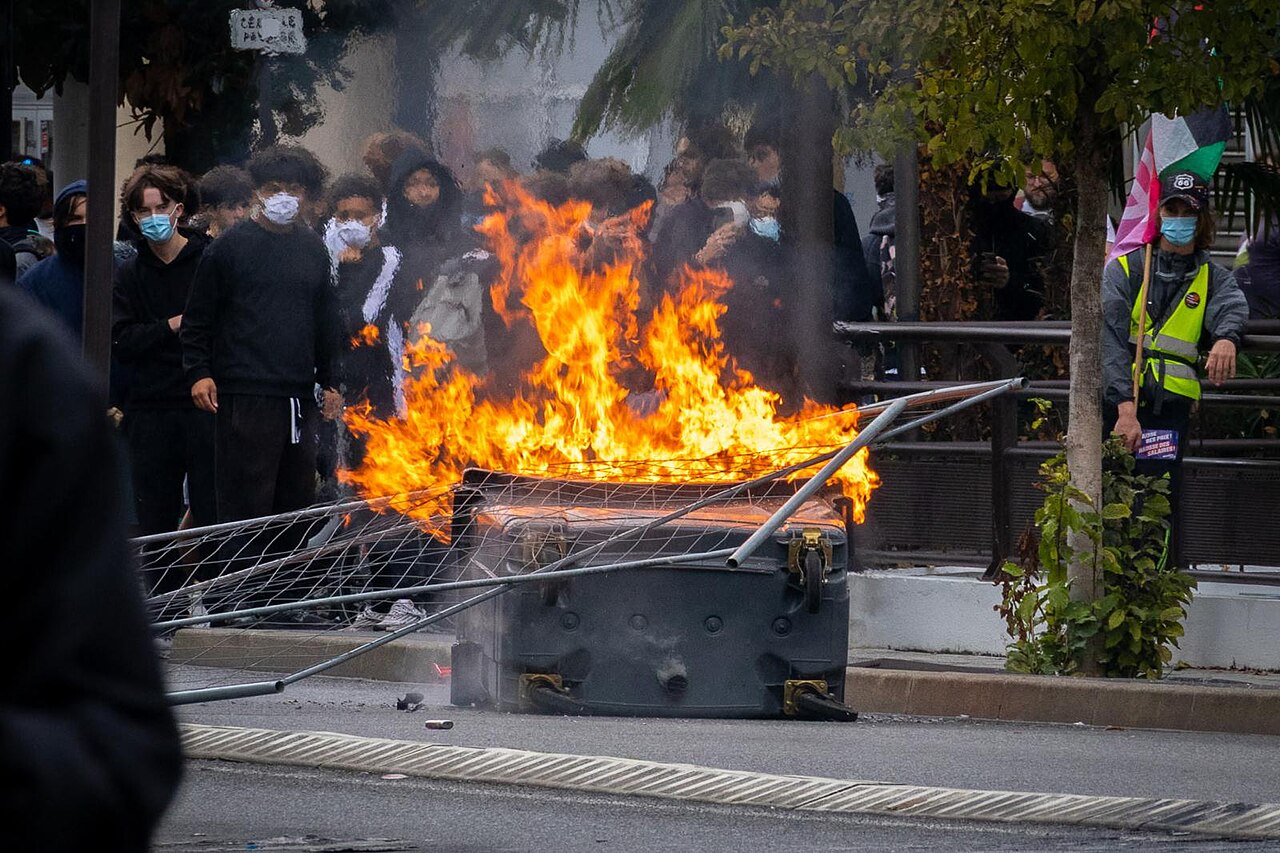
The second face of this crisis emerged abruptly on October 17. In Paris, Lyon, Marseille, Bordeaux and other major cities, demonstrations were accompanied by looting, fires and vandalism. Shopkeepers found their windows smashed, their stores ransacked and, in some cases, the work of an entire lifetime reduced to nothing.
Let us be clear. Protesting is a fundamental freedom. Social anger, however intense, does not justify theft or destruction. A business is not responsible for a country’s economic difficulties. Its owner, who pays taxes, sometimes employs staff and takes personal risks, should not have to fear seeing their livelihood destroyed by gangs of vandals.
In the wake of these events, we must ask ourselves an essential question: what is the purpose of public authority if it cannot guarantee people’s safety and protect their property? Law enforcement officers cannot be everywhere at once, but citizens are entitled to expect an effective strategy, a swift response and judicial proceedings commensurate with the offences committed.
Judicial leniency is regularly denounced in public debate. Arrests, prosecutions, convictions and the enforcement of sentences must not be confused; these are distinct stages. But one thing is certain: when serious offences go unpunished, or sanctions are not effectively enforced, a sense of injustice takes hold and trust in institutions erodes. The French Ministry of Justice’s criminal justice statistics show just how criminal cases are handled and how the justice system responds.
Firmness is not authoritarianism. It means consistently enforcing the law while respecting fundamental rights, regardless of ideology. The rule of law cannot be limited to protecting the freedoms of those who obey the rules, it must also ensure that those who break them are held accountable for their actions.
France does not need a state that claims to direct everything but fails to fulfil its essential duties. It needs institutions focused on what they are supposed to do: protect citizens, administer justice, guarantee freedoms and maintain an economic environment conducive to wealth creation.
This means controlling public spending, reducing barriers to entrepreneurship and ceasing to treat every problem as an opportunity to expand administrative intervention. It also requires an effective justice system, proportionate and genuinely enforced sanctions, and law enforcement agencies capable of intervening to protect citizens and their property.
Economic freedom and judicial authority are not contradictory. They complement each other: the former allows individuals to build their future, while the latter ensures they can do so without suffering violence or arbitrariness.
The real choice, therefore, is not between a weak state and an authoritarian state. It is between an omnipresent but ineffective state and a state refocused on its fundamental responsibilities.
France must stop trying to control everything and start protecting what matters: the freedom, property, security and prosperity of its citizens.
Photo Credit: Noémie Gadrat, CC0, via Wikimedia Commons
Good reporting is cheaper than heavy-handed regulation. Support freedom and independent journalism by donating today.
This piece reflects the author’s views, not necessarily the entire magazine. We welcome a range of pro-liberty perspectives. Send us your pitch or draft.