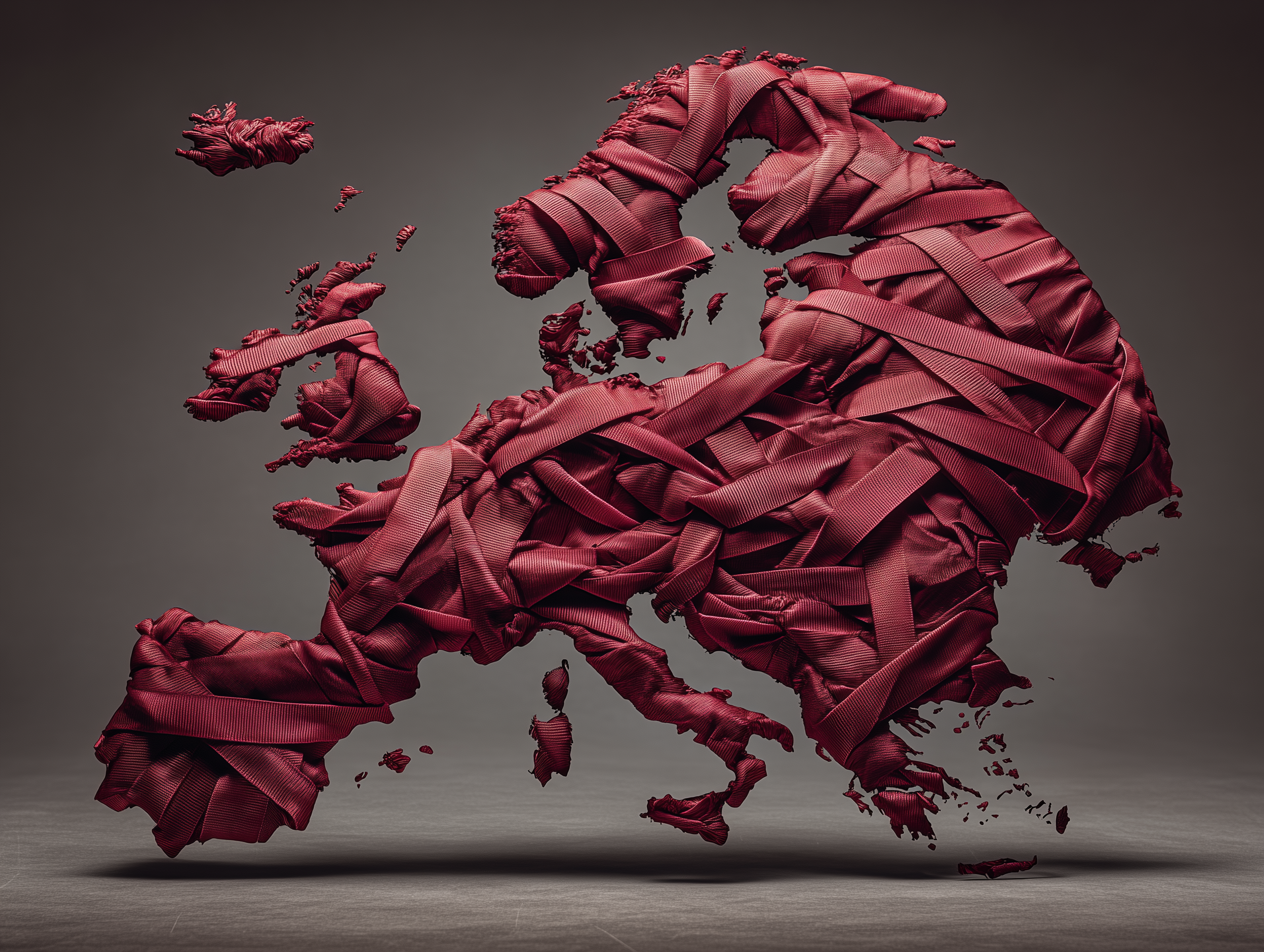
Ogechukwu Egwuatu on how overregulation in the EU stifles freedom and hinders progress.
The EU is suffering from a regulation fever. It is no news that the EU strives to be a world leader and set trends on what will be considered world standard in multiple fields. However, it reaches for this goal with an onslaught of regulation after regulation, ranging from social media, to AI, to green technologies and so on. If something can be conceived and gather enough attention, rest assured there’s a team in Brussels deliberating on how to regulate it. Despite claims to protect its freedom and advance competitiveness and progress, the EU’s attempt to launch itself as a trendsetter through legislation is the very thing that stands in the way of its founding values of free trade and civil liberties.
An obstacle to trade
The increasing multiplicity and complexity of EU regulations makes doing business more difficult. They make compliance difficult and cost intensive both on the path of businesses and that of regulatory bodies. The EU would then have to spend so much more on enforcing these rules or rely on random checks of targeted companies. Or as it often does, introduce more self-reporting rules. For businesses, keeping on top of the ever changing rules is expensive and time consuming without considering the limitations which these regulations impose on them.
The EU is facing a decline in competitiveness in a world with more players. As the deindustrialisation of the continent increasingly becomes an issue, complicated bureaucracies only serve to make the EU a less desirable place to do business, and many businesses are already choosing to go elsewhere.
It is important to also consider the effects on EU institutions. With a complex and delicate push and pull balance between regulations, taxes and subsidies, lobbying at the EU level becomes a necessity for companies and other organisations. Over €1.8 billion is spent on lobbying in Brussels each year. This opens up the door to corruption and skews the playing field against companies that cannot spend as much on pushing legislation favourable to them.
An obstacle to innovation
EU regulations do not only aim to control the present but the future as well. The EU is trying to regulate the development of future technologies. The bloc’s swiftness in regulating new technologies is worrisome. Whether it is to promote them like the Renewable Energy Directive or to control their development like the Artificial Intelligence Act, in each of these cases, legislation defines the tone and manner of the development of these fields. This in turn limits the flexibility of institutions and their ability to adapt to new developments. For a continent facing industrial and innovation decline, the EU is shooting itself in the foot with the overregulation of potential innovations.
An obstacle to free speech and a tool for government control
Legislation has also been a means for governments to insert controls that they would like especially as regards surveillance and free speech. Loopholes in the Media Freedom Act would allow governments to spy on journalists and the Digital Services Act would go as far as banning platforms that default on the guidelines from the EU. European leaders have shown an inclination to control speech and “manage” situations and crises in the bloc. French president Emmanuel Macron had suggested social media shutdowns during the riots that took place last year following the killing of a 17-year old youth. With EU Commissioner for Internal Market Thierry Breton repeatedly making anti-free speech statements, governments in the bloc banning and restricting protests and tightening of speech and other controls, it is obvious that their interests lie in control, and EU legislation continuously provides the tools for this.
EU citizens need to be more involved in what goes on in Brussels. While there is a lot of pressure on and interest in national policies, the EU gets away with putting in place thousands of regulations which affect the lives of millions of Europeans(and non-Europeans) with little pushback from the general population. Only a few think tanks, NGOs and affected companies and individuals concern themselves with and discuss the issues being discussed in Brussels. The pressure on officials in Brussels should not just be from special interest groups, but also from citizens who will hold them accountable.
The EU’s rhetoric remains protecting its citizens and their freedom. Of course, this is a difficult task to undertake. However, we should not fail to see how the consolidation of so many controls eventually becomes a danger to the very same safety and liberty for which they were created. Perhaps the EU does not need to “define” every new trend and field. Humanity’s progress so far has relied on its ability to adapt to new situations and solve new problems innovatively. Boxing in these prospects is a great disservice to the potential they hold.