In the late 2000s, the United States economy was dying. For years, banks and mortgage lenders had packaged home loans, many of them granted to borrowers with no realistic means of repayment, into complex financial instruments and sold them to investors around the world as though they were risk-free assets. This trend was sustained as housing prices kept rising, because as long as real estate prices maintained high pricing, nobody needed to confront the fact that the whole structure was made of glass.
Then the housing market crashed, and suddenly, the financial institutions found themselves holding assets that nobody wanted to buy at any price. The credit markets froze. Trust between banks evaporated overnight. And the global financial system was at a serious risk.
On September 15, 2008, Lehman Brothers, an investment bank with more than $600 billion in assets, filed for the largest bankruptcy in American history. The dominoes began to fall, and what followed was one of the most consequential interventions by a government into private markets, which produced a phrase that captures something true about power, dependence, and the uncomfortable logic of protecting institutions from the consequences of their own recklessness. That phrase was: too big to fail.
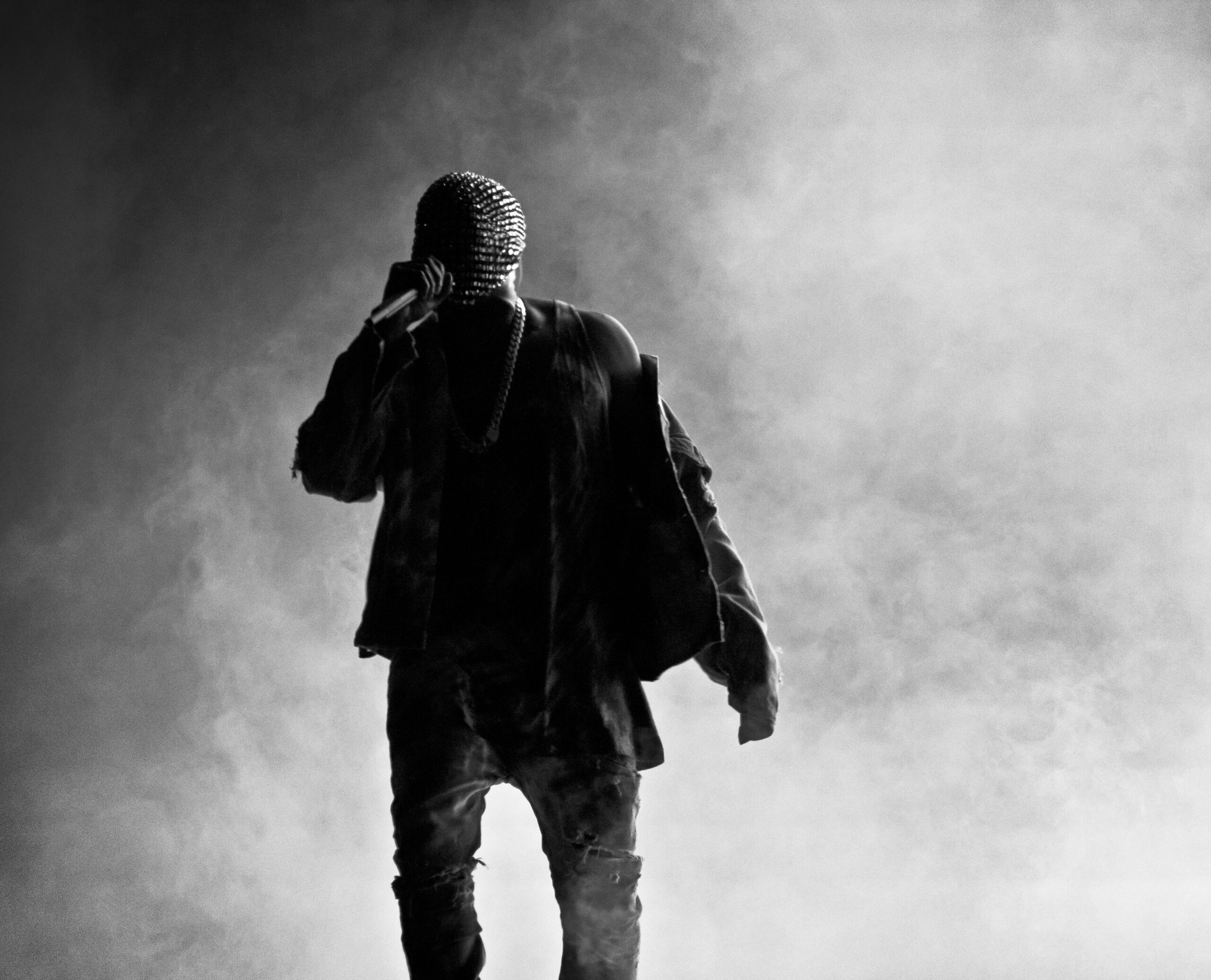
Sixteen years later, a different kind of institution has demonstrated a similar immunity to consequences. His name is Ye, or Kanye West. He treats controversy as a professional sport, which would have ended almost any other career. However, like the banks in 2008, he keeps getting bailed out. Not by government, but by cultural relevance.
The Anatomy of a Bailout
To understand how we got here culturally, it helps to revisit what “too big to fail” actually meant in 2008. The doctrine held that certain financial institutions were so deeply embedded in the global economy that their failure would trigger a catastrophic chain reaction. So the U.S. government used the $700 billion Troubled Asset Relief Program (TARP), and underwrote the entire rotten structure that had nearly brought the world economy to its knees.
Many people across the political spectrum were rightly furious. The message sent to Wall Street was that if you are large enough, connected enough, and systemically important enough, consequences are optional. Risk privatized, but the losses socialized. It remains one of the great injustices of the modern era.
Now consider Kanye West’s cancellable offences: the 2009 Taylor Swift VMA incident, the MAGA hat era, and then the 2022 antisemitic remarks that prompted Balenciaga, Gap, Adidas, and many more to cut ties simultaneously. By every conventional opinion, this man should have been commercially and culturally bankrupt multiple times.
Systemic Importance
To understand the size of that dependency, you need to travel the full length of his career, because his influence did not peak with one record or an idea. It accumulated year by year.
In 2004, West released “The College Dropout”, making Kanye an important name in the industry, and at the time of his second album’s release, he was already a star. However, they don’t come close to the importance of his third studio album – “Graduation”.
In 2007, Kanye West and 50 Cent were releasing albums on the same day. As a marketing move, both artists made a bet that whoever sold fewer copies of the album had to quit making music. Ye sold 957 000 copies in its first week, while 50 Cent sold 691 000. But the real significance wasn’t the sales race, it was what the victory meant for hip-hop. Graduation was so successful that his fans still use it to defend his controversies, eventually turning into a meme – “He Made Graduation”.
Graduation proved that rap did not have to be street-oriented or masculine. A man rapping about college anxiety, political structures, and relationships could outsell the genre’s reigning rapper. Then came “808s & Heartbreak”, acknowledged now as one of the most consequential records of the century, which introduced Auto-Tune as an emotional instrument.
In the decades that followed, introspective and more emotional hip-hop, the kind that would define Drake, The Weeknd, Kid Cudi, Travis Scott, Juice WRLD and others, became mainstream. You can draw a direct line from West’s discography to the sound of modern rap.
Alongside music, the Yeezy line, Kanye’s fashion enterprise, generated an estimated $1.7 billion in annual revenue at its peak. The Yeezy aesthetic – minimalist silhouettes and muted tones – reshaped luxury fashion’s relationship with sportswear and influenced everyone from Balenciaga to a thousand imitators. Even after Adidas severed its partnership in 2022, the influence had already been absorbed.
His live productions have done something rarer: they changed what audiences expect a concert to look like. His tours and listening parties still influence many artists to this day, some, like Billie Eilish, even being accused of copying him. And in April 2026, Ye sold out two nights at SoFi Stadium, with over a million fans queuing for the original single date. He performed atop a massive demi-globe in the middle of the stadium floor. Travis Scott, Don Toliver, CeeLo Green, and Lauryn Hill joined him across the two nights. The industry, despite everything, still showed up.
Each of these albums, clothing or concerts wasn’t merely a new idea. It was a new map that the artists and the fans used to navigate their entire careers. By the time of his cancellation, Kanye West, just like the institutions years ago, was too important for the culture.
The Moral Hazard Question
The problem with too-big-to-fail institutions is that the guarantee of rescue distorts their behaviour in advance. If a bank knows it will be bailed out regardless of its recklessness, it has less incentive to manage risk responsibly. Several TARP recipients demonstrated exactly this, using funds to pay executive bonuses and lobby regulators. The moral hazard was visible and infuriating, and the public fury it generated fuelled a decade of political resentment that has not fully disappeared.
The same goes for artists: if they know that their cultural capital will ultimately absorb any reputational damage, what constraint remains on their conduct?
The Fan Bailout
Here is where the analogy between Ye and 2008 banks gets interesting, and where the situation diverges sharply from the financial crisis parallel.
When the U.S. government bailed out Wall Street, no individual citizen had a vote. Taxpayers did not choose to save the financial institutions, they were compelled to by a government acting on its own. That is the definition of coerced redistribution, and it is precisely what a free society should reject.
Kanye’s cultural bailouts work differently. Every stream of his songs is a voluntary act. Every Yeezy sold is a free exchange between consenting parties. Every ticket purchased for one of his shows is an individual exercising their own judgment about what is worth their time and money. The fans are not taxpayers being conscripted into someone else’s rescue operation. They are free people making free choices.
This is the free market’s effect, which concluded that Ye’s cultural output is worth more than his personal failings are worth writing off.
The Sovereignty of the Individual
That said, the concept of moral hazard does not disappear simply because the bailout is voluntary. Ye has made a career of escalating provocations partly because he has learned that the cultural consequences are temporary.
This is not an argument for cancellation, a blunt instrument that tends to satisfy the desire for punishment while achieving precisely nothing. Cancellation is an attempt to remove someone’s ability to participate in economic and cultural life through coordinated social pressure. Free individuals should be sceptical of it for the same reasons they are sceptical of state censorship.
His bailouts, unlike those of 2008, are funded voluntarily. That distinction matters enormously. One is an imposition, the other is an expression of individual preference in a free cultural market. The question of whether those fans are making the right choice is genuinely open to interpretation, but it is their choice to make.
The Banks were bailed out by a government that had no right to spend that money. Kanye is bailed out by people who earned every dollar they spend on him. Whatever you think of Ye the person, that difference should matter to anyone who believes in the sovereignty of the individual.
Photo Credit: Photo by Axel Antas-Bergkvist on Unsplash
We roast sacred cows medium-rare. Help fund the habit!
This piece reflects the author’s views, not necessarily the entire magazine. We welcome a range of pro-liberty perspectives. Send us your pitch or draft.