
The lessons SFL has learned from Economics in One Lesson by Henry Hazlitt
I wish you all a very merry Christmas and I’m sure the great Henry Hazlitt would as well. And if you ever want to be considered the greatest gift giver, on Earth!, then you can’t go wrong with Hazlitt’s Economics in One Lesson. Top tip, FEE has an excellent edition perfect for your loved ones.
This year marks the 80th anniversary of one of the best economic books there is. Henry Hazlitt’s Economics in One Lesson.
To mark this momentous landmark, I have asked a number of Students For Liberty coordinators to consider what the book means to them and how it has impacted their lives and thinking. In particular, I wanted them to reflect on how it has shaped their liberty journey and what they have learned from reading the book. I hope you enjoy reading their reflections
I personally loved the book. As someone who doesn’t come from an economics background like many of my colleagues have, I was still able to digest and easily understand Hazlitt’s plethora of examples and how to evaluate them, utilising the one lesson. After the introduction, I felt confident I would be able to identify all the errors in logic and how modern governments and economists had missed or forgotten the lesson. But I was surprised when I found it quite difficult in some chapters. I partly attribute this to the fact that I had grown up in a society where these logical errors and poor economic policymaking have been persistent and ever present. Perpetrated by politicians and journalists alike.
Henry Hazlitt is an excellent counterexample to these unreliable second-hand dealers in ideas. Hazlitt was of course, much more than that, but it is this book that highlights his erudite nature and his ability to teach and communicate clearly, which is difficult to rival, even today. Although it is more important than ever that we strive to become more like Hazlitt and perhaps better. Both he and Leonard Read would agree.
This is why I want to highlight the next generation that are interiorizing and integrating Hazlitt’s spirit and teaching. These are the next generation that know to highlight the importance of prices and the price signal. And to look at the secondary impacts as well as the primary ones, on the entire economy, not just special interest groups.

Economics in One Lesson is not the first book you should read on economics; it should be the last. All other textbooks on Austrian Economics are essential to grasp the concepts of human action, but it is this one which decisively puts the theory into practice. Without referencing any fancy terms, it simply and indisputably challenges the (wrong) prevailing ideas of modern economists. If you listen to commentators on TV and want to understand what they are saying and the economic theory they are referencing, this book will give you the knowledge and skills to refute them on the spot.
Luís Gagliardini Graça is a Local Coordinator for SFL. He has a bachelor’s degree in Economics, and has written and recorded various articles and videos. He is currently working on a Portuguese video series about the Hazlitt’s “Economics in One Lesson”.
Note: Luís has made some excellent videos related to Economics in One Lesson. Chapter one and more can be found here.
Economics in One Lesson showed me, with practical examples, what Bastiat showed with theory in “What is seen and not seen”, that government control and planned “order” are actually the opposite to stable markets, supported by voluntary cooperation and “chaos” (spontaneous order). Furthermore, I learnt that the further the hands of government are from the economy, the more prosperous it becomes.
Bernardino Azarías Ferrer Lozano is a Medicine Graduate and Senior Coordinator from SFL Spain.
It is quite rare for someone in the Social Sciences to end up questioning the State in its entirety, to realise that “the emperor has no clothes.” This rarity becomes even more pronounced when we look at disciplines like Sociology: graduating as a libertarian –specifically, as a free-market anarchist– is something uncommon, at least in Spain. Influenced by Bastiat, Hazlitt rescues the essential lesson of thinking about economic phenomena from different perspectives: not only in the short term and their effects on a particular group, but also in the long term and on the rest of the community. The lesson that most radically changed my way of seeing the world (even from a sociological lens) was the one concerning the functioning of the price mechanism. Put simply, prices are signals that transmit dispersed information about value, scarcity, and urgency. Without them, we would be blind and condemned, at best, to misery. As an innate defender of freedom, this discovery was revolutionary.

Only through the free market can millions of individual decisions become a spontaneous order infinitely superior to any State design. From that moment on, I understood that defending freedom is not just another ideological stance: it is defending the only system capable of coordinating, peacefully, the dreams and efforts of all. It is precisely in that realisation that my libertarian conviction was born.
Alejandro Ballesteros Del Olmo is a senior studying sociology and coordinator of SFL Canarias in Spain.

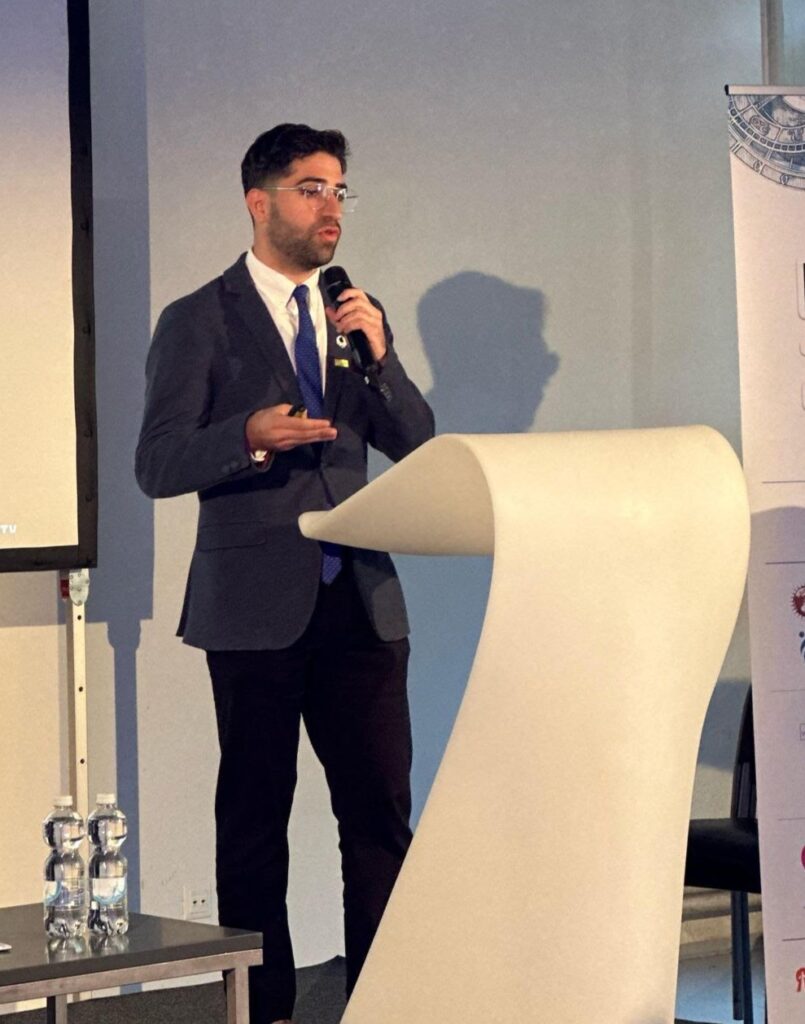
Although Economics in One Lesson did not introduce fundamentally new ideas to me — I had already been trained at the Mercatus Center and exposed early to the seminal works of Bastiat, Hayek, and Mises — I still recognise its enduring value. What makes Hazlitt’s book exceptional is not novelty but clarity. It brings together the essential insights of classical liberal economics and breaks them down in a way that a complete beginner can grasp without losing conceptual rigour. If I were teaching introductory economics or running a basic course on public policy for young libertarians, this is the first text I would assign. Its strength lies in how it equips readers to analyse policies beyond their immediate effects and to resist the temptations of political short-termism. In that sense, the book plays a crucial pedagogical role: even for those who already know the theory, it is a reminder that clear communication is a duty of scholarship, not an afterthought.
Vinayakan Sajeev Beena is a pluralist economist specialising in public policy and LGBTQIA+ economics, currently studying for an MSc at the University of Bologna and working as an Open Innovation and Ecosystem Analyst at CRIF’s headquarters in Italy. He also served as the National Coordinator for Students For Liberty, leading the Academic Programs track for South Asia, and was a distinguished Prometheus Fellow.
Before I read Economics in One Lesson, I was already familiar enough with libertarian ideas to realize how state interventionism fails. But, as someone with no formal training in economics, it was hard for me to explain exactly why it fails. It didn’t help that interventionist policies are often treated as not only beneficial but indispensable, to the point where questioning them can make you look unsympathetic or even cruel. Economics in One Lesson provided me with a mental framework to identify and debunk the economic fallacies underlying many of these policies. What surprised me the most was realizing how many of the myths Hazlitt sought to dispel in 1946 are still alive today, such as the idea that government spending creates wealth, that technological progress causes unemployment, or that tariffs protect the national industry. The key to countering these and many other myths is to keep the book’s lesson in mind: it’s not enough to look only at what is seen; we must also consider what is not seen.

Marta Ramírez Trives is a Local Coordinator at Students For Liberty in Alicante, Spain. Her main areas of interest within the liberty movement are free markets and individual freedom as the foundations for widespread human progress.
Economics in One Lesson might be the best explanation of basic economic principles for beginners. It was the book I started my journey into the subject with. I was amazed by how well-explained even more complicated topics were. The simple but precise explanation mixed with the in-depth analysis of the secondary effects of each case made each chapter interesting and rarely lost my attention. After completing the book, I was able to keep up with more complicated concepts, helping my studies progress smoother and quicker. I often refer back to Hazlitt’s explanations and analyses for my own projects and work, and I plan to re-read it in full soon.
Paraskevas Strantzalis is an SFL Local Coordinator in Greece.
This piece solely expresses the opinion of the author and not necessarily the magazine as a whole. SpeakFreely is committed to facilitating a broad dialogue for liberty, representing a variety of opinions. Support freedom and independent journalism by donating today.