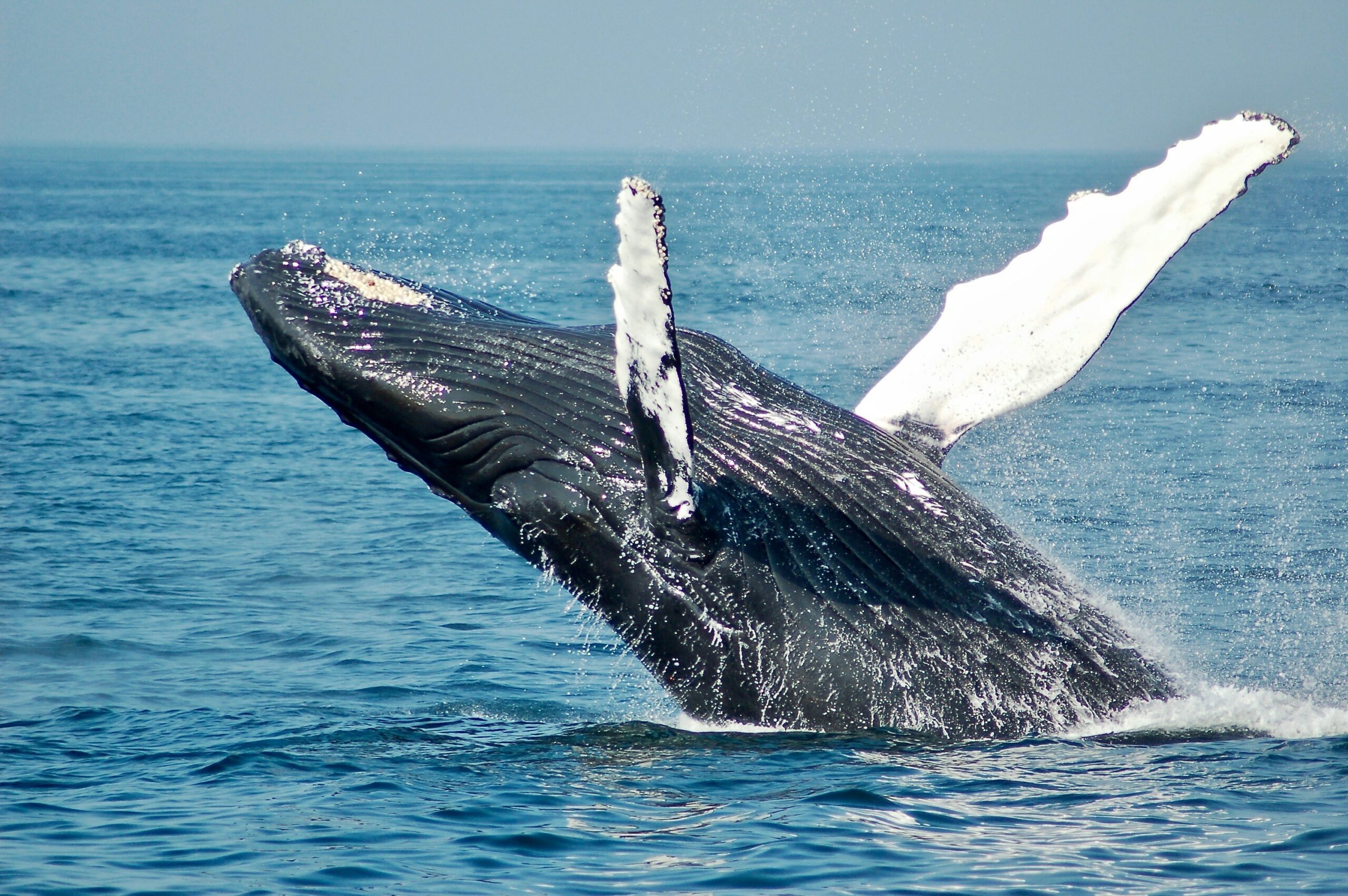
Once, in one of the very few economics lectures I attended at a public university given by a heterodox economist, I came across a definitely provocative claim: “Whales are only at risk of extinction because no one owns them.”
At the time, I most certainly wasn’t familiar with the ideas of marginal utility, subjective value, disutility, or the deep role that private property (and the jurisdiction that actually protects it) plays in a problem like this, so the shock was obvious. And I certainly wasn’t the only one, as right after the professor spoke, a sharp student quickly raised his hand and went on, “Professor, if the lack of ownership causes extinction, why aren’t cockroaches threatened with eradication? They seem to be doing just fine!
Well, yes, Professor, why is that? Aren’t the majestic whales going extinct solely because of human greed and the nefarious capitalist private-property social construction that leads to every single doom of humankind? “Certainly not,” the professor added shortly. In fact, this is a perfect example to explain key economic concepts that can help us see the true importance of ownership, above all in such sensitive cases. Let’s do as the professor did, and expand on it.
I. The Nature of Value: Utility and Scarcity
First and foremost, we must correct a century-old economic error that somehow still annoyingly persists. Classical economists, such as Adam Smith, struggled with the “paradox of value”. Why does water, so essential to everyday life, have little value, whilst diamonds, almost useless if not for the bride to show them off on her Instagram, have immense value?
Smith and many others, a tendency that persists today (perhaps through Marxist philosophy/economics), erroneously look to the cost of production of a good (labor) to determine its value. As established during the Marginalist Revolution of 1871 by the trio Menger, Jevons, and Walras (and anticipated by the Prussian Gossen), value is entirely subjective.
From the theory of marginal utility, we establish that value is determined by the satisfaction of human needs. A thing becomes a “good” only when a human recognizes its ability to satisfy their needs and desires. The value of any specific unit of a good is determined by the least urgent need that said unit satisfies (the margin). Put simply, things have no intrinsic value, the subject, the person, determines the value based on how useful the good is to them. Each additional unit of a good is usually worth less to you than the previous one, so that the first bottle of water you drink when you are thirsty is worth much more than the second, or third.
It becomes clear that whales and cockroaches won’t have the same value. When the former were endangered, it was most definitely for the high demand for their oil and meat, and there remains demand today for tourist reasons. Because they are scarce and useful, they have high economic value. Are cockroaches so useful and scarce that we must hunt them? Pest control companies would say they do hunt them, but definitely not for their usefulness. More on this later.
We have established why they are sought after, but why do the poor whales remain aggressively hunted, and not kept into a steady population or under a certain protection?
II. The Tragedy of the Commons
The “Tragedy of the Commons” is another classic problem in economics. When a resource is unowned, i.e., when it’s in the “public domain”, individuals have no incentive to conserve it and, in fact, are incentivised to consume it all immediately.
Consider a diamond mining company, preferably more ethical than the state-owned Belgian Congolese ones. They are famous for conserving their stones. If they were to mine them all today and dump them on the market, they would destroy the capital value of their mine! Now, if the mine were public, and it was, in fact, impossible to own or control, what incentive do people have to not extract everything as violently as possible? There’s no weighing of immediate income against future income. If the miner expects the diamond to be scarce in the future, he will conserve it today to sell at a higher price later, thereby preserving it.
The fisherman operates in a regime where private property is basically absent, or extremely hard to enforce (a problem aggravated by the fact that the poor animals live and migrate much farther than the protected commercial zones of states). The fisherman doesn’t own any whales, he just goes out and kills them. If he leaves the whales to breed and multiply, he has no guarantee that he will be one the to reap the benefits of that stewardship, a competitor might simply come along and kill them. As Murray Rothbard puts it, his only incentive is to harvest as fast as possible. It’s not “capitalist greed” so much as the rational response of people to the failure of the government to secure private-property rights.
Cows, sheep and chickens are slaughtered by the billions. Far more than whales have ever, and they seem to be doing just fine in the extinction problem. Even elephants, the heaviest and most dangerous land animals, were domesticated and used in war. They were bred as long as they were useful. One could also argue that if humans had bred them for their tusks, they wouldn’t have been at such risk of extinction.
III. Privatization
Because a farmer owns the cow, the cow is a capital good for them. They own and have a big interest in the longevity, quality and reproduction of their herd. He fences them, feeds them, treats their diseases and protects them from predators. The mixing of labour and resources with his animals gives him a clear proprietary title.
This is to say that perhaps, just like farms, mines and forests can be very effectively protected through private property and the interests of businesspeople, whether for pure charity (like creating national parks the size of Switzerland), or protection with profit in mind. If oceans were privatized, just like parts of the Amazon that are deeply and unreasonably destroyed (because no one cares for their future), we could have owners who would vehemently defend their property against overfishing, pollution and would then determine the optimal “harvest” rate that preserves the capital stock, ensuring that the resource is not depleted. A successful example, published by the OECD, is the Chumbe Island Coral Park in Tanzania, a privately managed and funded reserve that protects coral reefs while generating revenue through ecotourism.
IV. The Cockroach: Goods vs. “Bads”
Returning to the case of the much less loved cockroaches, and to answer the student’s question, it becomes clear why their value is fundamentally different from that of whales. Unlike cetaceans, the little insects are not scarce, and we definitely have no desire for their meat, oil or to go on exotic trips to see them. In fact, they are what economists call “bads”. That is to say that they are harmful, and even dangerous.
Rats, mosquitoes and cockroaches have, in economic terms, disutility. They are not assets, they are nuisances. They cause problems, diseases and often incur costs more often than not. In fact, they have negative value. Just a quick reminder that we pay, and not a small amount of money, to keep all of these very far from our houses and buildings.
If these pests, for any miraculous reason, were essential to the cure of cancer, wouldn’t we go crazy after them to explore their values? Wouldn’t labs and chemical companies go on farming and getting the best kinds to precisely meet such a big need? These little ones are usually pests because they can reproduce exceptionally well and even with aggressive “greed”, it would be very hard to deplete. Said difference makes the whales and other more critical ecological practices, the ones that don’t have the luck of establishing themselves fast, an even better asset to be protected under private property.
V. Government Failure
When governments try, their efforts often fall short, and history is full of examples demonstrating that poor enforcement, perverse incentives created by not understanding the consequences of their policies, or simply slow political responses can let species and ecosystems collapse. Policymakers often act on the visible effects without considering the unseen consequences, which can undermine the very goals they intend to achieve.
One such example is the collapse of the northern Atlantic cod fishery off Newfoundland. Scientists warned of declining stocks, but management and quota systems failed to constrain fishing, resulting in a government-declared moratorium that destroyed livelihoods and left stocks depressed for many years, despite the drastic intervention. This collapse shows how state control and regulation can suffer deeply from poorly informed managers, short-term political pressures and still produce catastrophic overexploitation.
Even worse are the cases where the government’s broken policies actively accelerate loss. The creation of a bounty system from the government in Tasmania played a huge role in the extinction of the thylacine. The participation of authorities in such a scheme is a reminder that public policy is not automatically pro-conservation. A more modern example of this seems to be the Chinese government’s disregard for pollution, as China approved 114 gigawatts of new coal power capacity in 2023, more than enough to supply electricity to the whole of Brazil.
These failures help explain why private actors, NGOs and philanthropic entrepreneurs often step in to protect what governments have neglected or mismanaged.
Taken together, these examples underline the practical point from earlier sections: the mere existence of laws or state ownership does not guarantee conservation. It seems to matter most the enforceability of law, private owners and organizations with the incentives and capacity to protect natural capital. Where governments have failed, private management has often been the corrective.
Conservation as Freedom
The resolution of this apparent paradox lies in the synthesis of economic laws we’ve explored. Looking into the nature of value, established by the marginalists, whales were very valued, historically, for its meat, oil, and scarcity. Cockroaches, conversely, possess disutility. Privatization and secure property rights, as we have seen with farms, mines and forests, demonstrate that giving ownership or management to actors with clear incentives can preserve natural capital effectively. Farmers care for their cows, private managers care for their corals, and philanthropists care for their forests. All because they directly benefit from maintaining the value of those assets.
When such assets are “public”, we fall into the already explained tragedy of the commons. Even when governments step in, history shows that their efforts are often the reason for the terrible state of some ecological areas. Perhaps we should allow freedom and property to also protect our natural world. It doesn’t seem a bad strategy when authoritarian decisions fail, or even promote such destruction.
We roast sacred cows medium-rare. Help fund the habit!
This piece reflects the author’s views, not necessarily the entire magazine. We welcome a range of pro-liberty perspectives. Send us your pitch or draft.