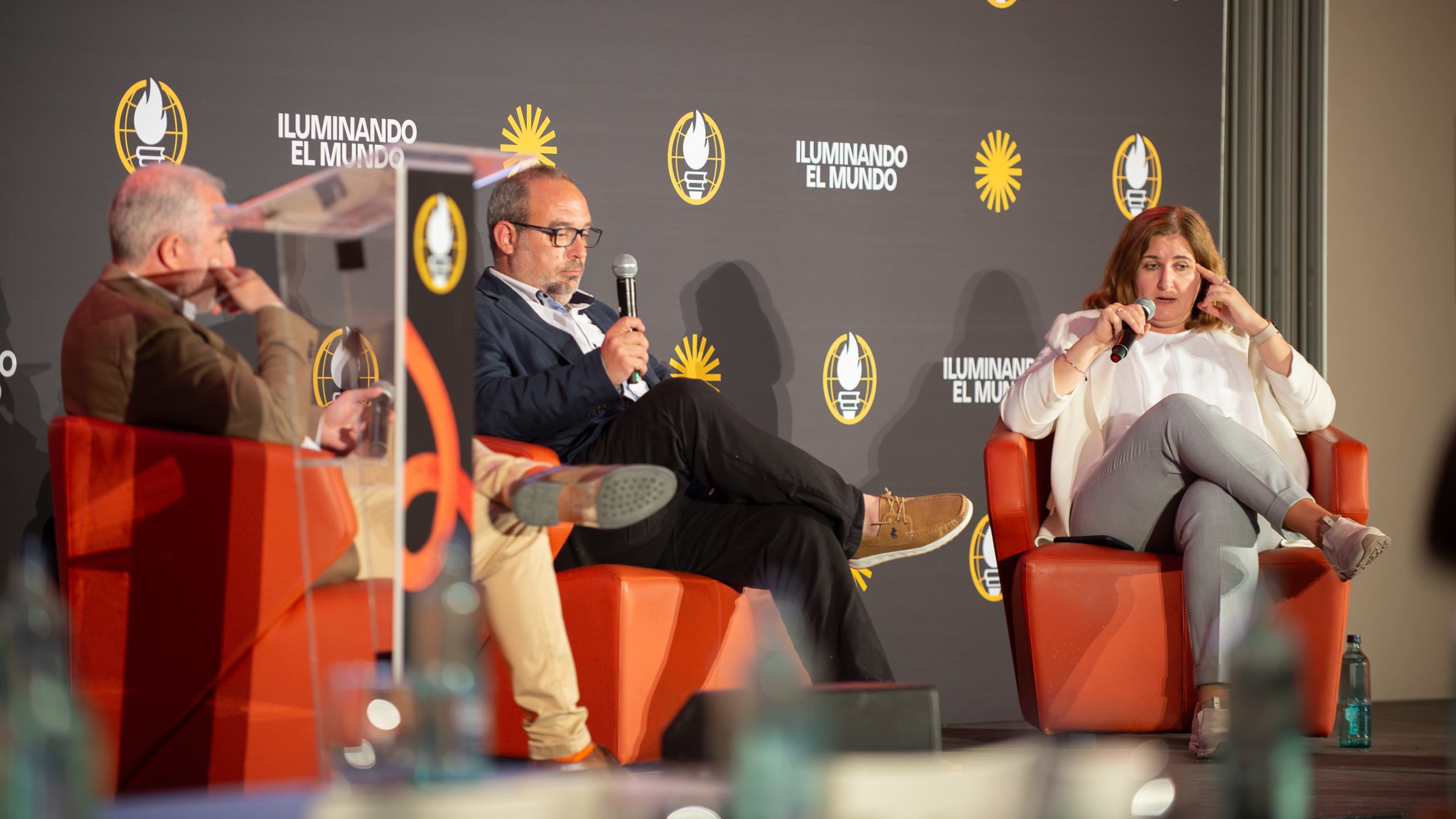
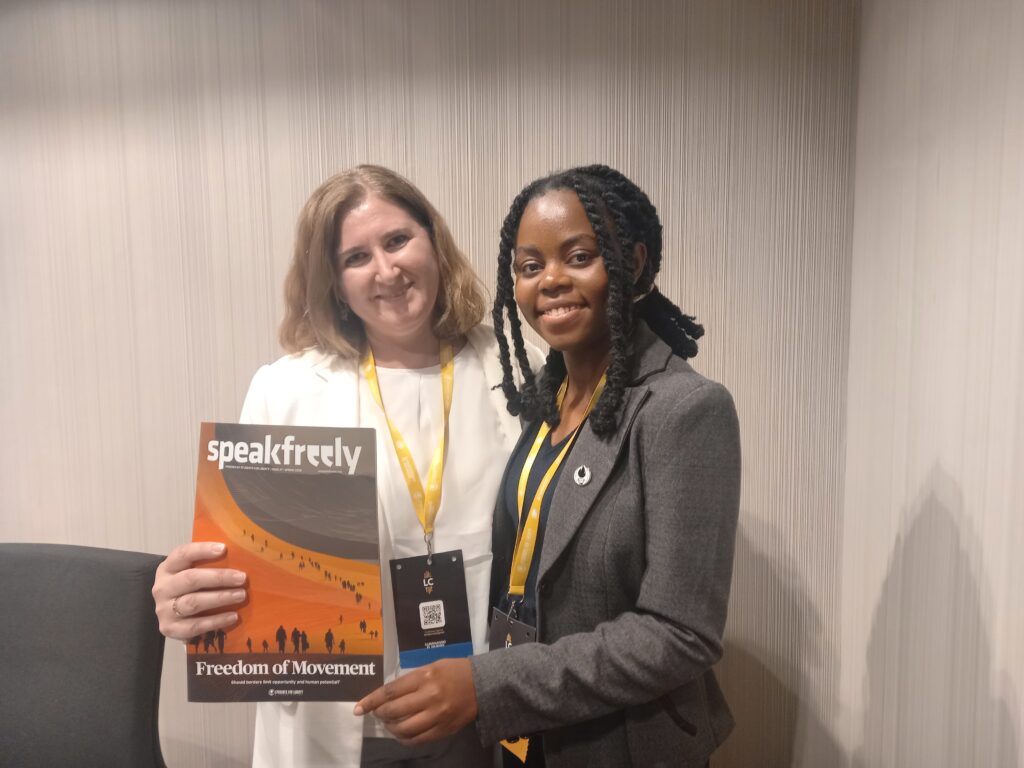
Roxana Nicula is the president of the Foundation for the Advancement of Liberty (Fundalib), a Spanish think tank which furthers the cause of free markets and individual liberty. She is also a lawyer and a TTMBA graduate of the Atlas Leadership Academy. She has worked on competitiveness within the EU and economic freedom. More recently on immigration, especially the economic integration of immigrants.
Nicula speaks with SpeakFreely about how immigrants are shut out of the formal economy, what they contribute anyway, and how Fundalib is turning their experiences into a case for reform.
SpeakFreely: One of the major debates around immigration is that immigrants are coming here, they’re either taking our jobs or they’re taking up all of the welfare or they’re not contributing well enough to society. But we see over and over again, bureaucracy that stops immigrants from working even in sectors where there is an obvious lack of manpower. How do you see what I like to call the economic exclusion of immigrants, in Europe but also in other parts of the world? And why is this a problem?
Roxana Nicula: As a liberal, I’m always interested in not only the utilitarian part of a policy, but also the reality that we are facing. The reality that we are going to discuss today is immigrants and their economic integration but also from the human value point of view. We have to remember, and unfortunately there are many people who still forget, that human beings, all throughout our entire history, have migrated. Why?
Because human needs, human curiosity pushes us to amplify our boundaries and to look for new things that can improve our lives. So we must not forget that all those people who are deciding to in many cases even risk their lives and invest whatever they have to improve their lives and their families’ lives are human beings. I believe that liberals have the moral ground, but also the economic ground to offer the best solutions to integrate migrants into our societies.
We thought that the European Union was going to be a sort of US 2.0 when it was founded. The land of the free where everyone would be able to come and fulfill their dreams. Then we got struck in our faces with the harsh reality. It’s not so free because we have a lot of regulation that’s been in place now for many years. For instance, access to banking and financial service, even for nationals, is becoming more and more of a problem. The excuse is always protecting someone or against money laundering, but that’s not the reality. The reality is that with the current legislation that we have in place in the European Union, millions of migrants are excluded from the conventional banking system. And it’s actually in opposition with the directive that the Commission approved several years ago that no one in the European Union can be excluded from having a bank account. But that is happening to immigrants in high numbers. I can give you examples.
I’ve been talking to many communities here in Spain and one of the communities, the Venezuelan community, was even devising new systems of information among one another to learn that there is in some obscure province in the other part of the country, a small bank office where the manager is more prone to be less bureaucratic and make easier things for them to open an account.
So instead of protecting our rights as consumers, what the current administration both in Europe and in our country has managed to do is the opposite. They have managed to create a big bureaucracy, a lot of regulation, and higher costs. Because regulation and bureaucracy always increases costs for the common citizen that has to comply with all that. They managed to create a lot of uncertainty and legal instability with this. So the work at the Foundation for the Advancement of Liberty was to analyze what is happening right now. What are the current regulations that we have in place in the European Union from the Commission and the European Parliament, but also in our own country? Because sometimes there are fairly interesting regulations that come from Brussels but they are not translated to the national reality and they take sometimes eight years to be translated. National governments sometimes even get fined for not transposing some regulations. For instance I remember the Bolkestein directive on opening the skies and the economy. In Spain, it took more than 10 years to start applying some parts of that directive.
Normally migrants are people who are very courageous. They know what they sign up for when they come into a country and they know they will have to start probably from a very low position and work their way up. They are willing to do all those jobs that you are not willing to do. In Spain and in any other European country, they contribute much more to the system than they take.
Second, migrants are much more compliable with the law. You can check it in our reports. We found out that they were more compliant with regulations, with the norms of that society than the nationals. And third, they are more prone to start businesses, to take risks. Spaniards in general are very risk averse individuals especially in the past 20 years as the welfare state has taken over big portions of the society.
But migrants know they want to be useful. They want to take control of their world and their lives. And that’s why it’s easier for them to start thinking, until I know the culture here, until I master the language, I’m going to try to start a business first and then see whatever other opportunities I can create for myself or there are in the market.
Of course we have the data to support that. In Spain, migrants are much more successful in business. It’s four to one in comparison to the nationals in terms of thriving, making their business go past the first initial phase and consolidating the business. That’s data that anyone can look up from the National Bank. We have it also in our reports because we did several reports on migrant entrepreneurship. One at first to offer the current government some ideas of specific policy when they were discussing a reform. It’s called the migration law and we are happy to say that at least some of the considerations that we were pushing forward in that report in the end entered the new law. There are many other flaws that are there but at least to work on a unification and make it easier for migrants to present their papers. Not in many offices, but just a one-stop window.
Another proposal that is now a reality was with the digitalization of the administrative process. There is a lot of corruption involved because there is very little manpower to deal with all the cases and all the permits. Then because of COVID, they moved everything online. But this was done in a very poor, centralized way which created this free market. I don’t call it a black market. It’s a free market of individuals and organizations that are giving options to migrants to be able to go and present their papers.
What I’m trying to make the administration understand is that the less bureaucracy we have involved, the better it will be. Not only for the migrants but also for our economy because the sooner they become productive members of the society, the sooner they don’t need so much assistance. Some parties are saying that they live off all kinds of subsidies and all kinds of support from the State based on the taxpayers’ money, which is not true. The data shows that migrants very seldom use the universal services that we have. They use it but they don’t use it as much as the nationals. Why? Because again migrants are very busy going about their lives, trying to make a living and many times they have a higher resistance and until they are very sick they don’t go to the doctor as opposed to other segments of the population.
We are fed up with seeing that narrative that you were mentioning earlier. Everything from a negative point of view. You watch the news, you watch talk shows that talk about migrants, everything is black in terms of negativity. And we said no, let’s flip the issue and start showing the positive things that migration has for our society. And how did we do that? We did it through policy recommendations and we showed the data but we also did it through a documentary. We got to know wonderful people from about 10 different communities.
We interviewed a lot of small-medium entrepreneurs from different sectors and we ended up with a very cool documentary which is on our YouTube channel. It’s called Immigrant entrepreneurs : value without borders. That documentary tells the story of eight entrepreneurs that come from different regions from China, Honduras, Venezuela, Morocco, from Senegal and it tells the story in a very cool way. It talks about bureaucracy more lightly. You can see the absurdity of things. I cannot dedicate my entire attention to growing my business because I have to do these kinds of things and then the costs.
That documentary won the worldwide international film festival on migration issues in New York a couple of years ago and was finalist in Seoul, in the short documentary category a year before. We are very happy that we managed to put those stories out there so that people can even relate to some extent with the stories of those immigrants. We are still very much involved with migration policies both in the European Union and also in Spain.
SpeakFreely: To wrap up, what would you say is one policy issue or one regulation in the EU that you would love to see change in the coming years? And what direction do you think we should be going in?
Roxana Nicula: Both at the EU level and here in Spain, I would love to have that 24 hours from when the migrant arrives to the country, there is an option to go on an online portal to register him or herself with their ID even if it’s expired. Because in many cases there are people who actually flee to save their lives and maybe they don’t have the right documentation. And get at least a temporary permit and start functioning as a full individual in the society. So they can contract their housing lease, their transportation card, and access to open a savings bank account because this is another problem that they have. So they can save and one day become owners of houses or flats, of businesses and so on. 24 hours after they arrive, they have the right to take a break and if they want to start working, to be allowed to work from day one.