An exclusive interview by Students For Liberty Spain.
Totalitarianism and authoritarianism are not just abstract concepts, political buzzwords, or numbers on an international index. They describe oppressive systems under which ordinary people are entirely prevented from living their lives in peace. But what happens when that totalitarianism is not enforced by a national government, but by a family within the borders of a free, Western democracy?
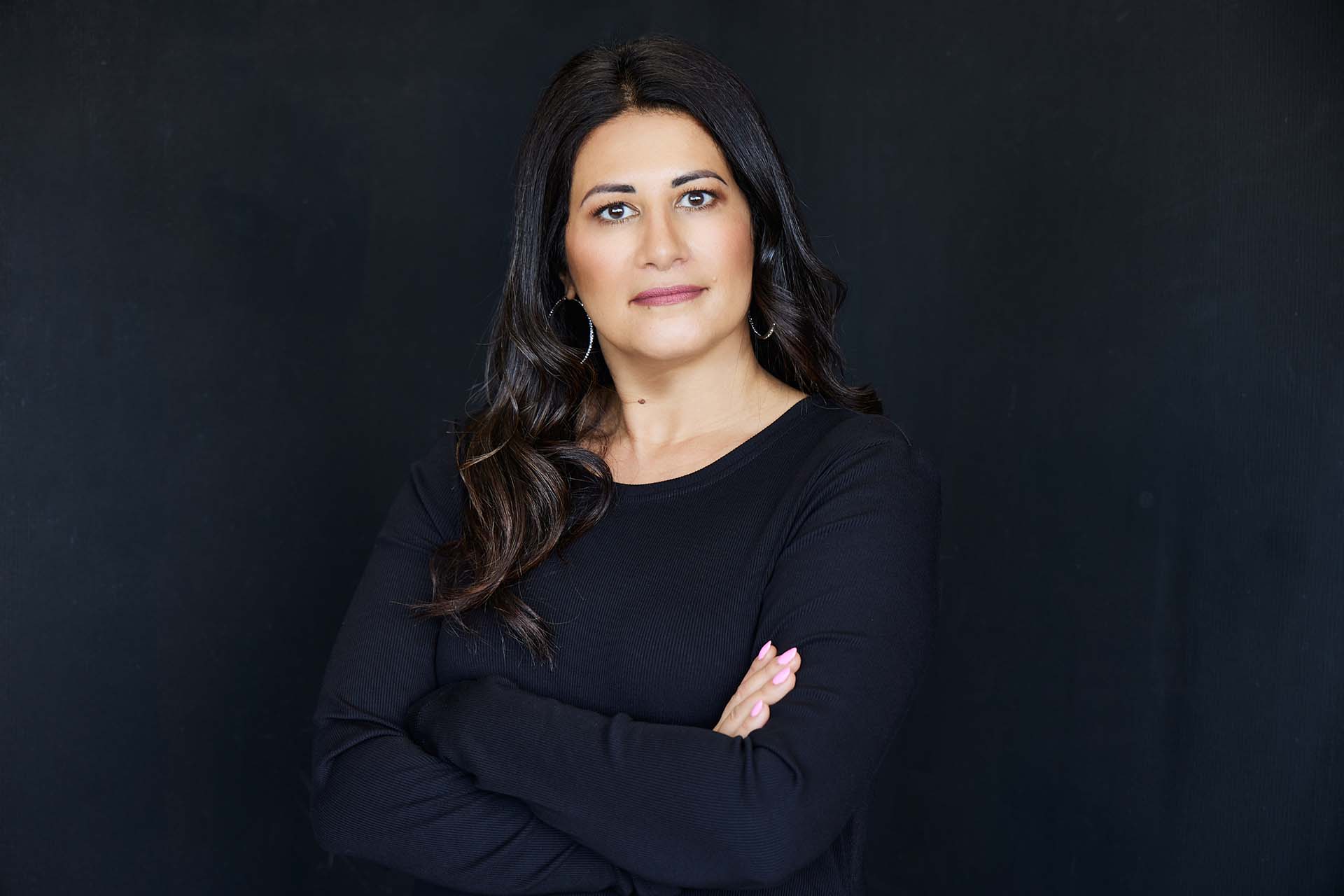
Yasmine Mohammed is a human rights activist, author, and a leading voice against religious extremism. She is the founder of Free Hearts Free Minds, a non-profit organization supporting ex-Muslims in Muslim-majority countries where apostasy is prosecuted and often punished by death. She is also a member of the Center for Inquiry Speaker’s Bureau, co-founder of the CLARITY Coalition, and the author of the memoir “Unveiled.” Today, she sits down with us to share her harrowing firsthand experience of growing up inside a “mini-theocracy” in Canada, her escape from a forced marriage to an Al-Qaeda operative, and her relentless advocacy for individual freedom.
Marta: Yasmine, your experience is very striking because you grew up in Canada, a free country. And yet at home, you lived inside what could be described as a “mini-theocracy.” Could you tell us about your story and what it was like to experience such a massive contrast between the individual liberty outside your home and the totalitarianism within it?
Yasmine Mohammed: Before I get into the specific details of my story, I want to reiterate that my experience is not by any means unique. Even though I was a Canadian girl living in a mini Sharia theocratic state inside my own home, this is an incredibly common experience for many first-generation people born in Spain, Italy, France, Sweden, the UK, Australia, America, and Canada.
When our families came from these religious theocracies, their ideas didn’t stop at the border. They brought their ideologies with them. Many of these families migrated because they were looking for economic opportunities, better health care, or social assistance that you simply do not get in the developing world. They came for opportunistic reasons, not because they loved Western freedoms, democracy, or liberty. Absolutely not.
Because their mindsets didn’t change geographically, they raised their children in the exact same religious extremist hatred of freedom that they were raised in. A common phrase my family used to tell me was: “Just because you were born in Canada, it doesn’t make you Canadian. If you were born in a barn, it doesn’t make you a horse.” It is a militant “us versus them” mentality. We were taught that we were the superior ones, the ones going to heaven, and that the outside Western world was our enemy. We were living in the Dar al-Islam (House of Islam), and everyone else was in the Dar al-Harb (House of War).
My personal story started when my parents—my father is from Gaza and my mother from Cairo—got married in Egypt and moved to San Francisco in the late 1960s. My father embraced the hippie culture and the sexual revolution, but my mother, who was secular but conservative, wanted a quieter environment. We moved to Vancouver, Canada, but their marriage eventually fell apart. Left alone with three children in a strange country, my mother went to the local mosque looking for community.
This was the early 1980s, the booming era of political Islam. She got caught in a tsunami of radicalization driven by the Muslim Brotherhood. She started listening to extremist rhetoric, connected with their hatred of Western women, and eventually became a religious zealot. She got her master’s degree in Sharia law and became the second wife to an Islamist man—even though polygamy is illegal in Canada.
Overnight, my life completely changed. No more non-Muslim friends. No more riding a bike because I might “lose my virginity.” No more swimming, no more music, no more birthdays. Everything that brings joy to a child became haram (forbidden). If I missed one of the five daily prayers, I was physically beaten. If I memorized the Quran incorrectly, I was beaten. Every single aspect of my life—how I drank water, how I put my shoes on, how I went to the bathroom—was strictly controlled.
Marta: When you were a little girl you suffered severe abuse and the authorities abandoned you to avoid being called ‘culturally insensitive.’ We as libertarians are constantly told a massive state is necessary to protect the most vulnerable, yet it failed you. What does this betrayal say about a government that prioritizes political correctness over basic human rights?
Yasmine Mohammed: It was the ultimate betrayal. When I was 13 years old, I couldn’t take the physical torture anymore. I confided in my drama teacher, Mr. Fabro. I showed him the scars, the cuts, and the bruises all over my body. He immediately alerted child services and the police, and it turned into a major court case.
But at the end of it all, the Canadian judge looked at me—a 13-year-old girl asking to be protected from horrific abuse—and said, “It’s your culture. It’s your family. It’s your religion. If this is how they choose to raise you, then it is none of my business.”
The state justified ignoring my abuse through the lens of cultural relativism. They thought that by leaving me in that abusive household, they were being virtuous, politically correct, and culturally sensitive. But what they don’t realize is how viciously racist cultural relativism actually is. By abandoning me, the government was essentially declaring that a little girl with brown skin and brown hair is not as valuable, and not as worthy of state protection, as a little girl with blonde hair and blue eyes. In their attempt to avoid being called racist, they became the biggest bigots of all.
Sadly, my story is just one of many. Look at the tragic grooming gang scandal in Rotherham and across the UK. For decades, British girls were systematically raped by gangs of Pakistani Muslim men. The politicians, the journalists, and even the rape crisis centers stayed completely silent. Why? Because the perpetrators were Pakistani Muslim men, and the authorities were terrified of being labeled racist or Islamophobic. They chose to protect themselves from “bad words” instead of protecting little girls from being systematically raped. It is completely counterproductive and undeniably evil.
Marta: In social psychology, there are two concepts often discussed when talking about contexts of total control: “learned helplessness” (the feeling that you can do nothing to change your situation) and “internalization of surveillance” (when individuals start policing themselves even when nobody is watching). How did this psychological pressure operate in your life, and how does fundamentalism alter the human mind until a woman accepts the complete loss of her agency?
Yasmine Mohammed: That is such a great question, and you are absolutely correct. The learned helplessness was a massive obstacle for me.
In my book, I use the analogy of a baby elephant. When an elephant is young, trainers tie one of its legs to a heavy post with a thick rope. The baby will pull and fight until its leg is bloody and torn, but it cannot break free. Eventually, the elephant stops fighting. Once it stops, the trainers can tie that same rope to a tiny little wooden nail in the ground. Even when the elephant grows to weigh several tons, it never tries to pull away. It could easily break free by moving its foot just one centimeter, but it has learned that resistance is futile.
I realized I was that elephant. From a young age, I was taught to stop fighting because there was no point. When I was 19, my family forced me into a marriage with an Al-Qaeda terrorist. My mom literally told me, “We finally found a man who is strong enough to control you.”
I was covered head-to-toe in black. I was being beaten. I was being raped. And I couldn’t even open my mouth to complain, because everything he did to me was explicitly justified by Islam. If I went to my mother to say he was beating me, she would tell me to go read verse 34 of the Quran, where Allah gives men permission to beat their wives if they merely fear arrogance or disobedience. If I told her he was raping me, she would point to the Hadiths that say a woman does not own her body and is the property of her husband.
If the all-powerful creator of the universe has already sanctioned your torture, who do you complain to? The Canadian government had already spat in my face. So, I accepted my fate. I gave up completely and slowly diminished into nothing.
The internalized surveillance was just as devastating. Even after I physically escaped my family and my terrorist husband, the prison was still inside my mind. My nervous system was completely shackled. It takes years of therapy to even realize that the voice in your head policing your every move isn’t your own—it’s a virus that was planted inside you. As Dr. Steven Hassan explains in his work on cults, you build a fake persona just to survive. If you don’t become that subservient persona, you lose your family and risk your life. Escaping means undertaking the terrifying work of dismantling that survival persona to uncover the authentic self that was buried beneath it.
Marta: We often associate totalitarianism solely with political repression, but without economic freedom and financial independence, individual liberty is practically impossible. Before you escaped your forced marriage to an Al-Qaeda operative, how important was the restriction of financial autonomy in keeping you trapped? And conversely, how can free enterprise and economic independence help victims who are trying to break free from these oppressive environments?
Yasmine Mohammed: Financial independence is everything. At the end of the day, you need the basic logistics of survival to be in place. Even though I have spent so much time criticizing my government in Canada, I am very grateful for our student loan program. That loan included money that I could use to pay rent and buy food for my daughter. It was a small amount, but it gave me a window to go to school, get my degrees, and eventually get a good job.
If I didn’t have that opportunity, I would have had nothing. I had a high school education and a toddler; there is no way I would have been able to survive. When we talk about the 57 Muslim-majority countries, there are millions of women like me who are trapped with absolutely no path, no window, and no way out. That lack of economic freedom is exactly what keeps them imprisoned.
Marta: We’ve talked about how this totalitarian environment traps individuals psychologically, socially, and economically. For many, escaping in this situation would seem completely impossible. And yet, you managed to break out of your forced marriage. What was the exact turning point for you, when you realized that you had to escape at all costs? And how did you find the strength to break those chains and reclaim your individual freedom?
Yasmine Mohammed: It was not a light switch; it was a very slow, difficult process. But the real turning point was having my daughter. Once I held my baby girl in my hands for the first time, I knew there was nothing I wasn’t going to do to protect her from the world I was living in. I had to make sure I saved her from the life that was going to be her future if we stayed in that house.
Simultaneously, 9/11 happened. At that time, I was taking a university course on the history of monotheistic religions, taught by a Lebanese professor. For the first time, I was allowed to critically examine Islam, and the religion was already being dismantled for me intellectually. Then 9/11 occurred, and everyone in my community and family was celebrating. They thought it was funny when they watched people jumping from the buildings. I was so humiliated to be connected to them, and I decided there was no way I would raise my daughter in that culture to become an unfeeling, horrible person like that.
My first step was taking off my hijab, taking off the physical handcuffs of their control. Because of that, my mother threatened to have me killed so I wouldn’t be an infidel dragging her to hell. With the father of my daughter being an Al-Qaeda terrorist and my mother wanting me dead, my daughter and I had to go into hiding, change our names, and completely disappear. It was terrifying, but the strength came entirely from needing to protect her.
Marta: After escaping that totalitarian environment and becoming free, many people would have chosen to live a quiet, safe life and leave the past behind. You made the brave decision to break your silence, write your book Unveiled, and become a public advocate. What pushed you to step into the public eye, despite all the risks and pressures that come with it?
Yasmine Mohammed: I never actually wanted to be a public figure. What pushed me was watching my fellow Canadians, Americans, and Westerners being completely fooled by Islamist propaganda.
The catalyst was an episode of Real Time with Bill Maher. Bill Maher and Sam Harris were discussing a Pew Research poll showing that nearly 90% of the Egyptian public believed that people who leave Islam should be executed. As a woman of Egyptian descent, I felt incredibly seen. These men were on national television arguing for my basic human rights—my right to not be murdered for my thoughts.
Suddenly, actor Ben Affleck jumped into the conversation, playing the role of the ultimate “useful idiot.” He interrupted them, accusing them of being racist, bigoted, and Islamophobic, shutting down the conversation entirely. He proved their exact point. But what truly terrified me was waking up the next day to see my progressive, secular Western friends celebrating Ben Affleck on social media. They were cheering him on for “stopping those racist white men.”
I realized then that the brainwashing had worked. The Muslim Brotherhood has stated openly that they don’t plan to conquer the West with bombs and bullets this time; they plan to use our own democratic systems and secular laws against us. They weaponized the word “Islamophobia”—making it sound like homophobia or xenophobia—to create a bottom-up system of censorship in the West. In Saudi Arabia or Pakistan, law enforcement will imprison or kill you for criticizing Islam. In the West, they don’t have blasphemy laws, so they use the word “Islamophobia” to manipulate well-meaning citizens into doing the policing for them. You criticize female genital mutilation? Islamophobia. You criticize Hamas murdering people in their homes? Islamophobia.
When I saw my friends falling for this, I knew I had to speak up. The main excuse people used to dismiss Sam Harris and Bill Maher was their immutable characteristics—they were white, straight American men. I realized that as a brown-skinned woman from an Arab background, I possessed the “correct” immutable characteristics to force them to actually engage with the argument. They couldn’t just dismiss me as a racist white man.
I started writing anonymously on a Tumblr blog. Instantly, I was inundated with heartbreaking messages from people all over the Islamic world—women imprisoned in Saudi Arabia for refusing to wear a hijab, teenagers in Somalia fleeing Al-Shabaab because they had doubts about the religion. Every message ended the same way: “I am so glad you are safe in the West. Please, be our voice.”
The guilt and the responsibility were overwhelming. I was in a free country. How could I stay quiet while they were trapped? The fear was immense, but as Salman Rushdie once said, there comes a point where you just have to decide not to be afraid anymore. The rage at the injustice simply overrides the fear.
Marta: Listening to your story, it is impossible not to empathize. For libertarians, solidarity is about individuals who voluntarily choose to step up and help, rather than relying on state bureaucracy. In that spirit, what can our audience do from the outside to support your work and help those dissidents who are still fighting for their freedom?
Yasmine Mohammed: The most important thing for your audience to understand is that by supporting these dissidents, you are supporting your own civilization.
People look at the horrors happening in the Middle East—like the October 7th attacks—and they think, “Oh, that’s over there. That has nothing to do with us.” They forget that the Iranian regime, which funded those attacks, has chanted “Death to America” and “Death to Israel” for nearly 50 years. They call America the “Great Satan.” The violence against Israel is largely a matter of geographical proximity and opportunity. They have not forgotten the West. Look at 9/11. Look at the Bataclan in France. Look at the trucks driving through Christmas markets across Europe.
If you want to show solidarity and protect a free society, all you need is courage. You must have the strength of character and the integrity to stand up for your values. When you see something that is fundamentally illiberal, misogynistic, or opposed to human rights, you must speak the truth—regardless of the perpetrator’s religion, ethnicity, or background.
When someone tries to shut you up with manipulated words like “Islamophobe,” “bigot,” or “racist,” do not listen to them. Do not capitulate. Capitulation is exactly how they are winning. They don’t need guns to take over our societies if we are willing to hand over our freedoms just to avoid being called a bad word. We are the ones allowing them to take over, which means we are also the ones with the power to push back.
We need to stop accepting the gaslighting. We must stand up straight and say, “Absolutely not. This is unacceptable. This is against our democratic beliefs, our freedoms, and our Western values, and it is not welcome here.” As soon as we find the courage to do that, they will be utterly powerless.