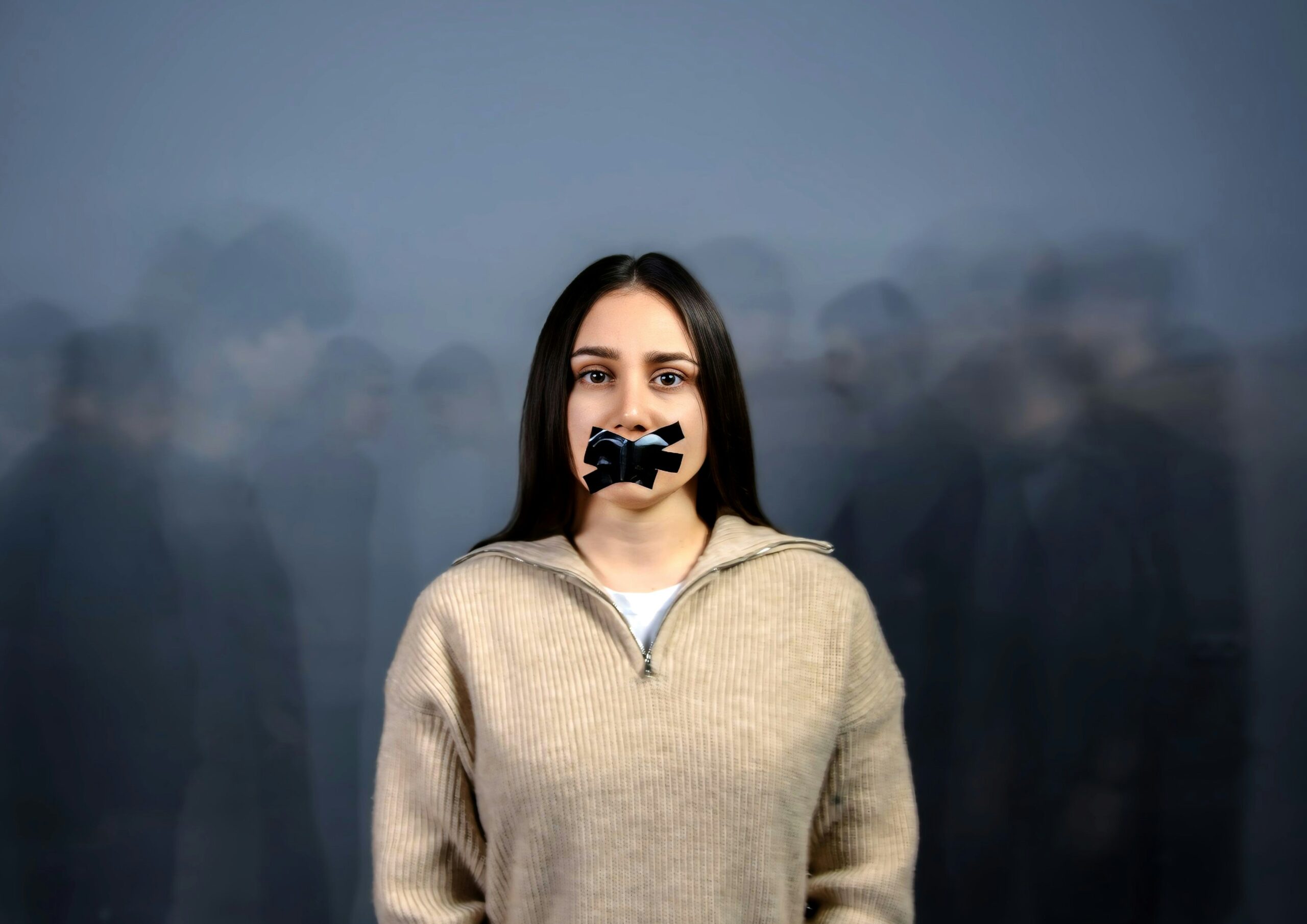
I was raised in a country where my grandparents were aware of which rooms were safe for conversation. In that place, a careless remark or an inappropriate joke about the wrong individual, overheard by the wrong neighbor, could destroy a person’s life. The Soviet Union constructed an entire society around that fear. It didn’t have to arrest everyone. It merely required a general sense of uncertainty about who might be next.
I believed that era was behind us. But it seems I was wrong
On 18 May 2026, Georgia’s State Minister for Coordination of Law Enforcement Agencies, who previously served as the chief of the State Security Service, approached a podium to declare the establishment of a new unit within the Interior Ministry that will “systematically monitor” all public communications throughout the nation. This includes social media posts, photos, captions, and videos. The unit will not wait for reports; instead, it will take the initiative to observe, evaluate what it deems to be hate speech or “aggressive communication,” and send cases directly to court.
What Georgia Looked Like Before This Announcement
To grasp the implications of this development today, it is crucial to first comprehend the preceding year, as this announcement is not an isolated event. It represents the most recent development in a strategy that the ruling party has been systematically constructing for over a year.
In February 2025, the parliament enacted a law that made “verbal insults, profanity, threats, or offensive remarks” towards public officials a crime, punishable by fines or up to 45 days in jail. Within weeks, Georgian Dream lodged an official complaint against its critics. Numerous journalists, activists, and opposition members found themselves summoned to court. Many discovered this through online listings. Later in the same year, the detention period for protest-related offenses was increased to 60 days. By October, simply participating in a demonstration that police had dispersed was redefined as a felony, which could lead to as much as four years of imprisonment.
These numbers are personal. They are people we know personally: journalists, activists and classmates who protested alongside me when we believed Georgia was on the path to Europe, to greater openness, and to a future better than the legacy we had received.
Human Rights Watch characterized 2025 as a period of “sharp deterioration” in Georgia’s human rights conditions. Amnesty International reported instances of “arbitrary detention and torture” of demonstrators. The Venice Commission, Europe’s leading constitutional advisory body, evaluated Georgia’s amendments from February 2025 and found that the language was so “vague and broadly defined” that it compromised legal certainty and was “likely to create a chilling effect” on free expression.
This is the environment in which a former chief of the secret service has now declared his intention to oversee what Georgians express.
Why This Fails Every Standard a Democracy Is Supposed to Meet
John Stuart Mill established the benchmark in 1859, and it remains unmatched: the sole justifiable reason for restricting speech is to avert genuine, tangible harm to others. Not mere offense. Not discomfort. Not the bruised egos of officials. Moreover, the restricted categories must be specified with enough precision that individuals know in advance exactly what they are prohibited from saying. Justice Brandeis articulated the democratic significance clearly in his famous 1927 concurrence in Whitney v. California: a populace can only self-govern if it can criticize its government “fully and without fear.” In the liberal tradition, the response to harmful speech is “more speech, not enforced silence.”
The Georgian unit fails to meet any of these criteria. Its mandate is intentionally vague. It addresses “hate speech, incitement of enmity, violation of dignity, and other similar acts,” without legal definitions available at the time of its announcement. “Other similar acts” do not constitute a law. It represents a blank check authorized by the Interior Ministry, which can be utilized whenever it finds it convenient.
The proactive nature of this unit is not just a technical aspect, it is fundamentally the purpose. When the state observes all public speech without needing a complaint, it is not necessary to arrest many individuals. The mere awareness that they could be monitored is enough. That awareness accomplishes the goal. Individuals self-censor. They moderate their language. They remove the post. They conclude that the joke is not worth the risk. No need for prosecution. The silence is established prior to any legal action being taken, and this silence is indistinguishable from that which results from outright censorship.
A unit within the Interior Ministry, managed by a government that has previously prosecuted critics for social media posts, cannot serve as an impartial arbiter of public dialogue. It acts as a political tool disguised in an institutional guise.
The State Minister referenced Germany, France, and the UK. However, the hate speech laws in Germany and similar statutes in France function within frameworks that feature independent judiciaries, robust constitutional protections for political speech, and a consistent history of applying these rules to both the powerful and the powerless. None of those nations has an Interior Ministry unit actively monitoring social media for content that offends officials. Utilizing the terminology of Western hate speech regulation while stripping away every safeguard that lends it legitimacy is not engaging in comparative law. It is merely the superficial disguise of oppression.
What I Want You to Understand
No one in Georgia’s government will declare that they are dismantling democracy. They will speak of safety, unity, and safeguarding against hatred. They will take to the podiums and reference European nations, employing the calm and rational language of governance. The documentation will be proper. The press events will be calculated.
Meanwhile, however, a subtler shift will occur. A journalist may second-guess publishing their piece. An activist will rephrase their statement multiple times before ultimately erasing it. A young individual in Tbilisi will glance at their phone and ponder: Is this worthwhile? Not due to an explicit law that forbids their expression, but because the authorities are surveilling, the standards are ambiguous, and the last people who voiced their opinions are facing legal action.
That does not constitute a functioning democracy. That is a democracy that has been hollowed out from within, its external forms maintained while its essence is stripped away, and it is being implemented in my nation, during my lifetime, by individuals who will assert earnestly that they are safeguarding free discourse.
Georgia has devoted three decades to striving for a future better than what Soviet governance left in its wake. Yet now, all that was achieved is being dismantled.
Photo Credit: Dav Hovhannisyan on Unsplash
Good reporting is cheaper than heavy-handed regulation. Support freedom and independent journalism by donating today.
This piece reflects the author’s views, not necessarily the entire magazine. We welcome a range of pro-liberty perspectives. Send us your pitch or draft.