In his 1992 essay Right-Wing Populism: A Strategy for the Paleo Movement, the late Murray Rothbard offered libertarians a risky bargain: abandon the academic zeal and open yourselves to right-wing populism as a strategic path toward political relevance. In his telling, the great enemy was no longer merely the state in the abstract, but the progressive coalition that had come to embody cultural liberalism, managerial power, and hostility to markets. The strategy was to fuse libertarian economics with a sharper populist mood, one built around hostility to political elites, cultural liberalism, and the expanding managerial state.
What Rothbard started was a great shift in the libertarian movement, with many of his followers aligning themselves with the Republican Party radicals and conservative populist movements, in the hope of steering the political right toward limited government and individual liberty.
Yet, looking today at the ideological makeup of the vanguard of the right-wing, one has to see the paleo strategy as an abject failure.
Previously, I wrote about the fatal alliance of neoliberalism and neoconservatism: how the neoconservative need for an expansive security state and interventionist foreign policy gradually derailed the promise of global markets and limited government. That tragedy has now come full circle. Rather than fully ending the era of “forever wars,” sections of the modern American right have increasingly moved toward economic nationalism, protectionism, stronger executive power, and populist politics.
A similar story played out in the case of paleolibertarianism. By aligning with the political right, libertarians may have secured occasional victories on taxation and regulation, but often at the cost of other pillars of the philosophy: civil liberties, non-interventionism, freedom of movement, privacy, and scepticism toward concentrated power.
The real question is not whether libertarians changed the right, but whether the right slowly remade libertarianism in its own image.
The American Experiment
Paleolibertarianism was born in the United States, and it is here that the strategy was first put to the test in its most perfect crystallisation: the Tea Party movement. The protests against bank bailouts, the push to end digital surveillance, and the Republican primary campaigns on budget cuts and reigning in the national debt enthused many, but did not last. The movement always functioned as a big tent spanning libertarians, fiscal conservatives, religious conservatives, and populists with very different priorities.
Over time, the centre of gravity shifted away from a coherent philosophy of limited government and toward amorphous populist politics. One Tea Partier after another joined Trump’s camp, unconcerned about the agenda hostile to free trade, limited executive power, and fiscal restraint.
The Tea Party, therefore, illustrates the central tragedy of paleolibertarianism. Rather than serving as a vehicle through which libertarians transformed the American right, it increasingly became a process through which libertarian energy was absorbed into an authoritarian populist movement.
Not So Libertarian Milei?
If Trump exposed the failure of the paleo strategy, Milei seemed to many like its vindication. Javier Milei was proof that libertarian ideas had finally entered mainstream politics. A self-described anarcho-capitalist and admirer of Austrian economics, Milei promised radical reductions in state intervention and an end to Argentina’s economic decline.
Economically, many libertarians have reasons to support aspects of his agenda. Spending reductions, deregulation, and market reforms align with long-standing libertarian arguments.
Yet libertarian programmes go beyond economic policy. It entails skepticism of concentrated power, support for civil liberties, opposition to excessive state coercion, and resistance to personality cults.
On social issues, Milei has repeatedly attacked the LGBTQ+ community, labelling gender-affirming care “absurd” and accusing the community of condoning paedophilia. He has also opposed the legalisation of all drugs, including medical marijuana, and enthusiastically backs and shares content of his police forces delivering hard blows against drug cartels and narcotrafficking networks. Milei’s own vice president also opposes same-sex marriage law and supports military conscription.
Just as many questions have to be raised on Milei’s track record in governance and accountability issues, with his controversial nomination of Ariel Lijo to the Supreme Court, who has faced over 30 disciplinary proceedings, including some based on allegations that Lijo delayed, and otherwise manipulated, investigations into corruption, and was also criminally investigated for “money laundering” and “bribes”.
Besides this, he has also faced political scandals implicating his chief of staff, Manuel Adorni (illicit enrichment, money laundering, and failure to declare assets) and his sister (audio recordings implicating her in in a major bribery and kickback scandal).
Milei has also downplayed the impacts of Argentina’s latest military dictatorship, and has found allies in populist right leaders such as Donald Trump, Viktor Orbán and Benjamin Netanyahu.
The issue is not whether Milei supports free markets; in many respects, he clearly does. The issue is whether libertarianism can be reduced to mere economics. Argentina’s president forces libertarians into a tough trade-off between civil liberties naturally paired with skepticism of expanding state power and rational fiscal policy.
If libertarianism means little more than tax reductions and deregulation it will never become s political movement in its own right, outside of increasingly anti-liberty right-wing politics.
Opportunity in Europe and Beyond
With the difficulties and contradictions of paleolibertarianism becoming increasingly visible in the United States, Europe presents an opportunity to rethink the broader libertarian project.
Yet even here, the same pattern has been emerging. Too many libertarians are now tempted by nationalist movements defined by contempt for the European project, without quite grasping the unprecedented nature of what the European Union has built: one of the world’s largest areas of free movement and free trade. One can and should criticize excessive regulation or bureaucracy; but one cannot lose sight of proportion, as it risks bringing down institutions that safeguard economic liberty in Europe.
Our continent has an opportunity to learn from the failures of the paleo strategy. Libertarians should avoid subordination to powerful political projects of hostile priorities.
If not, the EU will succumb to economic nationalism, protectionism, unfree trade, and the boiling frog of increasingly concentrated political power.
The only future for libertarianism lies in rediscovering its core principles: civil liberties, the rule of law, economic freedom, and scepticism toward concentrated power, regardless of where it originates.
Europe, despite its imperfections, offers a space in which these ideas can continue to evolve. Three centuries after the Enlightenment, we may once again find a home for libertarian ideas here. Our principles should become foundational to European institutions.
Because the tragedy of paleolibertarianism was not that libertarians entered politics. It was that, in seeking political relevance, they may have gradually forgotten what they were trying to defend.
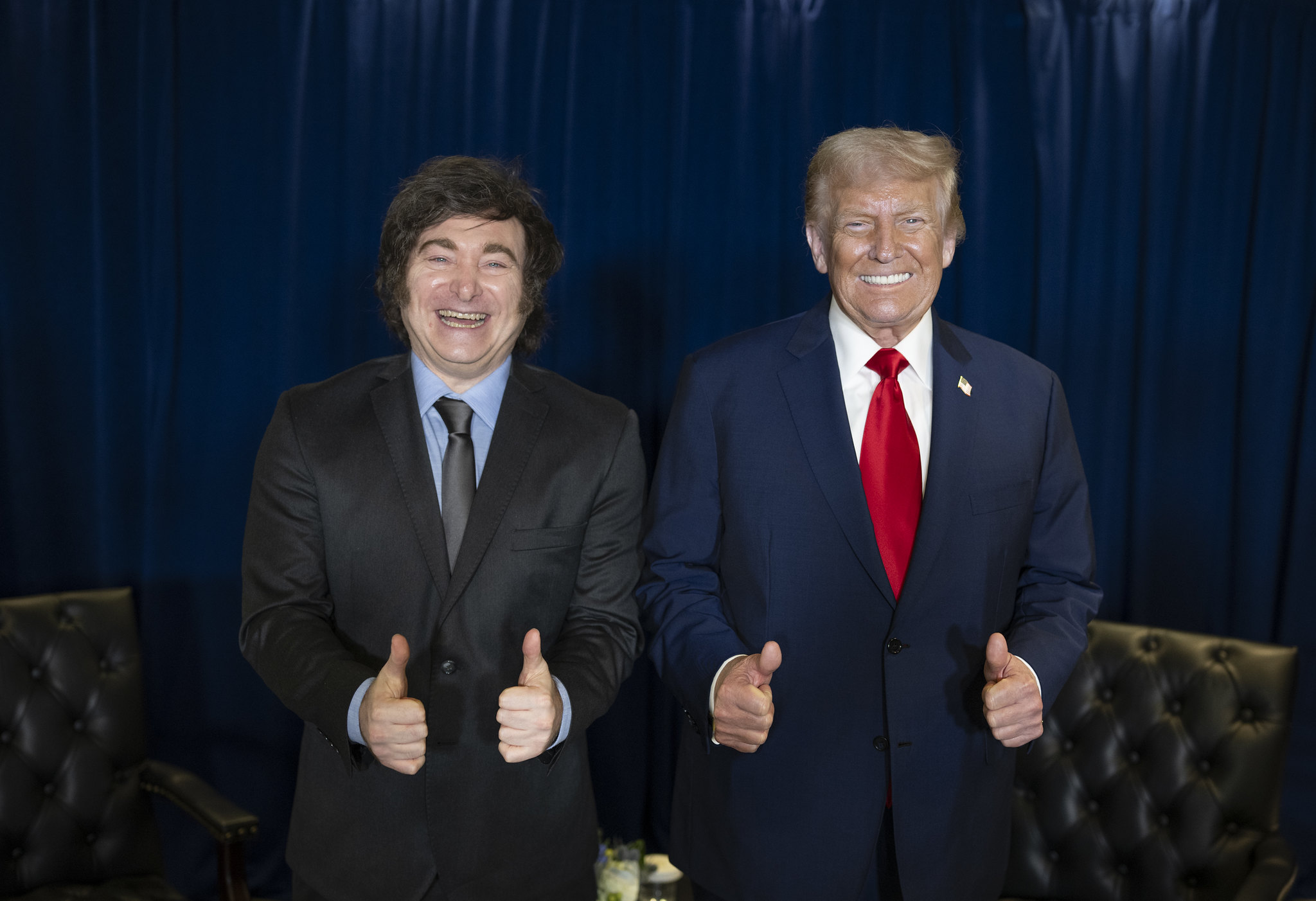
Photo Credit: “P20250923DT-1068” by The White House, United States Government Work
Not a cent from the state, ever. Keep us stubborn. Donate today!
This piece reflects the author’s views, not necessarily the entire magazine. We welcome a range of pro-liberty perspectives. Send us your pitch or draft.