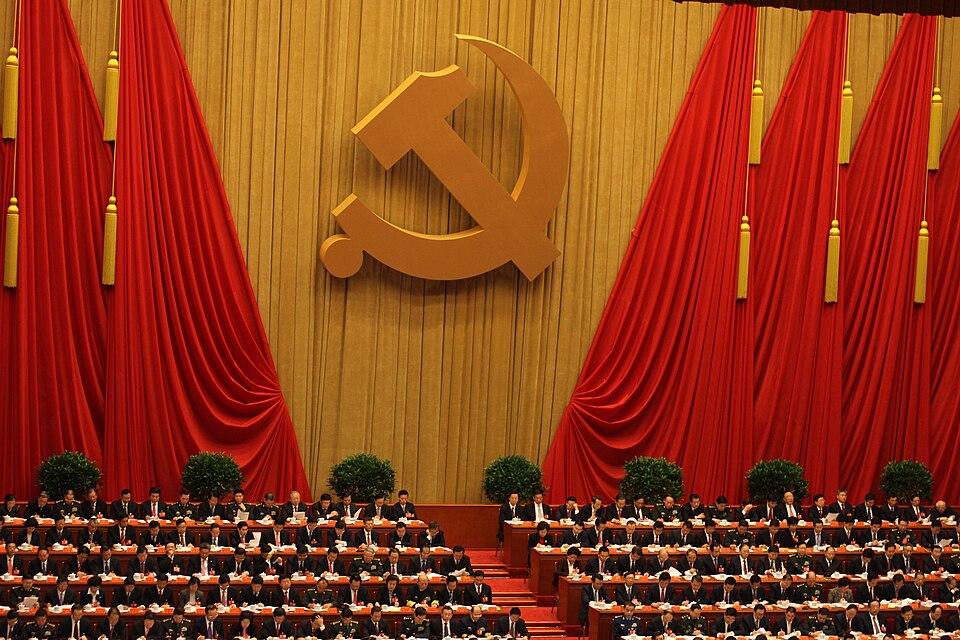
In 1983, Ronald Reagan called the Soviet Union an evil empire. Forty years later, the empire has disappeared. The Soviet flag was lowered at the Kremlin, the Berlin Wall fell, and the USSR is now little more than a chapter in history books.
But communism itself has not disappeared. It has adapted. In 1989, as Soviet communism was collapsing in Eastern Europe, thousands of Chinese students gathered in Tiananmen Square to demand greater freedom, democracy, and an end to corruption. Among them was Fengsuo Zhou, one of the leaders of the student movement, who would witness its brutal repression by the Chinese Communist Party.
The message seemed clear at the time: China would have to choose between political freedom and economic modernisation. It chose neither.
Instead, Beijing discovered something the Soviet Union had never truly understood: a communist dictatorship could survive and even become more powerful by adopting the instruments of a capitalist and globalised world. China opened its economy to foreign investment. It became the “factory of the world.” It joined the World Trade Organisation. Its companies expanded across every continent. Its technologies entered our homes, our universities, and our infrastructure.
And while the West hoped that economic integration would eventually make China more liberal, the Chinese Communist Party understood something else: globalisation could be used not only to create wealth, but also to create power.
Contemporary China is not the Soviet Union. It is something more sophisticated: a one-party authoritarian state, deeply integrated into the global economy, equipped with unprecedented surveillance technologies, possessing immense economic power and capable of projecting its political influence far beyond its borders.
Inside China, the Party controls political opposition, information, and a large part of public life. Abroad, it develops partnerships, finances infrastructure, builds political and academic networks, seeks to influence media narratives, and maintains close relations with some of the most authoritarian regimes on the planet.
The Soviet Union had attempted to build a world separate from the West. China has learned to establish itself inside ours. And that may be where the main authoritarian challenge of the 21st century lies.
The Empire Abroad
China does not seek only to control what happens within its borders. It also seeks to extend the limits of its power beyond its own borders.
During the Cold War, the USSR attempted to expand its model by supporting communist parties, revolutionary movements, and ideologically aligned governments. Contemporary China uses a much broader arsenal. Diplomacy, trade, investment, media, academic networks, diaspora organisations, technology, and political influence have all become instruments allowing the CCP to exercise its power on an international scale.
The “United Front”: Building Influence Networks
One of the central instruments of this strategy is what the CCP calls the “United Front.” It refers to a vast network of organisations and actors linked to the Party whose objectives include influencing groups outside it. This strategy does not concern foreign governments alone. It also targets Chinese diasporas, students, academics, associations, and certain civil society actors.
The Freedom House report on transnational repression describes the broader system of Chinese influence and repression abroad. However, an essential distinction must be made: not all Chinese associations, students, or Chinese cultural organisations abroad are instruments of the CCP.
The problem lies in documented networks and operations in which structures linked to the Party or the Chinese state actually seek to influence, monitor, or intimidate people abroad. And when influence is no longer sufficient, Beijing can go as far as pursuing its opponents outside China.
Repression Beyond Borders
This is probably the most striking aspect of this strategy. A Chinese dissident may leave China, but that does not necessarily mean that they escape the power of the Party.
Freedom House calls this phenomenon “transnational repression.” In its 2026 report on transnational repression, Freedom House recorded 1,375 direct physical incidents of transnational repression between 2014 and 2025, committed by 54 governments. China is among the main perpetrators and accounts for 23% of the incidents recorded during this period.
The methods used are numerous: threats, surveillance, cyberattacks, pressure on family members remaining in China, detention, expulsions, and, in some cases, physical attacks. The targets are not only Chinese political opponents. Freedom House also documents campaigns targeting Uyghurs, Tibetans, Hong Kongers, human rights activists, journalists, and members of other minorities or religious movements.
This phenomenon reveals something fundamental about the Chinese conception of sovereignty. For a liberal democracy, a citizen who settles abroad remains subject to the laws of their host country, while their government of origin normally cannot freely exercise its authority over them.
For the CCP, however, this boundary can be much more porous. Activists living in a Western democracy can be monitored. Their families remaining in China can be threatened. Opponents can be intimidated into giving up protesting or criticizing Beijing.
In February 2025, Thailand expelled 40 Uyghurs to China who had been detained in the country for around eleven years. The operation prompted condemnation from the UN, the United States, and the European Union, because of the risk of ill-treatment and torture these people could face after their return to China. Beijing, for its part, rejected these accusations and stated that the deportees had been treated in accordance with the law.
This event illustrates an important dimension of Chinese power: Beijing’s ability to make its interests felt beyond its territory, including when it concerns people who have already left China.
Covert Operations in the West
Transnational repression can also take more direct forms. In the United States, the FBI states that the Chinese government is among the regimes seeking to monitor, intimidate, or harass dissidents and people considered hostile to the regime outside China.
American court cases have established some of these mechanisms. In 2024, for example, a federal court in New York convicted Shujun Wang, who secretly worked for Chinese intelligence services to monitor Chinese pro-democracy activists in the United States. Four Chinese officials from the Ministry of State Security were also implicated in the case.
Another case tried in the United States concerned an operation intended to force a U.S. resident and his family to return to China. The U.S. Department of Justice established that individuals were acting at the request of the Chinese government as part of “Operation Fox Hunt,” a campaign launched by Beijing to track down people abroad whom Chinese authorities accuse, among other things, of corruption.
The case of “overseas police stations” is another particularly striking example. In 2025, a New York resident pleaded guilty to participating in the clandestine operation of a Chinese police station in Manhattan, according to the U.S. Department of Justice. In 2026, another defendant, Lu Jianwang, was convicted in connection with operating the station for China’s Ministry of Public Security.
American authorities stated that the system was intended, among other things, to extend the repressive activities of the Chinese Ministry of Public Security into the United States and more broadly into the West.
But Chinese influence does not rely solely on coercion. It also relies on the ability to organise networks.
Influencing Rather Than Conquering
The term “United Front” is particularly important here. It is not an invention of Western observers. The CCP itself describes the “United Front” as an instrument for bringing different groups together around the Party’s objectives and explicitly includes among its audiences people studying abroad, overseas Chinese, and their relatives.
The question is therefore not whether Beijing maintains relationships with Chinese people living abroad. The question is how some of these networks can be used to defend the political interests of the CCP.
Researchers at the Hoover Institution have documented a Chinese foreign influence apparatus mobilising Party, state, and non-state organisations. Their studies particularly highlight the role of the “United Front” system in influence efforts in the United States and other democracies.
Unlike the Soviet strategy, China’s strategy does not necessarily consist of directly imposing communism on foreign societies. It more often consists of building networks of relationships and interests capable of promoting Beijing’s positions, protecting its image, or reducing the political cost of its actions. This strategy also extends to information.
The Battle for Information
In 2023, the U.S. State Department’s Global Engagement Center published a study on how Beijing seeks to reshape the international information environment.
The report identifies five methods in particular: propaganda and censorship, promotion of digital control technologies, use of international organisations and bilateral partnerships, a combination of cooperation and pressure, and control of Chinese-language media.
The report also states that Beijing invests considerable sums in this ecosystem and seeks to encourage governments, journalists, and other foreign actors to adopt narratives favorable to China.
This phenomenon reveals a major evolution. The USSR essentially sought to attract other states into its bloc or support ideologically aligned movements. Contemporary China has a much broader range of instruments.
It has diplomatic relations, trade, investment, community networks, technology, media, academic cooperation, and, in an increasing number of cases, coercion.
Moscow sought to build a bloc. Beijing builds dependencies, networks, and interests.
Russia: Allowing Moscow to Hold On
China is the partner that allows isolated regimes to hold on, and the Sino-Russian relationship is probably the most important example.
Since the full-scale invasion of Ukraine in 2022, Beijing has not joined Western sanctions against Moscow. On the contrary, economic exchanges between the two countries have expanded considerably, while China has become an essential outlet for Russian oil.
In August 2026, the U.S.-China Economic and Security Review Commission estimated that China had helped Russia withstand Western sanctions by purchasing, among other things, its oil and supplying dual-use goods potentially capable of supporting the Russian defense industry.
The commission also describes the Sino-Russian partnership as a central element of a broader rapprochement between several authoritarian powers.
China, in addition to strategic support and the delivery of military equipment, therefore allows Russia to continue trading, exporting, and importing despite part of the Western economic pressure.
Iran: Trading Despite Sanctions
It is along this same pattern that China’s support for Iran can be understood, by allowing it to trade despite sanctions.
China is one of the main buyers of Iranian oil, and the two countries are developing cooperation in the fields of energy, trade, diplomacy, and especially repression.
In September 2025, Xi Jinping stated that relations with Iran were among Beijing’s priorities in the Middle East and called for deeper cooperation in trade, investment, energy, and infrastructure. In 2026, the two governments continued to describe their relationship as a comprehensive strategic partnership.
This relationship has taken on particular importance since Iran’s significant weakening following the popular uprisings of January and February, the beginning of the war with the United States on February 29, 2026, and the sanctions imposed on Iran by the international community.
The United States has notably sanctioned Chinese companies accused of participating in networks allowing Iran to sell its oil or acquire certain technologies.
Cuba: Keeping the Regime Alive
In Cuba, China allows the communist regime to remain alive. The case of Cuba has a much more direct ideological dimension. Both countries are governed by communist parties and have maintained close political relations for decades.
Beijing continues to publicly affirm its support for the regime installed in Havana. This cooperation is also security-related. China maintains increasingly close cooperation with Cuba in the fields of policing, internal security, and defence.
Perhaps the most revealing fact is the cooperation with the Black Berets, a special unit of the Cuban Ministry of the Interior known for its role in suppressing political dissent.
A Carnegie Endowment study on China’s foreign police training identified at least three Chinese training programs for this unit, in 2008–2009, 2016, and 2021. The training included close-quarters combat, precision shooting, riot control, and advanced tactics.
Carnegie notes that the Black Berets have been involved in the repression of dissent and were subsequently subject to U.S. sanctions for human rights abuses.
In August 2025, Chinese Minister of Public Security Wang Xiaohong still met with his Cuban counterpart in Beijing and announced the strengthening of cooperation in policing, security, and law enforcement capabilities.
The two sides had already committed to cooperating to prevent “colour revolutions,” a term used by Beijing to describe certain political mobilisations targeting authoritarian regimes.
In September 2025, Chinese Defence Minister Dong Jun stated that Beijing wanted to further deepen military cooperation with Cuba, personnel exchanges, and practical cooperation between the two armies.
Thus, when Cuban police or security forces face political unrest, China does not merely maintain diplomatic relations with Havana: it also participates in developing the capabilities of its security forces.
Technology in the Service of Control
China also uses its technology in the service of control.
Cuba has built much of its telecommunications infrastructure around Chinese companies. According to the Center for Strategic and International Studies, the main suppliers to Cuban operator ETECSA include Huawei, ZTE, and TP-Link. Researchers have also identified the use in Cuba of Huawei’s eSight network management software, which can enable the filtering of Internet searches.
This infrastructure took on particular importance during the July 2021 protests, when thousands of Cubans took to the streets to protest against the government. The Cuban regime then interrupted or severely disrupted Internet and telephone communications, preventing protesters from communicating freely with one another and with the outside world.
The CSIS considers that telecommunications infrastructure supplied by Chinese companies contributed to giving the Cuban government the means and techniques to control communications.
In this way, Beijing does not need to send soldiers into the streets to contribute to the repression of a foreign regime. It can provide the technological infrastructure that allows that regime to monitor, control, and isolate its own population.
Cuba, an Intelligence Platform
For China, Cuba is also an intelligence platform. The island has a strategic dimension that goes far beyond the country’s domestic affairs.
In 2024, the Center for Strategic and International Studies identified four Cuban sites potentially supporting Chinese intelligence-gathering activities. Satellite imagery analysis suggested in particular that some of these sites could be used to intercept communications and monitor U.S. and European activities in the region.
In 2026, new satellite imagery showed significant construction and changes at several of these facilities, according to a further CSIS analysis published in June 2026.
The history of this cooperation goes back several decades. Open-source reports notably describe longstanding links between the Chinese and Cuban military and intelligence apparatuses, as well as Chinese equipment intended for the island’s electronic surveillance capabilities.
The CSIS also emphasises that military relations between the two states have gradually strengthened.
This gives Cuba particular importance for Beijing. As during the Cold War with the USSR, Cuba represents a strategic location for China less than 200 kilometers from the American coast.
And today, while the regime ruling Havana is at its weakest, China allows it to survive. China continues to defend Cuba in international institutions and oppose policies intended to isolate the Cuban government.
In February 2026, Beijing once again publicly expressed its support for Cuba in the face of external pressure. In September 2026, Chinese Vice President Han Zheng again called for the lifting of the U.S. “blockade” against the island before the United Nations General Assembly.
Human Rights Watch currently documents the arbitrary detention of hundreds of Cuban critics and protesters, including people arrested during the July 2021 protests.
And here, the Chinese role is real. Beijing does not merely trade with a communist dictatorship: it provides it with surveillance technologies, trains some of its security forces, deepens military cooperation, maintains intelligence links with it, and provides it with constant diplomatic support.
Venezuela: The Economy as an Instrument of Power
We have a rather similar case with Venezuela, despite the changes that occurred in early January 2026.
Under Nicolás Maduro’s government, Beijing had become one of Caracas’s main economic partners. The relationship was based in particular on Chinese loans backed by oil, investments in the energy sector, and massive purchases of Venezuelan crude oil.
According to Reuters, the cumulative commitments of Chinese creditors to Venezuela reached approximately $106 billion between 2000 and 2018, mainly in the form of oil-backed loans. At the beginning of 2026, the debt still owed to China was estimated at between $10 and $15 billion. The relationship was therefore not limited to an ideological alliance. Beijing also sought to secure access to resources and protect its claims.
Moreover, as with Cuba, China offered Venezuela information-control services allowing the Caracas regime to monitor interactions among its population, as well as much more direct assistance through the training of government-linked armed groups and the delivery of anti-aircraft and missile systems.
Venezuela thus illustrates another dimension of the Chinese strategy: the economy can become a means of creating a lasting relationship of dependence, which then extends into the technological and security spheres.
North Korea: Keeping a Failing Regime Alive
Finally, there is China’s famous neighbor: North Korea.
Today, China remains Pyongyang’s main partner. According to Chinese customs data, Sino-North Korean trade reached $2.73 billion in 2025, an increase of 25% year-on-year and a level close to that of 2019.
Here again, China allows an authoritarian regime to remain alive. The Sino-North Korean relationship above all shows that the Chinese strategy is not limited to great powers or countries possessing significant natural resources.
When Beijing considers a regime to be a strategic partner, it can maintain economic and diplomatic exchanges with it despite its international isolation.
A Different Empire
China therefore does not seek to reproduce the Soviet Union exactly. It does not necessarily ask its partners to adopt Marxism-Leninism. Nor does it seek to build an Iron Curtain separating the communist world from the Western world.
Its strategy is different.
China has learned to build its influence inside ours.
Photo Credit: Dong Fang, Public domain, via Wikimedia Commons
We roast sacred cows medium-rare. Help fund the habit!
This piece reflects the author’s views, not necessarily the entire magazine. We welcome a range of pro-liberty perspectives. Send us your pitch or draft.