On May 25, 1809, the bells of the Basilica of San Francisco in Chuquisaca did not just announce a mutiny. They proclaimed the first cry for liberty (primer grito libertario) in the Americas. It was in this rugged, defiant territory that the spark was lit, which set the entire continent ablaze in its quest for emancipation. Years later, reflecting on the fierceness and determination of this land that would adopt his name, Simón Bolívar described Bolivia as the reflection of “an unbridled love for liberty” (un amor desenfrenado por la libertad). Bolivians still see this phrase as a founding mandate of the country.
That love, in its purest conception, was not a mere romantic passion, but an unrenounceable demand for self-determination, the repudiation of tyranny, and the establishment of an order where the individual was not a subject, but a sovereign citizen. However, upon observing the contemporary national reality, it is imperative to subject the current state of that historical legacy to a critical and rigorous analysis. What remains of that frantic love in today’s Bolivia? The answer, unfortunately, forces us to confront a reality where liberty has been systematically suffocated, cornered by a state apparatus that has distorted the social contract.
Over the last two decades, the country has been a laboratory for a political project that, under the rhetoric of social vindication and popular hegemony, has established a suffocating socialism. This model has not only hypertrophied the size of the State but has also engulfed the independence of public powers, blurring the boundaries of the rule of law. Individual liberty—understood as the capacity to enterprise, to express oneself without coercion, to dissent politically, and to prosper through personal merit—has been gradually replaced by a structural dependence on the power of the day.
One of the most pernicious mechanisms of this democratic erosion has been the instrumentalization of unionism (sindicalismo). What historically originated as a legitimate tool to defend labor rights has mutated into a prebendal corporatism that operates as a coercive force parallel to the State. Weeks ago, in Bolivia, certain union elites acted with de facto impunity, paralyzing the country, blocking free transit, and dictating the public agenda through force. This hegemonic unionism does not defend the worker. Rather, it subjugates the common citizen, the merchant, the transporter, and the student, hijacking freedom of movement and economic liberty. Corporatism has replaced the law, creating first-class citizens—those aligned with and protected by the elite—and second-class citizens, subjected to the arbitrary will of the de facto power.
The inevitable consequence of this institutional degradation is chronic instability. It is no coincidence that, in recent history, Bolivia has been the scene of severe political crises and attempted coups d’état. When the constitution is treated as a malleable document serving the interests of caudillismo, and justice becomes the persecutory arm of the executive branch, democratic channels become obstructed. Crises and institutional breakdowns are not sudden anomalies, but the terminal symptom of a system that has lost its legitimacy of exercise. A country where power is disputed outside constitutional frameworks is a country where liberty is nonexistent. For without legal certainty, the rights of individuals are mere temporary concessions from the strongest.
We are, therefore, facing a painful paradox: the nation that launched the fight for liberty on the continent is now struggling to survive, defending the last bastions of its institutional framework against a predatory statism. The “frantic love” of which Bolívar spoke seems to have been tamed, anesthetized by subsidies, clientelism, and the fear of state repression.
But history is not written in stone, and it is in the moments of deepest institutional darkness that the forces of counterbalance arise. This is where Bolivia’s youth take on a historic duty that no one else can carry for them.
The current generation of youth (students, academics, entrepreneurs, and workers) cannot settle for inheriting a country designed for corporate submission. We cannot accept the normalization of a state that punishes talent and rewards political loyalty. A civic awakening is urgent, an intellectual rebellion that dismantles demagoguery and reclaims the primacy of reason and law.
The youth must recover that unbridled love for liberty as a radical conviction. A love so unwavering that it does not tolerate the abuse of power; so intense that it rejects the chains of welfarism; and so brave that it dares to think, to question, and to build outside of imposed dogmas. The cry of 1809 was not an event frozen in time, it was a torch. Today, facing the shadows of authoritarianism and decadence, that torch must be wielded once again by an irreverent youth, ready to remind the tyrants of the day that liberty in Bolivia is not begged for. It is conquered, it is exercised, and above all, it is loved madly.
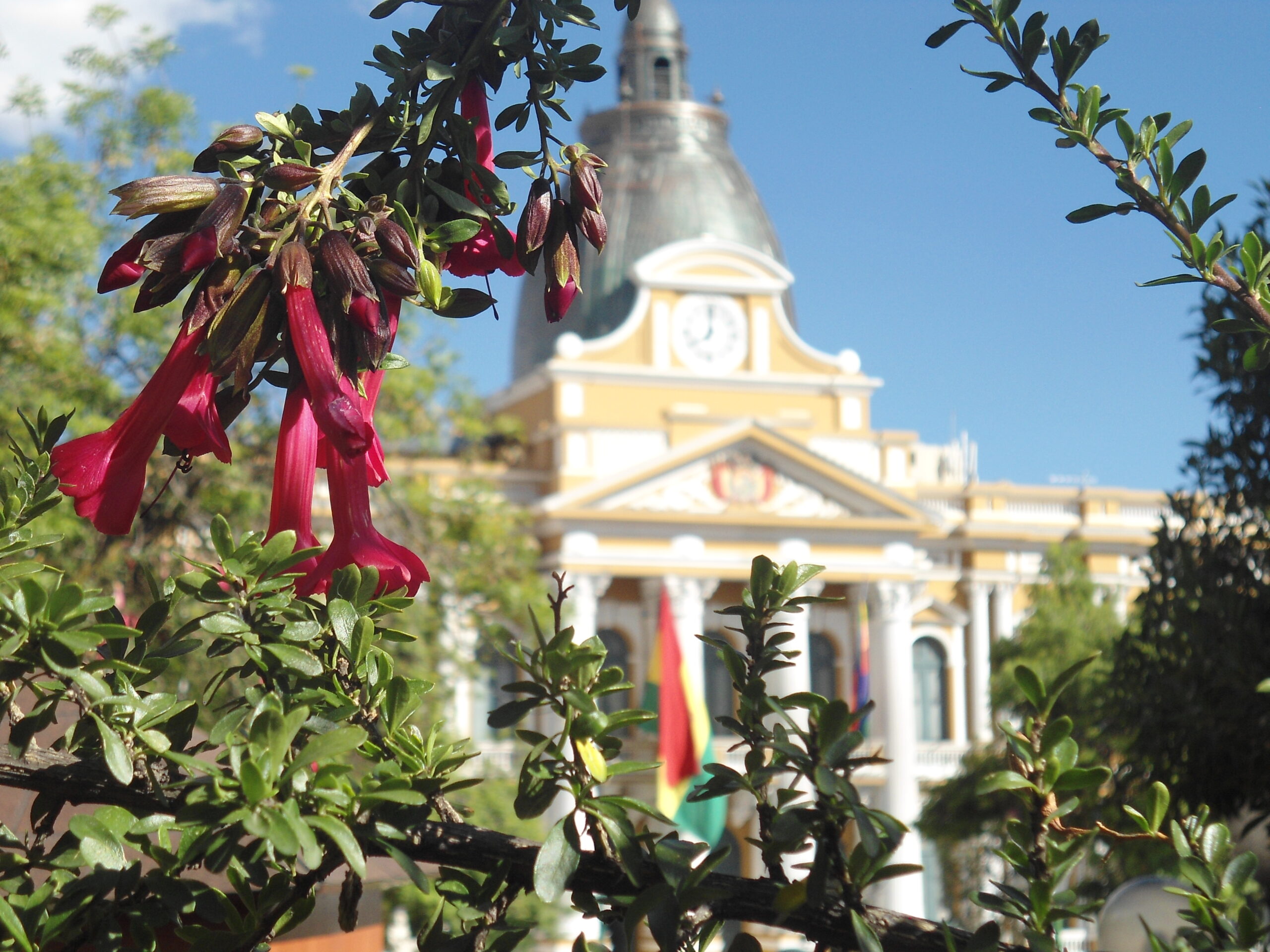
Photo Credit: Alison Selena Alvarado Gutierrez
We roast sacred cows medium-rare. Help fund the habit!
This piece reflects the author’s views, not necessarily the entire magazine. We welcome a range of pro-liberty perspectives. Send us your pitch or draft.