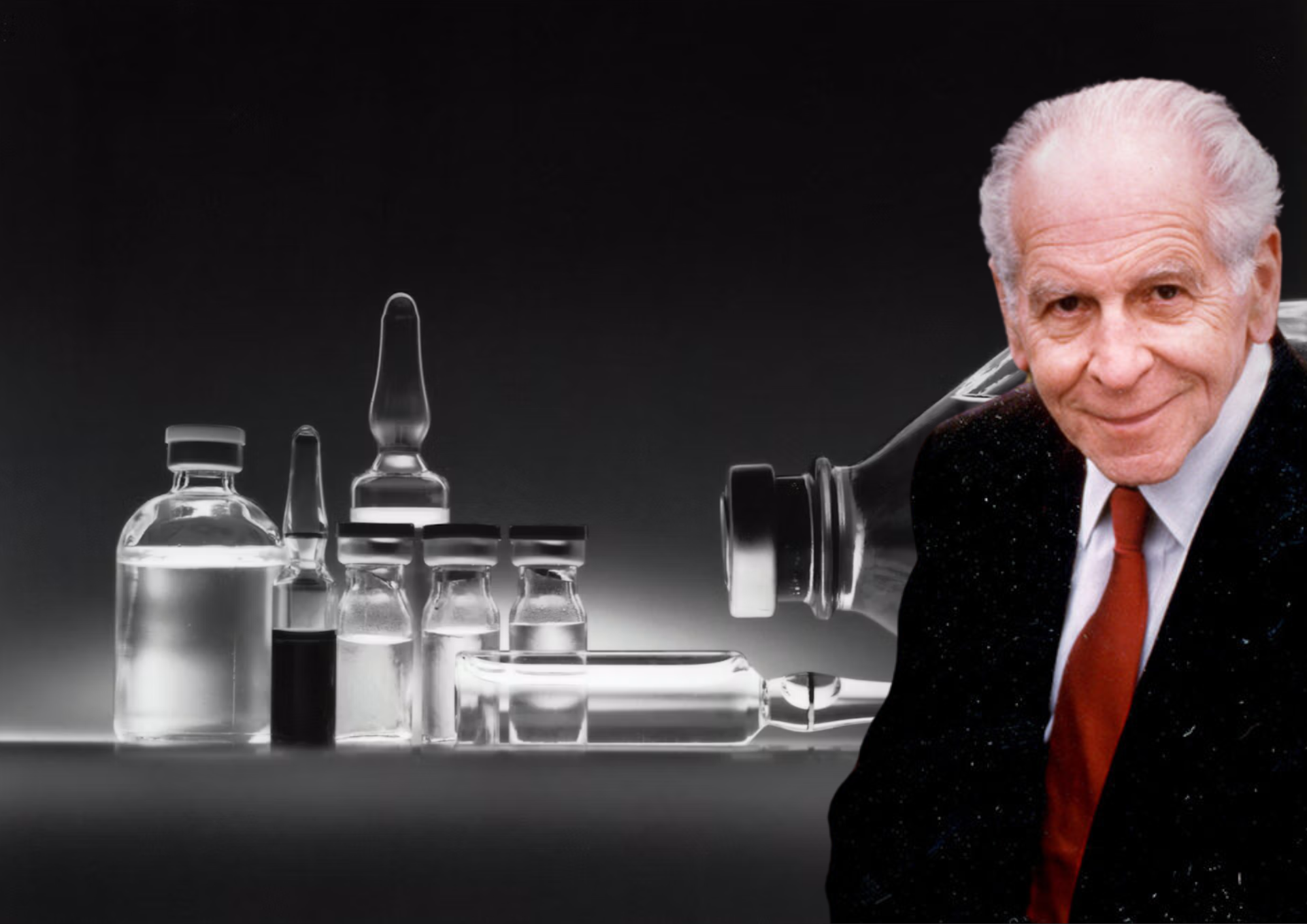
Alan Rzeszutko & Ian Golan on the transformation of public health from a tool for addressing genuine harms into a system of moral regulation.
“Harming people in the name of helping them is one of mankind’s favourite pastimes,” wrote the great libertarian psychiatrist Thomas Szasz. Few pastimes have proved more politically durable. While many of the justifications for invasive public policy have been slowly chiselled away, public health hegemony is just as alive and more vigorous than when those words were put together 30 years ago.
We live in a world forewarned by Szasz. In Poland, as elsewhere in Europe, the state concerns itself with diligent classification of certain substances as “dangerous narcotics,” which are neither dangerous nor narcotic, but which are particularly popular with groups whose members readily lend themselves to social and psychiatric stigmatisation. With the target acquired, it prohibits, restricts and gatekeeps these substances through corrupt and capricious law enforcement of those associated with their use, as bad criminals (“pushers”) and as mad patients (“addicts” and “dope fiends”). To justify it all, it coordinates a fearmongering campaign that “the substances spread at an alarming rate, thus waging, in effect, a gigantic advertising campaign for the use of drugs that, although illegal, are supposedly the source of immense pleasures.’’
Steeped in the same public health sanctimony is much of the rhetoric surrounding harm reduction. The therapeutic state is not out of its depth in its efforts to medicate us; it is merely misguided about the specifics. A few less cigarettes, a few more vapes, and we shall be good to go; addicts saved from their sinful desires.
What the now oft-forgotten Szasz did was challenge the prevailing paradigm. Rather than accept the medical category of addiction at face value, he examined the moral and political judgments concealed within it:
“In its present popular and professional use, the term “addiction” refers not to a disease but to a despised kind of deviance. Hence the term “addict” refers not to a bona fide patient but to a stigmatised identity, usually stamped on a person against his or her will. (…) there is, in fact, no such thing as “drug addiction.” To be sure, some people do take drugs that the authorities do not want them to take; and some people do become used to taking certain substances, or become habituated to them; and the various substances which people take may be legal or illegal, relatively harmless or quite harmful, But the difference between someone “using a drug” and his being “addicted” to it is not a matter of fact, but a matter of our moral attitude and political strategy toward him.”
Here we arrive at the central inversion of the therapeutic state: moral and political condemnation is recast as medical diagnosis, while coercion is presented as treatment. “Church, Medicine, and State continue to collaborate in maintaining social order by regulating personal conduct (…) as medical values have replaced religious values, medical rituals have taken the place of religious rituals.”
In Poland, this pattern repeats itself time and again. Once, as Szasz warned, “entrenched becomes the idea in the public mind that caring for people’s health requires not individual self-control but political control, that is, control by deception, seduction, and coercion.” And deception, seduction, and coercion certainly follow.
Deception
In April of this year, Polish rapper Taco Hemingway became the target of action by the Central Pharmaceutical Office. It was not, however, his substance use that drew the ire of the Polish authorities. Instead, he found himself in a legal battle over lyrics to his song “I Fell in Love In Front of the Pharmacy”, which featured the drug “Solpadeine”. Hemingway used the drug as an element in character creation, building a narrative about the mental health problems of the protagonist of both the song and his newly released album. The reference to the drug was undoubtedly part of a broader warning against the dangers of a variety of substances.
Unconcerned by any of the context, the Central Pharmaceutical Office issued a decision finding the rapper to have illegally promoted the drug and ordered the word removed. Hemingway’s label immediately issued a statement refusing to implement the verdict.
Besides the obnoxious paternalism, the decision is clearly unconstitutional as it violates the right to creative freedom. The therapeutic state cannot tolerate unpoliced discourse about drugs; their pleasures and their perils alike.
Seduction
In March last year, the Polish Ministry of Health introduced proposals aimed at restricting the promotion and availability of alcohol. The project envisaged a series of draconian restrictions: a ban on the sale of alcohol at gas stations (seemingly under the assumption that drivers indulge in their new bought spirits straight away), tightened regulations for online sales, a crackdown on discounts and promotions, and outright prohibition of alcohol in non-liquid forms (including powders, gels, pastes, and crystals).
What is more, the bill would impose a blanket ban on alcohol advertising, abolishing the long-standing exception that permits beer advertisements under already draconian conditions. Beer promotion cannot be associated with health, may appear on television and radio only at night, and must carry a warning about alcohol’s harmful effects occupying one fifth of a billboard’s surface. This has effectively led breweries to concentrate their advertising efforts on non-alcoholic beer, but that too has come under fire from Poland’s paternalistic crusaders.
The Health Ministry is brewing up a ban on advertising non-alcoholic beer, which is due to take effect in 2027 and will be backed by fines of up to €176,500. This, of course, is justified by the unfounded fear that non-alcoholic beer is accustoming society to a culture of alcohol consumption. In Szasz’s terms, it is part of “the ceaseless warfare of authority against the exercise, both real and symbolic, of autonomy.”
This all seems profoundly odd for anyone following data on drinking habits development. Poles are drinking less and less alcohol year after year. Concerning just beer, the decline in its production in Poland has reached 5.8 million hectolitres. Among those under 24, 40.3% of citizens report limiting their alcohol consumption, while among those aged 25-34, which still includes Generation Z, a staggering 51% report consuming less alcohol than before.
The government’s focus on beer, of all alcoholic products, also seems misplaced given its declining consumption and relative unimportance among the heaviest drinkers, unless one considers the public-choice dynamics operating behind the scenes. Emblematic is the analysis funded by the Polish spirits industry, which called on policymakers to crack down on advertising for non-alcoholic beer. An often-overlooked explanation for the prevalence of the nanny state might be that firms enlist regulatory coercion to shut their competitors out of the market.
Inherent in the entire story is the denial of young people’s agency. We are told that “Those who used drugs could not help themselves. Since they were the victims of their irresistible impulses, they needed others to protect them from these impulses. (…) The policymakers, the public health experts work and rework this anti-self-control message where all mention or reference to self-discipline must be degraded and dismissed as “moralistic” and “unscientific” so that the most absurd ideas concerning man’s complete helplessness to control himself and the most abhorrent methods to control him by external force must be extolled as “scientific” and “therapeutic.”
Coercion
Across the globe, alcohol is sold in myriad containers, from glass bottles and cans to even plastic wine bags. Yet Poland may be the only country where the shape of an alcohol container itself has provoked a state crackdown. When a small manufacturer found success selling spirits in squeezable pouches, Poland’s nanny-state crusaders whipped up a moral panic over fears that the packaging would appeal to children, even though the pouches were clearly labelled and bore unmistakably alcoholic names.
The ruling party deployed an entire arsenal of regulatory intimidation, from the Labour Inspectorate to the consumer-protection authority, to pressure a private company into halting production of the alcohol pouches, while the prime minister threatened personal consequences for civil servants who had allowed the product to slip under the radar. No law had been broken, yet the company was bullied into submission. The mob’s appetite for punishment was satisfied: the company suffered an estimated €10 million in losses, while 50 employees lost their jobs.
As HL Mencken pointed out during the prohibition era, “It is precisely that sort of entertainment that makes Prohibition popular with the boobery. It is precisely because it is unjust, imbecile, arbitrary, and tyrannical that they are so hot for it. The incidental violation of even the inferior man’s liberty is not sufficient to empty him of delight in the chase.”
And so we can be certain that any sufficiently potent outbreak of mob panic will inevitably claim its victims. One need only wait for a remotely plausible justification. Perhaps a rumour that pregnant women find gin sold in Tetra Paks irresistible would suffice to trigger another nationwide ban?
One feels safer knowing that our dear therapeutic state remains ever vigilant.