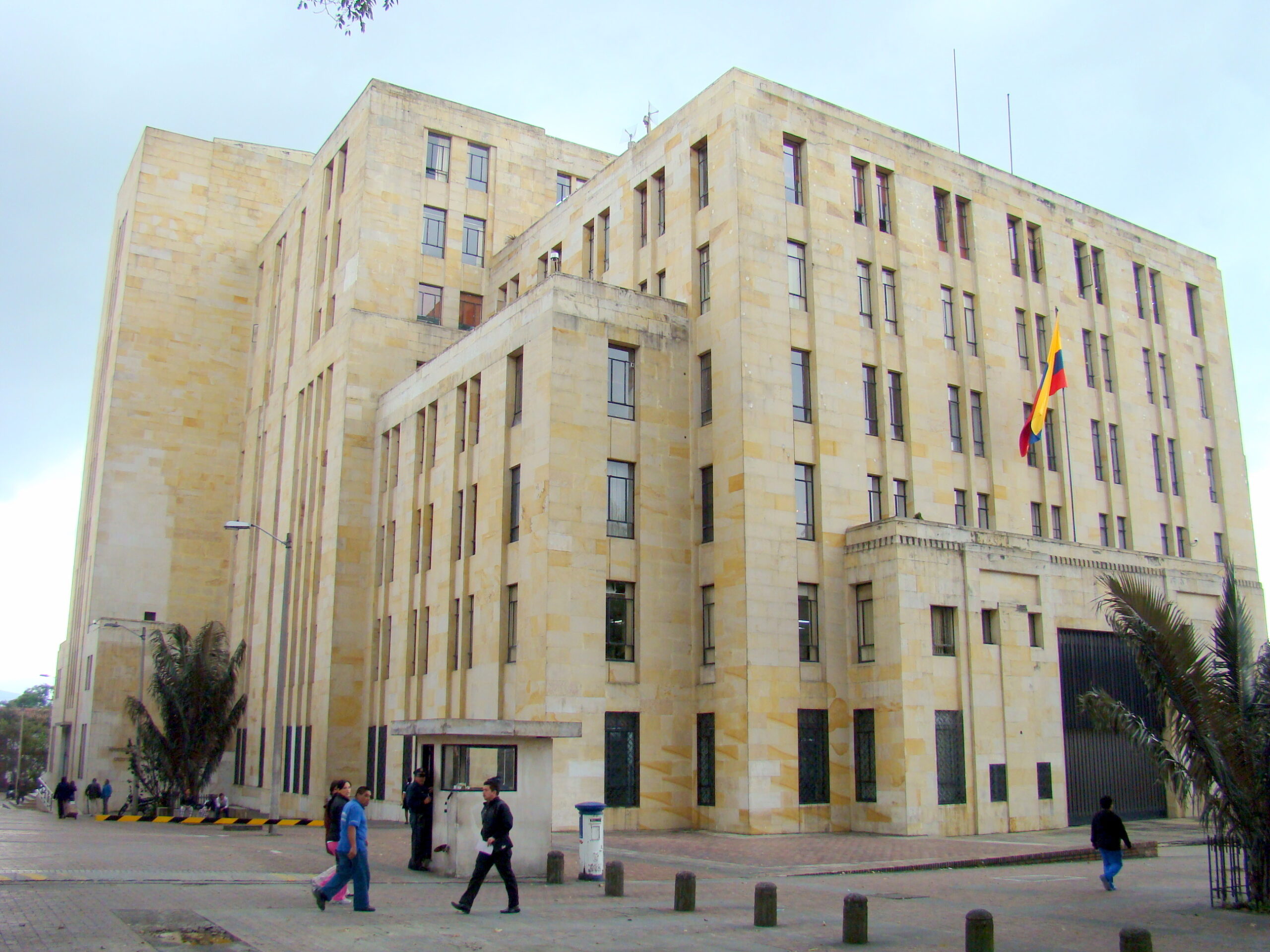
In late August 2026, Colombia’s Finance Ministry presented Congress with a revised General Budget of the Nation (PGN) for 2026. The budget grew from 575.6 to 634.9 trillion pesos, an increase justified by social spending, pensions, wages, and earthquake recovery. At first glance this looks like routine budget housekeeping. In practice, it is the latest chapter in a pattern that should worry anyone who values economic freedom, economic growth and development: a state that spends far beyond what it collects, finances the gap by suspending its own rules, and quietly passes the bill to future citizens. That combination of overspending, deferred rules, and currency pressure deserves closer scrutiny.
The Numbers Behind The Headline
The National Government’s deficit rose from 4.2% of GDP in 2023 to 7.1% in 2025, and even the government’s most optimistic projections put it at 6.2% for 2026. Private analysts expect it could reach 6.5–7%. By mid-2026, Colombia’s Comptroller General warned of a financing shortfall near 303 trillion pesos, since only 45.5% of projected revenue had been collected, partly because Congress rejected the tax-financing bill and the Constitutional Court struck down most emergency taxes. Public debt, meanwhile, is approaching a historic high of 61% of GDP, above the legal 55% debt anchor.
Rules That Stop Being Rules
None of this would be so troubling if the institutions were functioning as designed, and Petro’s governance demonstrates once again progressive statism by activating the Fiscal Rule’s escape clause, meant for extraordinary shocks, for three consecutive years, 2025 through 2027. Colombia’s fiscal watchdog, the CARF, has stated that the justification does not meet the legal standard for exceptionality, since the government cited its own spending rigidity rather than an external shock. A fiscal rule is only valuable if it is credible, credibility is earned by predictable actions not by promises, and it lets households and firms form stable expectations about taxes, inflation, and currency. When the body bound by the rule can indefinitely defer it, the rule stops being a rule and becomes a suggestion, expanding the space of political discretion relative to predictable law. This is precisely what Hayek warned erodes the rule of law that markets need.
How A Bigger State Budget Shrinks Private Choice
The liberal case against runaway spending is not an aesthetic preference for small government. Every peso spent beyond what is collected must come from somewhere, and each source narrows the choices available to ordinary Colombian citizens. Debt issued to cover the gap competes with private borrowers and pushes up interest rates. This crowds out investment that individuals and firms would otherwise have chosen, increasing the opportunity cost. When debt became costlier, the previous government under former president Gustavo Petro, turned to currency markets. This year the Treasury bought close to a billion dollars in the spot market to meet prepayment obligations, pushing the exchange rate toward 3,800 pesos per dollar. This is an invisible tax on anyone holding pesos or buying imports. Despite the fact that the Representative Market Rate has been trending downward over the last few weeks, even breaking below the 3,000-peso barrier, everything indicates that the Banco de la República will intervene to devalue the peso. As usual, they would argue that there is a need to protect exporting entrepreneurs.
Every trillion pesos redirected through the PGN is a trillion allocated by political criteria, congressional bargaining, ministerial priorities, rather than the price signals and market laws that tell an economy where resources are most valued.
The Other Side Of The Debate
Conversely, De la Espriella’s government presents itself as a free-market champion promising tax cuts and administrative efficiency. Yet, his platform replaces progressive statism with conservative penal and mercantilist statism. De la Espriella advocates a massive expansion of the security state, building ten maximum-security mega-prisons, implementing a militarized “Plan Colombia 2.0” and expanding police forces.
Furthermore, his “País de Propietarios” initiative promises state-subsidized 30-year housing loans at 2% interest, a central-plan distortion of credit markets that risks asset bubbles and fiscal liabilities. Programs like “Cosecha Solidaria” position the state as a guaranteed agricultural buyer, replacing voluntary trade. Replacing welfare entitlements with security expansion and credit manipulation does not liberate citizens from the state, just the opposite. It creates dependency. That is why it is not simply a story of waste versus prudence.
Meanwhile, the government faces real pressures: pension, wage, and social obligations that are hard to cut quickly; earthquake recovery, and a Court that has repeatedly blocked emergency revenue measures. Defenders of the escape clause argue that an abrupt spending cut mid-recovery would itself be destabilizing, risking jobs more than a temporarily elevated deficit would. That is a legitimate consideration.
Still, Colombia’s trajectory deficits above 6% of GDP for a third straight year, debt nearing a historic high, a suspended fiscal rule, and a budget revised almost 10% upward within weeks is not the story of one bad year. It is the gradual substitution of rules-based governance for discretionary political judgment. A government that today spends beyond its own rules can tomorrow tax, inflate, or borrow away the economic choices of future citizens.
Photo Credit: I.D. R.J. from Medellín, Colombia, CC BY-SA 2.0, via Wikimedia Commons
Not a cent from the state, ever. Keep us stubborn. Donate today!
This piece reflects the author’s views, not necessarily the entire magazine. We welcome a range of pro-liberty perspectives. Send us your pitch or draft.