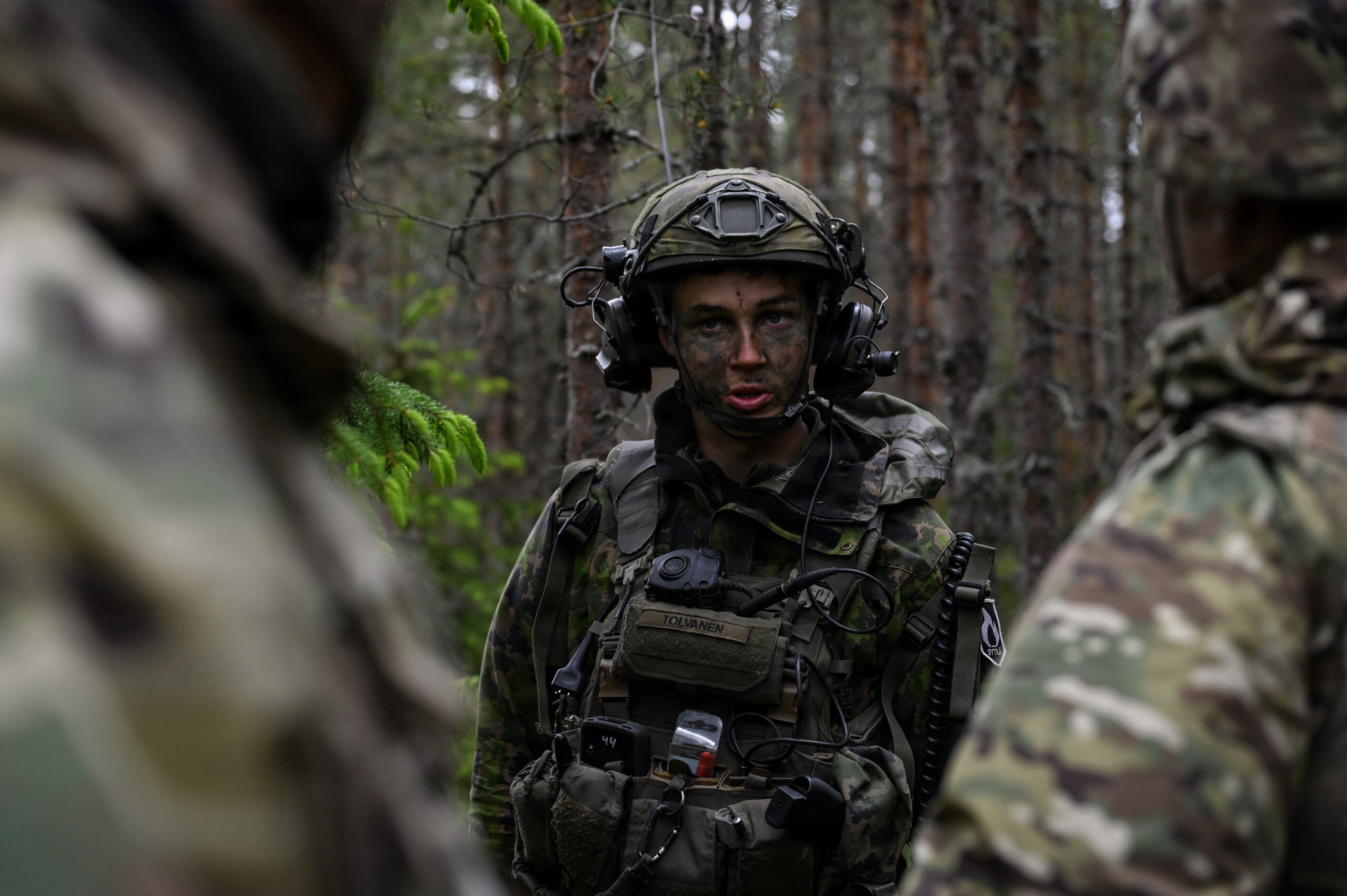
Last week, we submitted this letter to the Editor of The i Paper. It was not selected, so we will publish it here:
Dear Editor,
As the debate over conscription in Europe intensifies, we at the international campaign End Conscription! feel it is our responsibility to challenge the framing, evidence, and conclusions of the June 7 article, “Young Britons won’t fight for their country. Meet the Finnish youths who will.”
One immediate problem is that the article quotes a Finnish conscript saying that “your stamina gets better,” implying that the system brings meaningful health benefits. But the evidence points in the opposite direction. Where such benefits exist, they appear to be modest, unevenly distributed across the conscript population, and set against a broader picture of alarmingly poor fitness levels.
It is enough to note that in Finland, the average Cooper test result for conscripts in 2025 was 2,414 metres in 12 minutes, well below the basic standard expected in many professional forces. In the Czech military, for example, the annual passing norm is 2,600 metres in 12 minutes.
More strikingly, studies show that Finnish “conscripts who were initially in the highest two fitness quartiles showed a decline in performance in all assessed fitness variables.” This is an extraordinary indictment of the system. A mass conscription model may improve weaker recruits at the margin, but it does so partly by dragging down some of the men who are best suited for national defence.
The picture is even more damning when it comes to the reserve. Fewer than half of Finnish reservists reach the minimum target level in endurance fitness, only 14 per cent are suitable for mobile warfare tasks, and “in terms of physical capacity, just under half of reservists are assignable to wartime duties.”
The article is also impressed by polling showing the defence willingness of young Finns: “A 2025 poll found that 71 per cent of Finns aged 18 to 25 were prepared to fight ‘in all situations’.” But it is quite dangerous to trust such numbers at face value. They are most likely the result of traditional societal taboos, the imminent geopolitical threat, and the prevailing patriotic fervour, rather than the particular recruitment regime. Given the coercive nature of the current system, it is difficult to estimate how many of them would actually join the army on their own under today’s inadequate conditions.
One way to do so is simply to consider how many Finnish women are willing to serve under the same conditions. The rate of female recruits remains persistently below 5 per cent of the new Finnish army intake. This is less than half of the NATO average share of women in the armed forces, which stood at 13.9 per cent in 2024.
To say then, as a quoted source does in the piece, that “there are also many people who just want to do it, like women who don’t have to serve. We have many women here serving; our tank driver is a woman who came here voluntarily,” is to invert the reality entirely. Women en masse do not want to serve, and for good reason. Roughly one in three women experiences harassment during military service. Take only last week’s scandal involving deepfake pornography made of female conscripts as a symptom of an institution’s deeply dysfunctional gender relations.
And even the article itself notes that “most Finnish military personnel who spoke to The i Paper attribute this to two factors: the geographical proximity to Russia, and the history of violent conflict with the country.” The defence willingness that appears in Nordic polling is not, then, the result of a coercive army structure, but of geopolitical conditions. A lack of defence resolve would not be cured by months of forced military service.
The piece goes on to say that “this model means almost one million people could be mobilised from a population of just 5.5 million.” This entirely dubious accounting appears to be vaguely based on the public figure of roughly 870,000 Finns who have at some point gone through military training, still quite short of a million. But this number says almost nothing about actual mobilisable capacity. It does not account for their condition, age, current skills, refresher training, or military usefulness. It even includes retirees and pensioners, many of whom could never plausibly be sent to the front. They cannot meaningfully be mobilised, and Finland does not even plan to mobilise them.
For this vast reserve of roughly 870,000 trained Finns on paper, the equipment and uniforms are not even in stock. Finland’s actual wartime strength has long been structured around roughly 280,000 soldiers, and a more realistic estimate is given, for instance, by The Military Balance 2025, which puts Finland’s reserve at 233,000.
Fetishising a broken Nordic conscription model won’t make the UK any safer.
Yours Sincerely,
Ian Golan & Oscar Gill-Lewis