We’re living through one of the darkest moments for liberty in a generation. Europe is threatened by Russia, an imperialist regime that has revealed a fundamental truth about itself: it cannot create anything new; it can only corrupt and plunder what Western civilisation has built. Yet Europe’s leaders have proven both impotent in the face of its plunder and reluctant to defend those who suffer under it. And when they have chosen to act, they have more often than not blundered into self-inflicted damage. Indeed, anyone who cherishes liberty must view with dread the grinding gears of the war economy, the advance of fear-driven protectionism, the mounting calls for conscription, and the rampant return of nationalism.
Austerity or Peril
Yet, the spectre of war is finally bringing moral clarity and a sense of urgency to the frivolous model of governance that has become pervasive across Europe. At last, the political class is being forced to confront the real costs of its budgetary cowardice.
Every euro wasted on welfare for the rich, our pampered retirees, is a euro that can no longer be used to defend our borders. Every subsidy handed to spoiled farmers is ammunition our brave soldiers will never fire. Every Erasmus-funded continental pub crawl is an air defence system we will never build. Every handout, every needless law, every interventionist pet project drains the strength from our economy and leaves it less able to confront the threats that may yet come. The European Union’s barren entrepreneurial landscape, ravaged by relentless regulatory zeal, is one reason our capacity to resist foreign danger falls so far short of what it should be.
Europe is now entering a war economy. The era of scarcity is upon us, and it may be the only moment in this century when we can finally rein in reckless budgets, slash red tape, and reorient government toward the one task a limited state should genuinely be charged with: defence. For libertarians, this is an unprecedented opportunity.
Yes, it may feel icky to argue for a surge in defence spending, but in the long run it may be the only way to persuade the public to reconsider entitlements and interest group welfare. If the threat to the nation truly passes, then armament purchases can cease, military budgets can be reduced, and national budgets can finally be brought back into balance. Defence spending may actually be the easiest spending to cut. It is the only major item in the budget that has seen widespread reductions across Europe in recent decades. That is why, for now, every possible slice of spending bloat should be redirected into national defence. If the threat to Europe materialises, it will prove the best money we could have spent. If Russia collapses, or its ruler meets his just end, we may then have a rare chance to reign in a new age of fiscal discipline.
Conscription Counterstrike
Yet beyond the authoritarians in the East, the gravest danger of all lies in the return to Europe of the notion that proper defence requires the imprisonment of young men behind the barbed wire of military garrisons, to ensure its security. In Europe, it is once again fashionable to sacrifice teenage men as burnt offerings on the altar of national security.
They are condemned to months of full-time and overtime labour paid at rates that would be illegal in any civilian occupation, and to a privacy-free life in the bleak hostel conditions of army barracks. Finland is an exemplary case: new conscripts are expected to survive on near-starvation wages of around six euros a day, forcing many to rely on savings, parental support, or even debt just to endure their service. In the garrisons, violence awaits them, as hazing remains endemic in northern Europe: brawls, assaults, theft and extortion by officers, forced stripping for public humiliation, degrading punishment drills, coercive sexual misconduct, and recruits left half naked in the snow or plunged into holes cut through lake ice; all of it part of the so called Nordic success story, in which one in five Finnish men report bullying or hazing during service. They are stripped not only of their liberty, but also of their freedom of speech, as shown by the Swede punished for a joke told in his private time and the Norwegian conscripts who fear reprisals from their superiors for speaking to the media.
This is all an exercise in sheer military illiteracy. Everything we know suggests that a military of equal or greater effectiveness could be maintained at a far lower cost. An expert report prepared for Germany’s Ministry of Finance found that, once all externalities are taken into account, conscription is 45 per cent more expensive than a professional force of the same size. The draft inflicts immense economic damage by forcing unwilling men out of more productive careers and into service for which many are neither suited nor needed. A study published last year by the Swedish Armed Forces found that conscription costs men an average of €47,000 in lifetime earnings, due to the negative impact on their careers.
Europe is now embracing a disgraceful arrangement that concentrates the burden of national defence on a fraction of powerless young men. Draft advocates believe that male teenagers should be stripped of their rights, force dressed into uniforms, and reduced to cheap labour. In their eyes, of all the jobs in modern society, military service is the one least deserving of proper pay. Conscription, in that sense, is the greatest insult to all the men serving in uniform.
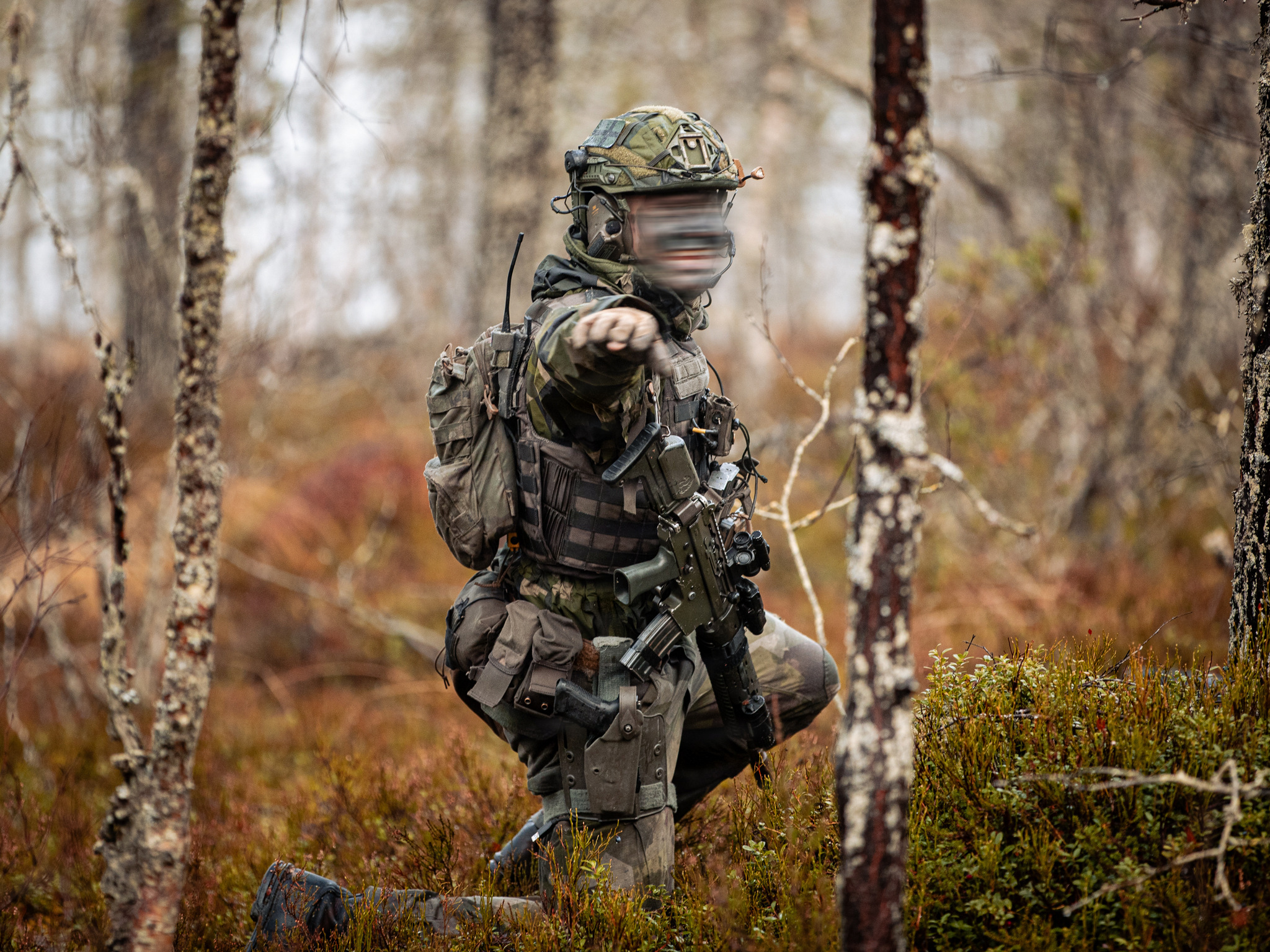
In the rush to recruit en masse, reserve numbers rise on paper even as vital equipment needs go unmet and soldiers are left without the means to train for modern war. A somewhat surreal example surfaced in an early-January Swedish news story. Young men from the P7 South Scanian Panzer Regiment were about to depart for an exercise in Latvia, yet the only communications tools available to them were maps, compasses, and a 14-kilogram radio.
Conscripts and officers refused to use the outdated gear. In just two weeks, they used off-the-shelf tablets, mobile phones, and encryption software to build a functioning digital battle management system. Their system allows for real-time tracking of friendly units and drone footage feeds, providing a massive tactical advantage that the “official” equipment currently lacks. But the episode points to a bleak state of war readiness. The Swedish army doesn’t have a modern digital communication system and won’t have one until 2028.
This is the amateur logic at the heart of Nordic conscription, and it is a liability for Northern Europe. Young men are drafted en masse, but drafted to do what, exactly? Run around boreal forests with a map, rehearsing routines that do little to prepare them for a sensor-saturated, networked battlefield. In practice, the fixation on a huge compulsory apparatus crowds out the unglamorous basics that win wars.
Back to the Roots
The struggle against conscription that stands before us today is, in many ways, a return to libertarianism’s roots. It was in those dark years, when the modern movement was first taking shape, that the fight against the Vietnam draft gave much of its early energy a defining cause. As the late Brian Doherty recounts, the battle over conscription was the point of rupture between early libertarians and conservatives within Young Americans for Freedom.
“Then, on the convention floor, came a symbolic gesture that many of those energised by it mark as the beginning of the modern libertarian movement: the burning of a facsimile draft card by a small group of libertarians. Then the depth of the typical YAF members’ contempt and anger at radical libertarianism was revealed fully, in roars, shoving, fist waving, a rushing mass of bodies yearning to punch ‘lazy fairy’ noses.”
In that moment, the movement broke decisively with the statist right and freed itself from one of its earliest false allies. Libertarians played a vital role in one of the great victories against the draft. Today, once again, we are the only real hope for countless young Europeans facing one of the most oppressive institutions of the modern state. For decades, we have had to endure left-wing anti-conscription activism that has been proven entirely impotent. Even now, much of the visible resistance has come from the anti-NATO radical left in Germany, recycling the climate strikes playbook.
Let us be very clear, if conscription is protested in the style of the privileged white girl who wouldn’t go to school until literally everyone on earth changed the weather for her, freedom will be lost. If we leave the fight for freedom from military servitude to the illiberal left, we will be destined for another century of conscription regimes in Europe. We have a historic opportunity to stand at the forefront of the struggle for Europe’s conscripted youth while advancing the security of the continent itself. Let history record that this was our hour.