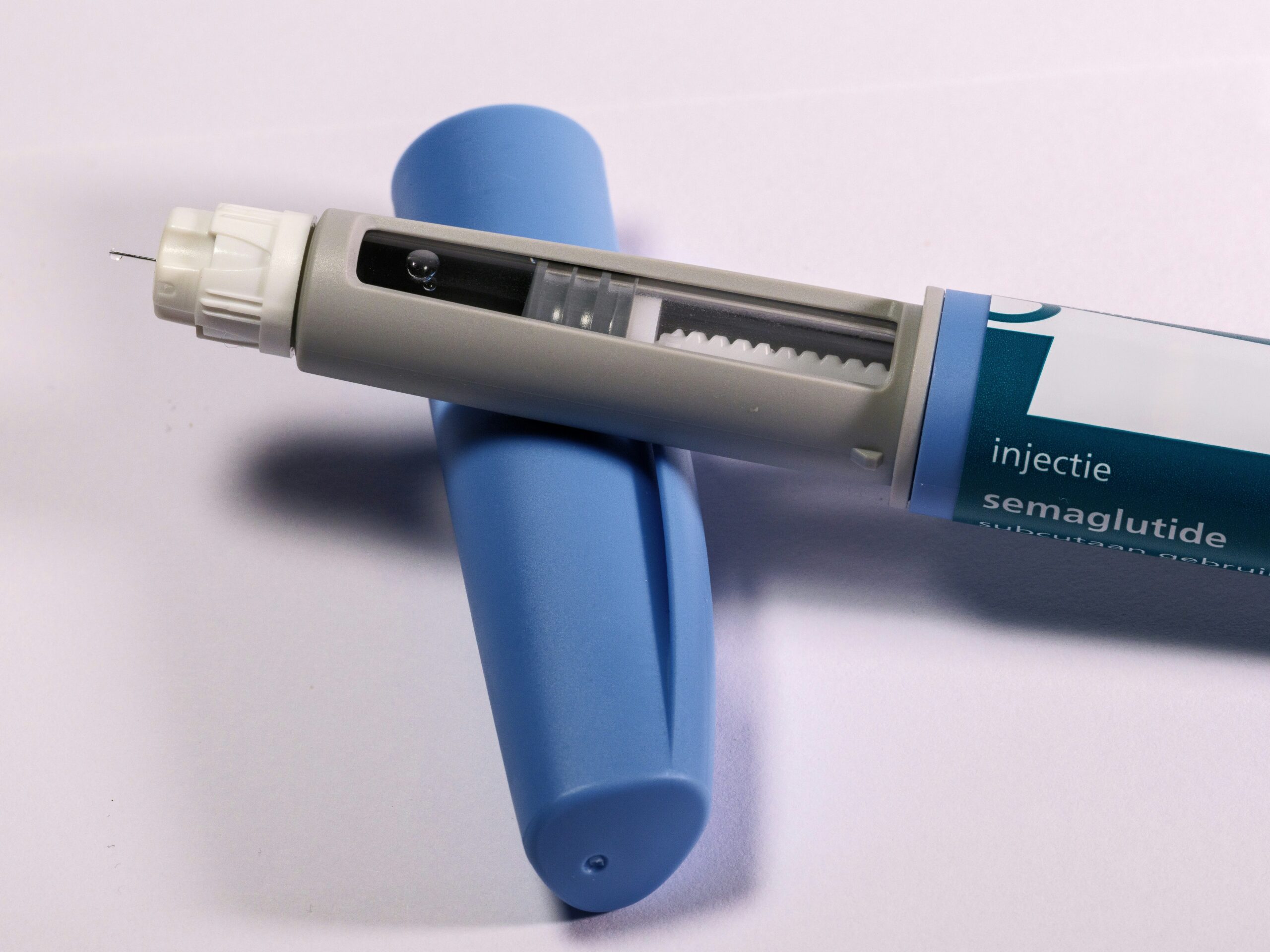
Since 2022, the European Union has been managing a shortage of GLP-1 receptor agonists — the class of drugs that includes Ozempic, Wegovy, and Saxenda. It has done so the way European institutions tend to manage shortages: through committees, recommendations, and controlled distribution, rather than through faster supply. The result, several years on, is not a healthcare system catching up to demand. It is a thriving black market.
In 2024, the European Medicines Agency and the Heads of Medicines Agencies, acting through their joint Executive Steering Group on Shortages and Safety of Medicinal Products, responded to the shortage with a familiar regulatory instinct: ration what exists rather than expand what’s available. The agencies pushed national authorities toward controlled distribution and patient-prioritization schemes, restricted off-label use, and required that manufacturers obtain regulator sign-off before promoting these medicines at all.
Individual member states went further. Belgium’s Royal Decree of November 2023 limited authorized prescriptions of GLP-1 receptor agonists to specific categories of patients, a restriction regulators have repeatedly extended rather than lifted.
The predictable consequence of allocating a scarce good by bureaucratic fiat rather than by price and competition is that legitimate demand goes unmet. By 2026, only 2 to 3 percent of eligible patients in Europe were being treated with GLP-1 receptor agonists, compared with roughly 10 percent in the United States, a gap industry executives described candidly at the HLTH Europe conference in Amsterdam this June. Most European health systems still don’t reimburse these drugs for weight management at all, leaving patients to either pay out of pocket through private clinics or go without.
Where the legal market is rationed, an illegal one fills the gap. In 2025, Interpol coordinated a global operation across 90 countries, 16 of them in the EU, that seized roughly €57 million worth of counterfeit and unapproved medicines. Fake or diverted GLP-1 products and related peptides were among the most common finds, and officials noted that a single counterfeit pen could fetch hundreds of euros on the black market. Months later, EU regulators issued a public warning about a sharp rise in illegal semaglutide, liraglutide, and tirzepatide sold through fraudulent websites and social media. Much of it is hosted outside the EU, some do not contain the active ingredient at all or are laced with unknown contaminants.
This is the part the rationing model never quite reckons with. When official channels close, people don’t stop wanting the drug, they just stop buying it from anyone who is accountable. A patient turned away by a pharmacist because she doesn’t fit a government’s prioritization criteria does not have less of an incentive to lose forty pounds. She has more of an incentive to find an unregulated seller on Telegram or Facebook who asks no questions.
None of this is a failure of the free market. It is what scarcity by decree looks like when it meets sustained demand. The EU faced real supply bottlenecks: limited manufacturing capacity, a patent-protected handful of producers, and a regulatory system that still requires its own site inspections rather than recognizing approvals already granted by equally rigorous regulators like the FDA. But these were treated as fixed constraints to be managed, not problems to be solved by inviting in more competition. Marketing restrictions, meanwhile, didn’t reduce demand; they just reduced the amount of reliable information patients had when they went looking for supply anyway.
A more liberal alternative would start from the opposite premise: that the way to end a shortage is to make it easier, not harder, for new and legitimate supply to reach patients. The EU could fast-track manufacturing approvals through mutual recognition with other stringent regulators, rather than insisting on duplicate inspections for plants the FDA has already cleared. It could let new biosimilar competitors enter as patents lapse rather than entertaining extensions. It could allow manufacturers to communicate honestly with both doctors and patients about availability and off-label evidence, on the reasonable theory that an informed patient is a safer one than a desperate one. It could expand legal, cross-border telehealth prescribing so that Europeans aren’t pushed toward sellers with no medical license and no accountability. And it could treat obesity, as the World Health Organization already classifies it, as the chronic disease it is for reimbursement purposes, rather than as a discretionary lifestyle choice that public insurers can simply decline to cover.
None of this means abandoning safety oversight, and it would not eliminate every risk. Medicine, like any market, benefits from real quality controls. But four years into a shortage that regulators have managed mainly by deciding who gets to wait and who doesn’t, the evidence is in. Rationing a good doesn’t make more of it exist. It just decides, by committee, who goes without and quietly hands the rest of the market to people who answer to no one. A freer market in GLP-1 medicines wouldn’t be a free-for-all. It would simply replace central planning with the kind of regulated competition that has reliably done what Brussels’ decrees have not: deliver enough supply that patients don’t have to gamble on a stranger online.
Photo Credit: Photo by Haberdoedas on Unsplash
Good reporting is cheaper than heavy-handed regulation. Support freedom and independent journalism by donating today.
This piece reflects the author’s views, not necessarily the entire magazine. We welcome a range of pro-liberty perspectives. Send us your pitch or draft.