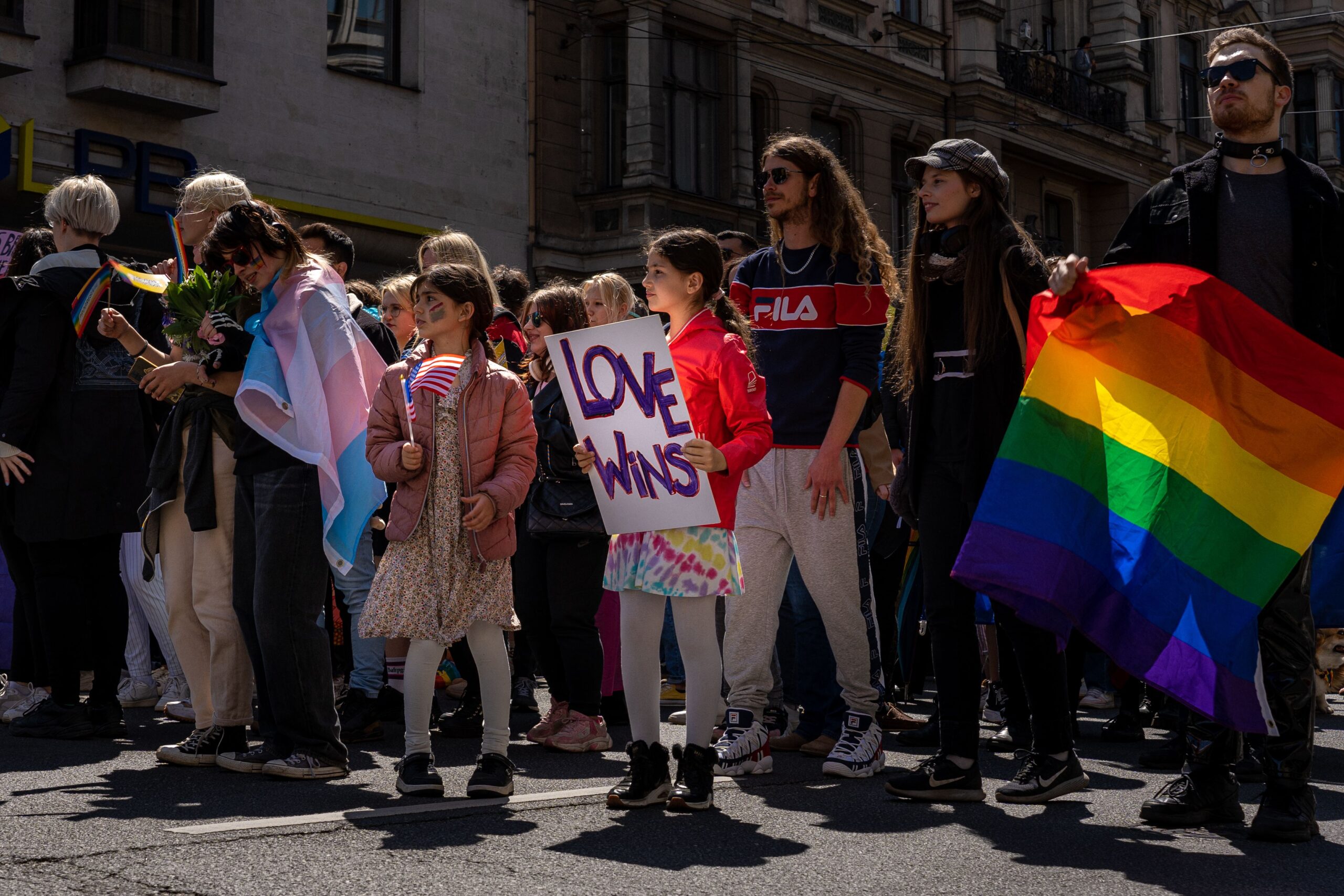
Sona remembers gathering all the courage she had before sitting down with her family and telling them, simply, “I like girls.” Her mother smiled, nodded and gave what sounded like a reassuring speech. For a moment, Sona felt relieved. But two days later, her mother sat her down for a more serious conversation. This time, the message was different. “It is something that comes and goes with age,” she told her.
Across the town, Sargis grew up watching TV shows for girls and doing makeup and dress-up with his sisters. He never came out to his parents, because there was no need to; it was already apparent to his family. “We never had a proper conversation about my orientation in the family, but they know who I am and they are very proud of me,” tells me Sargis, who now identifies as bisexual.
They are not the only ones feeling this pressure from society. It is everywhere: in the side-eyes on the streets, mockery from peers at school, and family quarrels centred on who they love. Their stories reveal the lived reality of the LGBTQ+ community in Armenia today: they face suppression by both society and the government.
Recent years have seen many countries in the region move forward on gay acceptance. In 2024, Greece became the first Orthodox Christian country to legalise same-sex marriages. A year earlier, Moldova introduced protections for sexual orientation and gender identity in its anti-discrimination laws. Yet, according to the Rainbow Map Index, Armenia remains among the worst countries in Europe when it comes to legal equality, with a score of 9.16, ahead only of the authoritarian regimes on the continent.
While the Constitution of the Republic of Armenia guarantees protection of basic human rights, Armenia does not have separate anti-discrimination legislation, which makes it near impossible for individuals to receive effective protection from violence and harassment. Homophobia is very much entrenched in Armenian life, tracing its roots to the Soviet Union past. During the communist régime, homosexuality was deemed a decadent product of a capitalistic society’s degeneracy, by the ruling class, and male gay relations were criminalised. And even after the USSR’s dissolution, Armenia effectively traded the Soviet rationale for a religious one. Hostility toward same-sex relationships remained firmly in place, effectively stigmatised by church authorities.
Ever since, the prejudice has persisted and spread into Armenian families, where being LGBTQ+ is perceived as a “grave sin,” leading to parents discriminating, ostracising, and disowning their children. On November 14, 2023, 17-year-old Kh. S. committed suicide by jumping from the Davtashen bridge. He was consistently subjected to domestic violence because of his sexual orientation. Before the suicide, photos of the victim along with hateful comments were spread on a Telegram channel. The social media campaign of harassment led the teenager to lose his job and get kicked out of the house, leaving him without any support from either his family or society.
It was not a unique case. Approximately 50% of discrimination and human rights violations against LGBTQ+ people involve domestic violence, although many cases remain unreported, because of the “huge distrust of the police and any governmental organisation,” tells us Leo Zatikyan, a project coordinator from Pink Armenia, a non-governmental organisation that protects the Armenian LGBTQ+ community from abuse and discrimination. Pink Armenia provides victims with free legal representation as well as mental and financial support, nowhere to be found within the legal system of Armenia.
Sona feels that she can be free and doesn’t feel ashamed to express herself openly. She walks the streets of Yerevan freely, hand-in-hand with her girlfriend, thanks to the efforts of heterosexual girls who worked to change the interpretation of the gesture to platonic. Sona thinks the reaction of the country towards the LGBTQ+ community is mostly negative because of the people’s false interpretation of religion. Armenians believe that “sexuality goes against religious beliefs,” however, as Sona notes, Jesus’s message was “pro-love.” Nevertheless, Sona is optimistic about the future of Armenian queer society. She believes that the Armenian prime minister is pro-Western and if the political leadership continues on that way, Armenia’s public will gradually change its attitude towards LGBTQ+ people.
Sargis was expressing himself openly in the school, and he continues to show his identity on the streets of Yerevan even now. He is not afraid of facing discrimination, because he does not have that typical look of a gay man who is afraid to fight back. “I look a bit scary to qyarts [street toughs], no one ever can approach me with the question about my looks because I look like I am capable of killing them,” he says with a smile. However, every day he feels discriminated against in Armenian society. “It is bad, it is awful and disgusting that some people want to kill you only because you want to be loved and love,” Sargis admits with a sad smile. He believes that the situation of the LGBTQ+ community is going to improve, and if all goes right, in 10 years someone his age will be able to express themselves more openly than he can today.