Liberalism has built one of the most comprehensive and ethically coherent intellectual traditions in modern political thought. It has developed theories of individual rights, constitutional government, markets and the limits of political power. It has explained why dispersed knowledge makes central planning fail, why voluntary exchange creates prosperity and why institutions must constrain power.
Yet liberalism has often appeared strangely less confident when asked what kind of culture can sustain a free society.
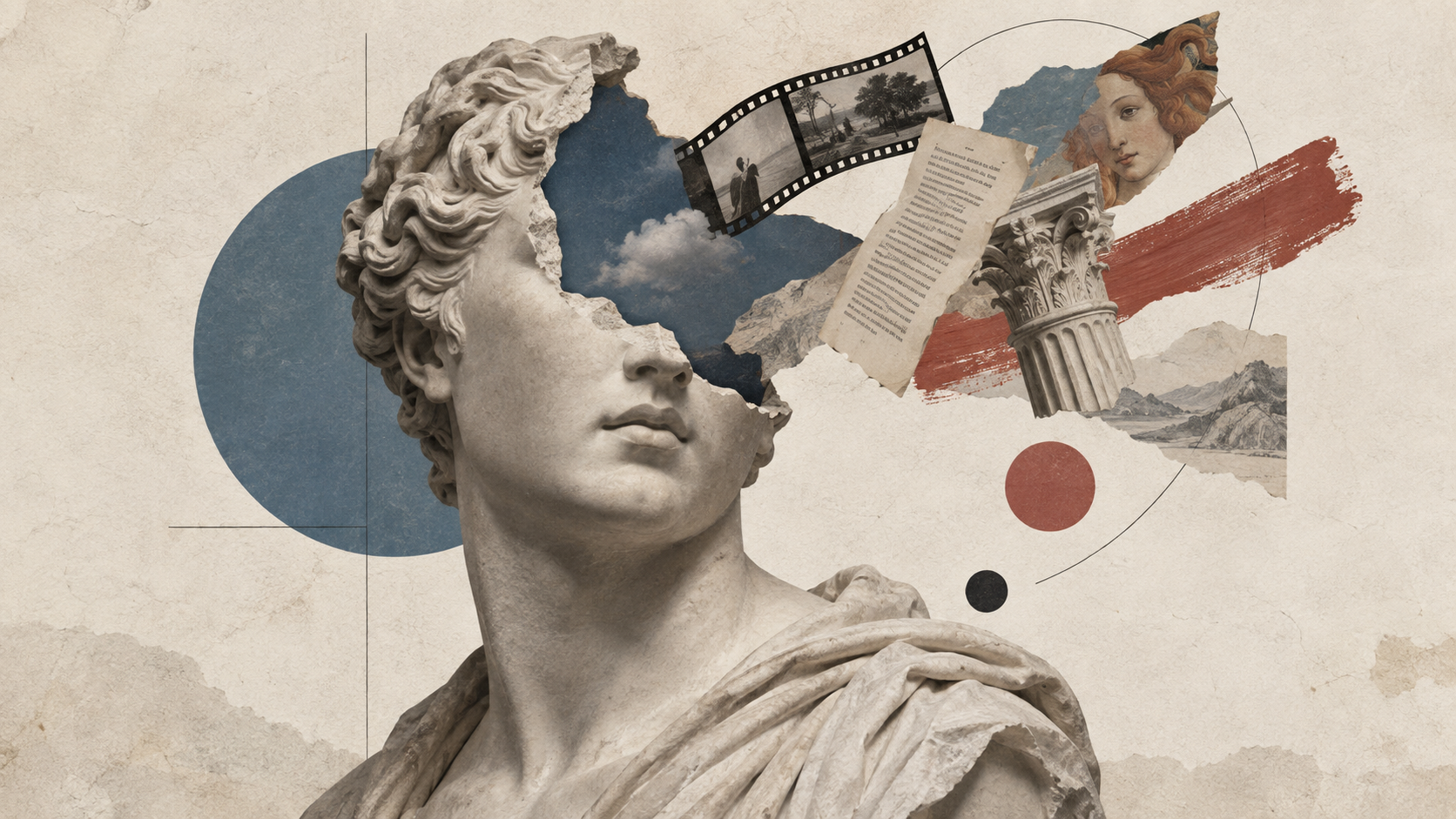
This series of articles will explore the possibility of a liberal aesthetics. It begins with the more fundamental question of what it could mean for liberalism to speak seriously about beauty, artistic value and the cultural imagination.
Early liberal thinkers did not ignore culture. Yet those ideas became secondary within a tradition increasingly accustomed to thinking about freedom in the language of rights, institutions and incentives. Liberalism learned to justify the rules of a free society more successfully than it learned to make freedom imaginable, admirable and worth defending.
In fact, political institutions never operate in a cultural vacuum. None of them, by themselves, can determine what people admire or aspire to become. A society may formally protect individual freedom while becoming culturally hostile to individuality. It may preserve private property while treating commercial ambition as morally suspect. It may protect freedom of expression while producing powerful social pressures towards conformity. The rules of a free society and the character of the people living under them are related, but they are not identical.
Tocqueville’s analysis of American democracy focused not only on institutions but on mores, the habits and sentiments through which citizens understood themselves. He saw the Puritan culture of self-government, literacy and communal responsibility as one source of dispositions favourable to political liberty. Many of these habits survived their original theological setting and were reinforced through local government and voluntary association.
A free society requires people accustomed to acting freely.
Tocqueville also saw the danger of democratic equality, which could expand independence while generating conformity, turning the tyranny of the majority into a tyranny of opinion. Individuals could remain legally free while becoming increasingly unwilling to think or live differently.
This is where the liberal problem moves from institutions to character.
John Stuart Mill feared what he called the “despotism of custom”, society’s tendency to compress individuals into conventional forms of life. His defence of “experiments of living” rested on the belief that individuality must be exercised, because choosing develops judgement and character. Drawing on Wilhelm von Humboldt, he understood freedom as an environment in which distinctive personalities could develop. Yet formal liberty can coexist with passive or conformist characters. The existence of choice does not guarantee individuals capable of using it meaningfully.
The cultural dimension did not disappear from liberal thought. It ceased to occupy its intellectual centre of gravity.
The deepest reason lay in liberalism’s commitment to pluralism. Its reluctance to impose a conception of the good was one of its great achievements, but political restraint could become cultural reticence. The more liberalism defined itself through neutrality between competing visions of the good life, the less comfortable it became speaking about admirable forms of character or higher and lower uses of freedom.
Methodological specialisation reinforced this tendency. Economics and institutional theory gave liberalism powerful tools for analysing prices, incentives and political constraints, drawing attention towards questions that could be treated with greater precision. The twentieth century added another reason for caution, as fascism and communism demonstrated how myth, art and visions of human transformation could be mobilised for domination. It became safer to defend institutions than to speak about heroism, aspiration or beauty.
Hayek, through his theory of spontaneous order, showed why law, language, markets and social norms cannot simply be designed from above, and culture is no different. Cultural formation does not disappear because nobody controls it. Families, schools, associations and artistic creation continually shape what people value.
The liberal rejection of centralised cultural engineering does not require cultural withdrawal. Cultural cultivation, in a liberal sense, means participation. Individuals create from their own experiences and values without anyone determining in advance what culture must express. Lionel Trilling identified the corresponding problem of imagination. Political thought naturally gravitates towards institutions, interests and measurable outcomes, while literature confronts us with motives and experiences that resist such categories.
The same problem appears in the language through which freedom itself is defended.
Economic freedom can be described through efficiency and decentralised information. It can also mean building something without permission, risking failure or turning an idea into an enterprise.
Freedom of expression can be defended as a condition for discovering truth. It can also be understood through the figure of the dissident, the eccentric or the artist who refuses to conform.
Freedom of movement can be analysed economically as labour mobility. It can also evoke exploration, escape and the possibility of reinventing oneself elsewhere.
The institutional vocabulary explains why these freedoms matter within a system. The cultural vocabulary shows what they mean in a human life.
Political neutrality need not require cultural silence. People encounter freedom not only through institutions, but through the stories, images and forms of life through which they understand human possibility.
The cultural failure of modern liberalism is therefore best understood as a failure of integration. Its greatest thinkers repeatedly recognised that free institutions depended on habits, developed individuals, inherited norms and imagination. These observations remained within liberal thought, but increasingly outside its centre.
The consequence is an unusual imbalance. Liberalism possesses a highly developed account of why a free society should exist, while offering a comparatively weaker picture of what is compelling about living in one.
This is where the question of liberal aesthetics begins.
The articles that follow will ask whether liberals can speak coherently about beauty and artistic value, before exploring how freedom has been imagined across different artistic forms.
One aim of this series is therefore both practical and theoretical. People who care about liberty should not confine themselves to defending institutions. They should write, paint, build, compose, film, design and create. A free culture is formed when individuals bring their own values into the common world through voluntary acts of creation.
A free society cannot tell its citizens what they must admire. But it cannot afford to forget that societies survive because people find something within them worth admiring.
Liberalism has spent centuries explaining why freedom is justified. It must also learn how to imagine freedom.