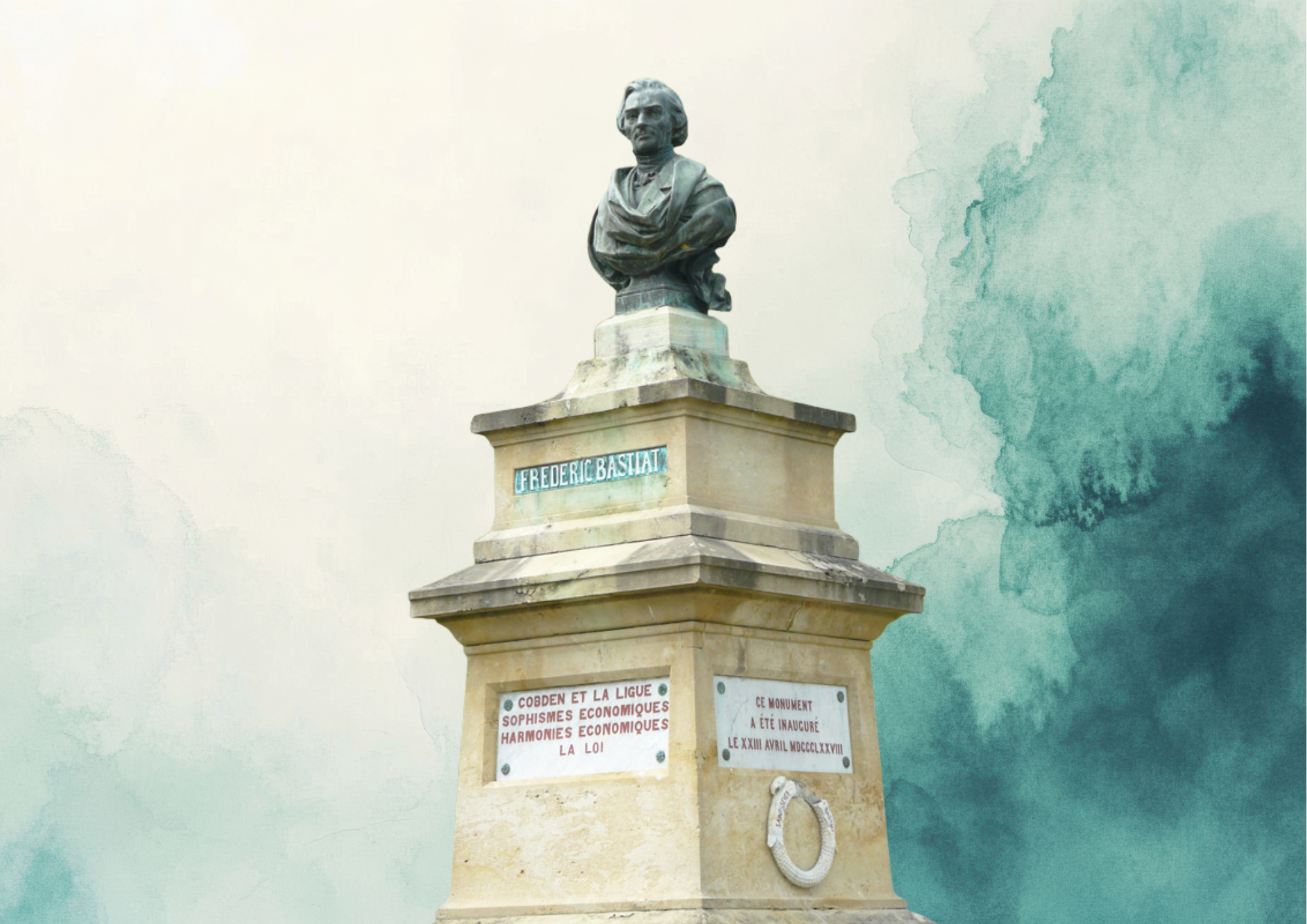
“There is that which is seen, and that which is not seen”.
This sentence by Frédéric Bastiat has passed into posterity.
Frédéric Bastiat (1801-1850), was a French economist, writer, and member of the French National Assembly. During his relatively short life, Bastiat wrote letters, essays and books that had a great
influence, and he is known as a prominent member of the French liberal school. In his 1850 essay “Ce qu’on voit et ce qu’on ne voit pas” (“What is seen and what is not seen”), Bastiat introduced, through the parable of the broken window, the concept of opportunity cost in all but name.
Born in Bayonne, Frédéric Bastiat spent most of his life in the village of Mugron, his family’s hometown. In Mugron, Bastiat served as justice of the peace for the local canton from 1831 to 1846, and as a member of the General Council of the Landes department from 1831 until his death.
Mugron is a small village situated in southwestern France. Its location next to the Adour River made Mugron an important place for wine storage and trading in the 18 th and 19th centuries. Nowadays the village is mostly known for its 16 th century square-shaped manor and its bullring where people can enjoy a course landaise (a French variant of the Spanish corrida in which the bull is neither killed nor harmed).
Liberty-minded people will be glad to discover where Bastiat wrote many of his works and see his statue that sits in the center of the village. So if you are visiting southwestern France – a great area for gastronomy, sightseeing and enjoying the beach – don’t forget to pass by Mugron, hometown of one of the most brilliant writers of the 19th century!
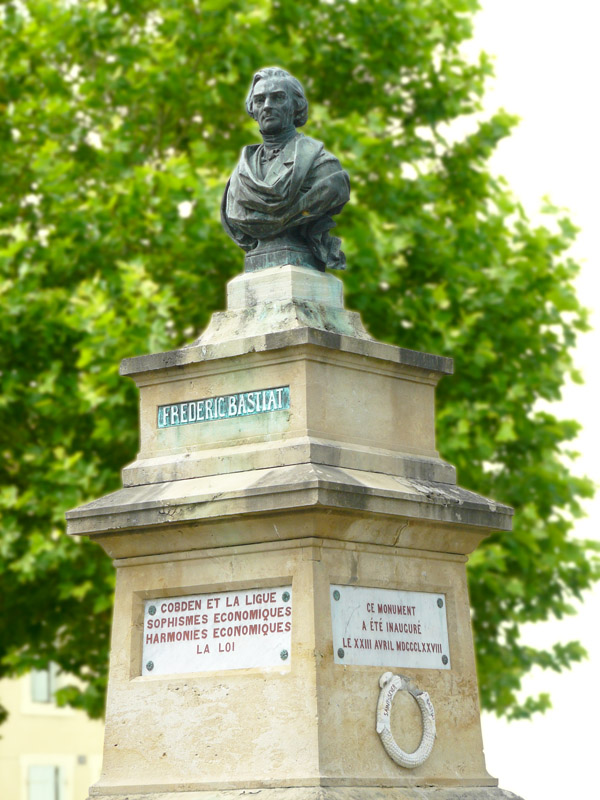
Contribution by: Christopher BRENIER, Secretary of the French Libertarian Party
Image Source: the Cercle Frédéric Bastiat website
Send us your own forgotten place where the history of liberty can still be found. And explore more in the map below: